The air in Taiz tastes like dust and old iron.
If you have never stood in a war-fractured city while the municipal pipes run dry for the fourth consecutive month, you might not understand the geometry of survival. You might not understand why a blue plastic barrel—cracked at the base, salvaged from a bombed-out courtyard—becomes the most precious object a family owns. In related developments, we also covered: Why England Keeps Growing a North South Health Divide.
Water does not flow freely here. It arrives in erratic trickles or via the rumbling bed of a rusted truck, sold by the liter to people whose pockets are as empty as their cisterns. So you catch it. You hoard it. You cover the opening with a scrap of cloth to keep the dirt out, hoping against hope that nothing else slips beneath the surface.
That is where the mistake happens. That is where the invisible wingbeats begin. World Health Organization has also covered this fascinating issue in extensive detail.
The Shape of an Enemy
Let us talk about an adversary you cannot negotiate with.
Aedes aegypti does not care about frontlines. It does not pause its lifecycle for ceasefires, nor does it check identification papers at the rubble-strewn thresholds of abandoned homes. It is a small creature, dark-bodied, marked with delicate white lyre-shaped stripes on its thorax. To the casual observer, it is merely a nuisance, a minor itch to swat away in the heavy, breathless heat of an afternoon.
But in places like Yemen, this mosquito is an executioner.
When the rains finally cut through the dry months, they do not bring renewal. They bring puddles. They bring stagnant pools caught in the jagged teeth of concrete slabs, collecting in discarded packaging, gathering in the very barrels people rely on for drinking and washing. Inside those micro-reservoirs, beneath the shimmering surface tension of the water, transformation takes place with horrifying speed. Eggs hatch. Larvae wriggle. Pupa rise. And within days, a new generation takes flight.
They fly low. They bite silently, usually around the ankles and wrists, preferring the cool shadows beneath tables and beds. They carry a virus that belongs to the family Flaviviridae, a microscopic package of RNA encased in a protein shell.
When that virus enters your bloodstream, your body does not merely get sick. It stages a revolt.
Inside the Ward
Dr. Tariq knows the sound of the drop.
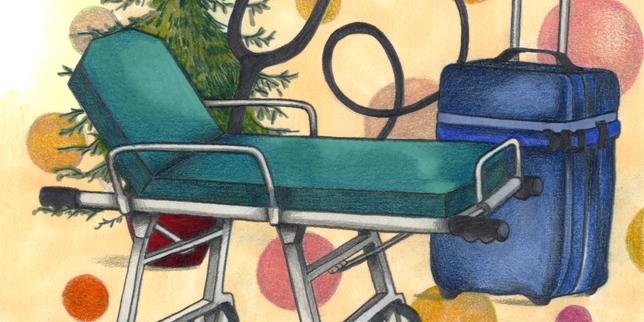
He stands in the corridor of a crowded public hospital in Hodeidah, his stethoscope dangling from his neck like a dead weight. Around him, the walls are painted a peeling, institutional green, smelling sharply of chlorine and unwashed linen. There are no spare beds. Two children share a single narrow cot in the corner, their skin flushed a bruised, angry red, their tiny chests rising and falling in shallow, rapid rhythms.
In the language of textbooks, dengue fever is classified as an acute systemic viral infection. In the language of the ward, it is known as breakbone fever.
"People think it is just a bad flu until the pain starts," Dr. Tariq says, his voice flat with exhaustion. He has not slept a full night in three days. "They come in walking, but their eyes are sunken back into their skulls. They tell me their bones feel like they are cracking from the inside out. By the evening, their blood pressure drops. Their skin goes cold and clammy. And then we have to make decisions."
The decisions are agonizing. The hospital runs on rationing. Intravenous fluids are counted like gold coins. When a patient progresses to severe dengue—what used to be called dengue hemorrhagic fever—plasma leakage begins. Fluid escapes the blood vessels, pooling in the chest and abdomen. The blood thickens. Without immediate, precise volume replacement, organs begin to fail one by one.
Consider what happens next in a system stretched to absolute breaking point.
The laboratory reagents run low. The power grid flickers, dies, and the backup generator groans to life, coughing black smoke into the courtyard before shuddering to a halt. Nurses must monitor pulse rates by hand, pressing fingertips against fragile wrists in the dim amber glow of smartphone screens.
Dr. Tariq watches a mother fan her seven-year-old son with a folded piece of cardboard. The boy is delirious, murmuring about schoolbooks lost in the dust.
"We are racing against time," the doctor murmurs, not looking up. "The outbreak peaks when the water settles. And the water is always settling somewhere."
The Anatomy of Vulnerability
Why here? Why now?
Epidemiology is rarely just about biology; it is about infrastructure. Or, more accurately, the catastrophic absence of it.
Before the conflict dismantled the country's public health machinery, Yemen had vector control programs. Teams sprayed insecticides. Communities were educated on drainage. Surveillance networks tracked case numbers week by week, intercepting outbreaks before they bloomed into crises.
Today, those networks are frayed threads holding up a collapsing ceiling.
Water networks have been bombed, neglected, or starved of fuel for pumps. Over half of all health facilities are either partially functional or completely closed. When you combine a broken sanitation system with a population displaced from their homes, crammed into makeshift camps or overcrowded apartments, you create an amplifier for disease.
It is a cascading failure. A family flees fighting in the highlands, arriving in a coastal city with no money and no shelter. They sleep outdoors or in unfinished buildings with no window screens. They store water in open containers because they lack proper plumbing. The mosquitoes multiply. The virus circulates. The clinic lacks the medicine.
The math is brutal. And it is entirely human-made.
The Invisible Stakes
We tend to measure health crises in cold digits. Thousands of suspected cases. Hundreds of hospitalized children. Case fatality rates expressed to a single decimal place.
These numbers matter, of course. They are the distress signals sent out across international wire services, the metrics used by the World Health Organization and local NGOs to plead for emergency funding. But numbers have a peculiar habit of creating distance. They render suffering abstract. They turn a child into a statistic.
Let us step closer.
Imagine a courtyard in Aden. The sun is setting, painting the sky in violent shades of violet and amber. A grandmother sits on a low stone wall, her hands rough and calloused from decades of labor. Beside her sits a tin basin filled with fresh water she collected that morning from a charitable distribution point.
She knows the danger. Everyone knows the danger now. The radio broadcasts warnings between segments of traditional music; the local committees distribute pamphlets with crudely drawn pictures of mosquitoes hovering over open jars.
Yet, what choice does she have? If she leaves the basin uncovered, the insects breed. If she empties it, her grandchildren go thirsty.
This is the tyranny of the immediate. When you are fighting for the next meal, the invisible threat buzzing in the corner of the room feels like just one more hazard in a life already defined by them. You cannot quarantine poverty. You cannot social distance from a broken water pipe.
The Race Against the Cycle
Out in the field, health workers are fighting a guerrilla war against an enemy that outnumbers them by billions.
They move through alleys wearing heavy backpacks filled with larvicides and educational flyers. They climb stairs in skeletonized apartment blocks, checking rooftop tanks, tipping over discarded tires, treating pools of standing water with biological agents that target mosquito larvae before they can mature. It is grueling, unglamorous work performed under a merciless sun.
They do not wear body armor, but they face equal peril. They deal with suspicion from tired residents, administrative roadblocks, and the constant, gnawing anxiety that supplies will run out before the rainy season breaks.
Every successfully treated container is a small victory. Every patient who walks out of the ward under their own power is an act of defiance.
But the rain keeps coming. The barrels remain unsealed. The infrastructure remains broken.
Back in the ward, Dr. Tariq checks the monitor for the seventh time in ten minutes. The young boy’s fever has finally begun to break. His breathing is deeper now, more regular. The mother offers a tired, trembling smile, pressing her palms together in silent gratitude.
Outside, the city of Taiz settles into another restless night. Somewhere in the dark, near a cracked blue plastic barrel, a wing beats against the heavy air. The race is far from over.