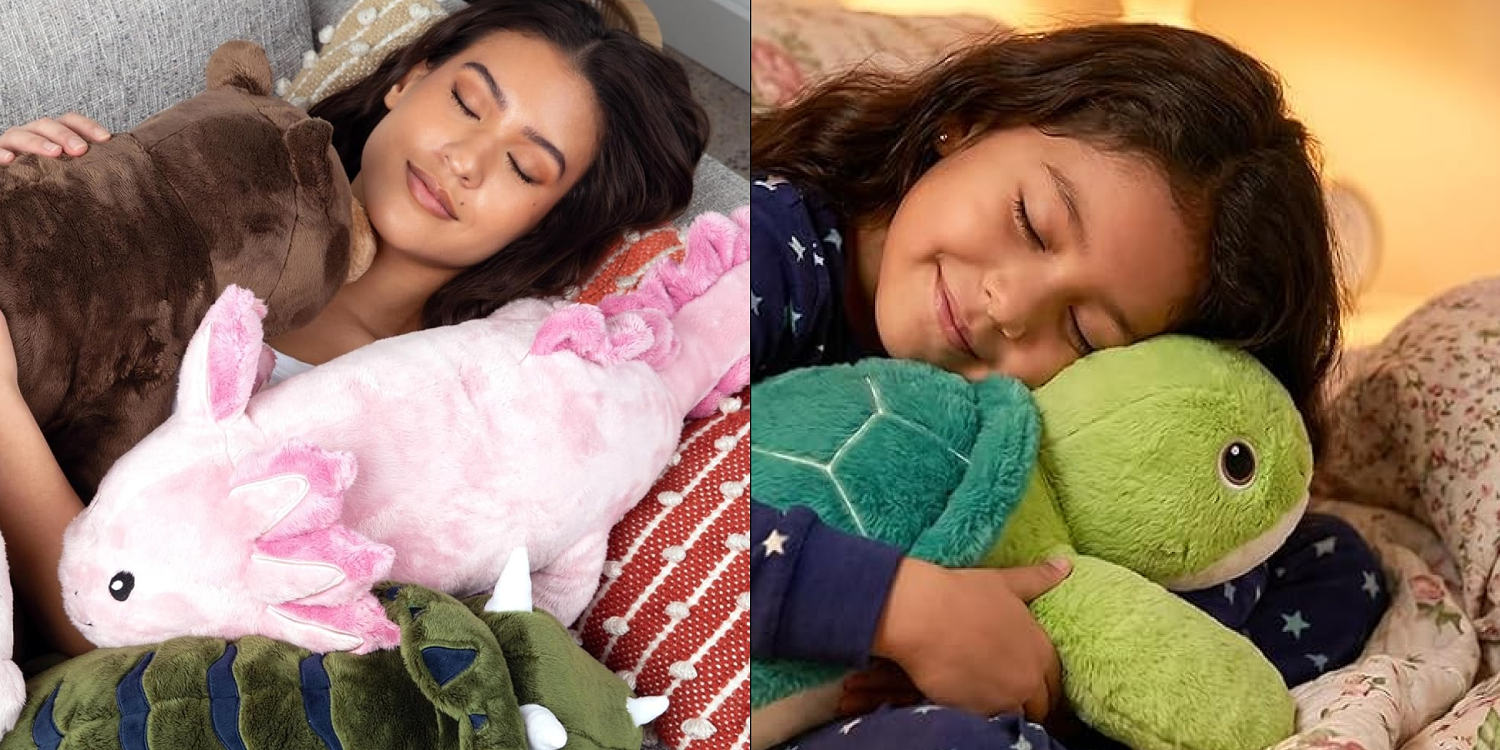
Adults buying plush toys that weigh three to six pounds are not regressing into childhood; they are purchasing low-friction, tactile self-regulation hardware to manage chronic autonomic arousal. The standard media framing—calling these items "adult security blankets"—captures the emotional resonance while obscuring the physical mechanics, behavioral economics, and material trade-offs that determine whether the object actually calms a nervous system or simply clutters a couch. This analysis breaks down weighted stuffed animals into four operational layers: sensory mechanics, attachment economics, product engineering, and clinical boundaries.
The Sensory Architecture of Deep Pressure
Popular commentary treats weighted plushies as a novelty variation of a weighted blanket. Mechanically, the two formats solve different spatial problems through the same underlying sensory pathway: sustained, evenly distributed deep pressure stimulation (DPS).
Deep pressure applies steady mechanical force to the skin, joints, and fascia. That input recruits mechanoreceptors—such as Pacinian corpuscles and Ruffini endings—and proprioceptors in muscles and tendons. In sensory integration theory and occupational therapy practice, steady proprioceptive and tactile input is hypothesized to shift autonomic balance away from sympathetic fight-or-flight activation toward parasympathetic rest-and-digest states, often measured in clinical and laboratory settings via heart rate variability, electrodermal activity, or self-reported state anxiety.
Known fact vs. educated hypothesis: Research on weighted blankets and deep pressure shows modest, mixed-to-positive effects on subjective anxiety and perceived calm in certain populations, though methodological quality varies across trials, sample sizes are frequently small, and placebo or expectancy effects are difficult to isolate. For weighted stuffed animals specifically, large-scale randomized controlled trials remain scarce compared to weighted blankets. Treating a weighted plushie as a proven clinical intervention for panic disorder or insomnia overstates current evidence. Treating it as an accessible, low-risk sensory grounding aid aligns with how occupational therapists use weighted lap pads and tactile objects in daily routines.
A plush toy alters how deep pressure is delivered compared to a blanket:
- Focal concentration: A blanket spreads load across a wide surface area, whereas a three-to-five-pound plushie concentrates mass against the sternum, abdomen, lap, or forearm.
- Portability and posture: A plush object can sit on a desk chair, ride in a car, or rest on a sofa without requiring a person to lie down or stay under covers.
- Contoured contact: Soft textile geometry conforms around curved body segments—such as the ribs or collarbones—creating localized resistance when hugged.
- Boundary of load: Because a plushie is compact, its weight is strictly localized rather than enveloping the whole body, which suits people who feel trapped or overheated under heavy blankets.
That concentration creates a direct cause-and-effect trade-off. Concentrating four pounds onto a small patch of the abdomen or chest increases pressure per square inch compared to four pounds spread over a twin mattress. For someone seeking firm grounding, concentrated load feels more decisive. For someone with joint sensitivity, rib tenderness, chronic pain, or claustrophobia, localized weight can feel restrictive or uncomfortable within minutes.
Why Adults Buy Weighted Plushies Instead of Blankets
Calling a weighted plush toy a "security blanket" treats nostalgia as the main driver of demand. In practice, adult adoption rests on three interacting forces: friction reduction, social signaling, and attachment transfer.
In behavioral terms, a weighted blanket carries high setup and context friction. You usually deploy it when lying down, winding down for sleep, or settling into a stationary couch session. A weighted plush toy has much lower activation energy. A remote worker sitting at a kitchen table during a tense afternoon can pull a four-pound plush onto their lap for ten minutes between calls without changing posture or room setting. Small reductions in friction matter heavily when someone is already experiencing cognitive fatigue or acute stress, because complex coping routines get abandoned first when bandwidth drops.
Social signaling works in two directions at once. Soft toys carry stigma in hyper-formal or status-conscious environments, yet many adults actively reject rigid adult performance norms at home or in private digital spaces. Buying a weighted plushie lets a consumer pair a socially legible, sometimes ironic or whimsical object with a practical self-soothing function. Instead of explaining "I need a sensory aid," a person can keep a plush animal on a bed or reading chair and use it privately whenever stress spikes.
Attachment theory helps explain why form matters alongside weight. A classic transitional object or security blanket provides continuity and emotional predictability. When you add mass to a soft, contoured animal form, you combine symbolic familiarity (softness, warmth, recognizable shape) with somatic anchoring (physical weight pulling attention back into the body). For a person experiencing racing thoughts or detachment during high stress, holding something with both shape and heft gives attention a concrete physical anchor.
Consider a software engineer finishing a high-stakes incident response at 9:00 p.m. Their sympathetic nervous system is still running hot, making it hard to transition straight into sleep. A full weighted blanket feels too heavy for a warm room, and scrolling on a phone increases cognitive stimulation. Holding a four-pound weighted plush while reading a physical book supplies steady forearm and chest pressure while keeping hands occupied away from a screen. The object does not fix the underlying workload, but it lowers the immediate cost of downshifting.
The Cost Function of Weighted Plush Design
From a product engineering and unit-economics standpoint, adding weight to a stuffed toy changes its entire cost function. Standard plush toys are mostly air trapped inside low-density polyester fiberfill. Shipping cost is driven largely by dimensional weight (volume), while raw material cost is low.
Once you add three to six pounds of dense filler, actual weight, load distribution, and failure modes become primary design constraints:
- Filler density and material: Glass micro-beads, plastic poly-pellets, and steel shot each change density, acoustic profile, washability, and price. Glass beads pack densely and feel cool initially, but if containment fails, tiny beads scatter across floors and create slip or ingestion hazards. Poly-pellets are lighter per volume and resist clumping when washed, though cheaper grades can feel stiff or noisy.
- Internal containment architecture: High-performing designs separate the weighted core into stitched inner pouches or compartments rather than dumping loose beads into the main body cavity. Without internal baffling, weight shifts to the lowest point—often the bottom or tail—causing awkward balance and stress on outer seams.
- Seam stress and stitching: Static weight pulls continuously on seams, and dynamic movement—picking the toy up by one arm or ear—multiplies tensile stress at stress risers. Double stitching and reinforced seam allowances are mandatory if the product is meant to last beyond a few months.
- Care and maintenance constraints: Moisture trapped inside dense filler takes longer to dry and can encourage mildew or odor if washing instructions are ignored. Spot-cleaning or removable inner weight packs reduce maintenance risk, at the cost of extra manufacturing steps.
These engineering choices explain why cheap weighted plushies often disappoint buyers. A low-cost unit might use a single unbaffled pouch of coarse pellets and single-needle seams. Within weeks, the beads clump to one side, the silhouette sags, and a popped seam turns a calming object into a cleanup chore. Higher-priced units generally justify their cost not through magic materials, but through multi-compartment baffling, denser outer fabrics, and better seam reinforcement.
How to Evaluate and Use a Weighted Plush Pragmatically
Anyone considering a weighted plushie—whether as an individual buyer or a product manager building in the comfort and wellness category—can evaluate utility using a straightforward four-step sequence.
Step 1: Match Load to Body Mass and Use Case
Do not treat weight as "higher equals better." A common rule of thumb in weighted blanket guidance is roughly 5% to 10% of body weight for general comfort, adjusted downward for frailty, circulation issues, or localized use. Because a plushie concentrates load in a smaller area, three to five pounds is often plenty for lap, chest, or desk use. Start lighter if you plan to rest it on your chest while lying down, where breathing mechanics and rib comfort matter most.
Step 2: Audit the Internal Construction Before Buying
Check product specifications for internal weight pouches, filler type, and washing instructions. Avoid items where weight distribution is unspecified or where the entire plush must be submerged and air-dried slowly without a removable core. Inspect seam descriptions and customer feedback specifically for bead leakage and lopsided settling after a few weeks of use.
Step 3: Pair the Object With a Behavioral Cue
A weighted plush works best as part of a repeatable transition rather than a passive decoration. Link it to a specific trigger—such as closing a laptop at the end of work, sitting down to decompress after commuting, or lying in bed before lights-out—and pair it with slow nasal breathing or progressive muscle release for five to ten minutes. Relying on the object alone without changing habits limits its usefulness when stress is severe.
Step 4: Respect Clinical and Safety Boundaries
Weighted items are not appropriate for everyone. People with respiratory limitations, impaired circulation, fragile skin, open wounds, or certain neuropathic or orthopedic conditions should consult a clinician before using weighted products, especially on the chest or torso. Keep small weighted beads away from young children and pets that chew through fabric, as loose pellets pose choking and intestinal obstruction hazards. Most importantly, if persistent anxiety, depression, trauma symptoms, or insomnia are interfering with daily life, treat a weighted plush as a minor comfort adjunct—not a substitute for evidence-based therapy or medical care.
Limitations and Blind Spots
Even well-engineered weighted plushies have clear ceilings. First, habituation occurs: the nervous system adapts to steady sensory input over time, so a weight that feels grounding in week one can feel ordinary or unremarkable by month six. Second, avoidance reinforcement is a real risk if someone uses comforting objects to postpone necessary decisions, difficult conversations, or clinical care. Third, market noise is heavy: wellness branding routinely dresses up simple plush toys in clinical-sounding language without sharing test data or durability metrics.
The Strategic Play
For brands and creators in this category, the winning move is to stop selling weighted plushies as a quirky adult toy or a cure-all for anxiety and build them as honest, durable tactile tools. Publish clear specs on internal weight baffling, bead material, and seam construction; price transparently around actual bill-of-materials and freight weight; and frame the value proposition around low-friction daily decompression rather than medical claims. Consumers who buy with that clarity—treating the plush as a practical sensory aid with known limits rather than a magic fix—get the most reliable calm per dollar.