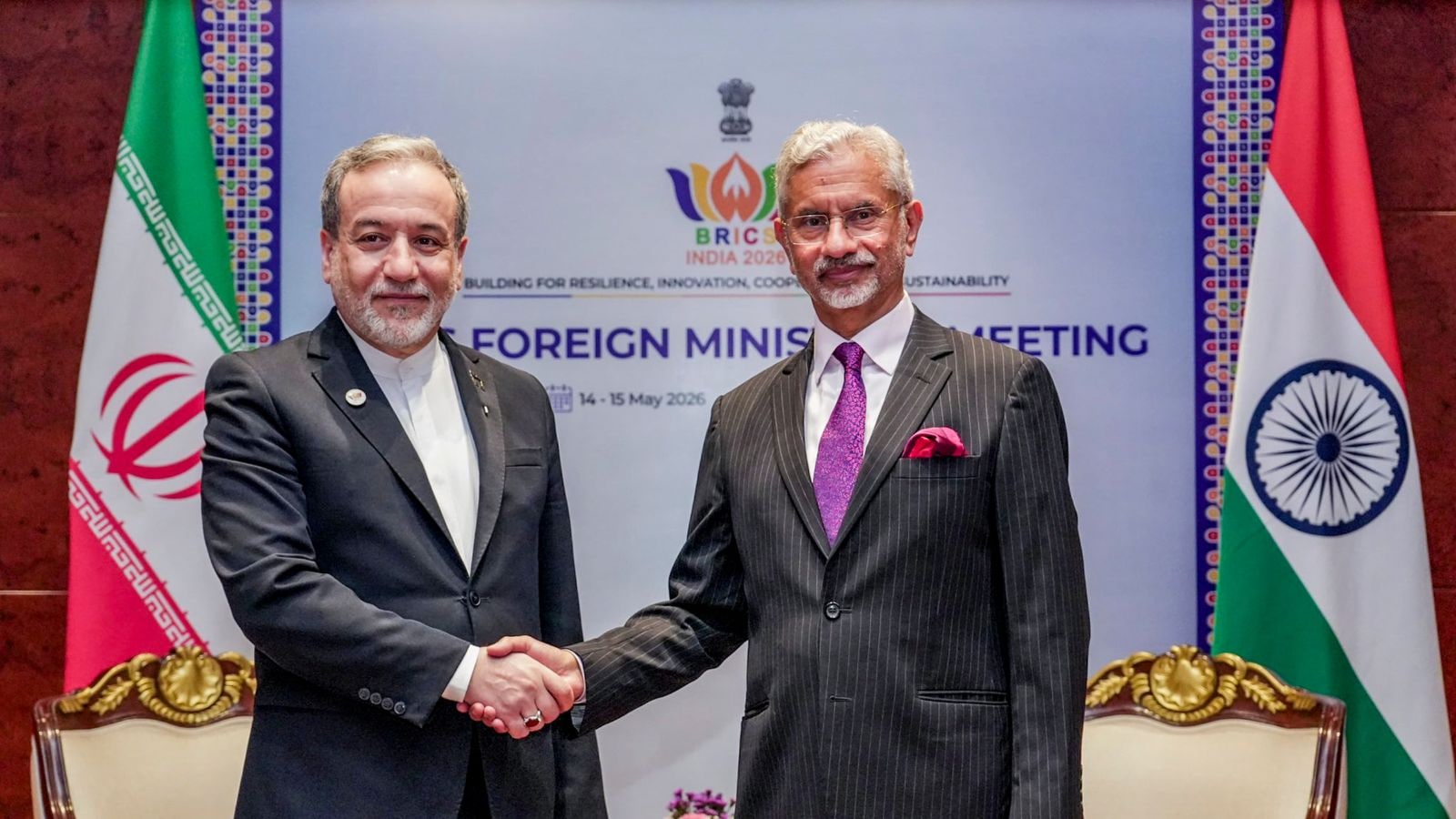
Washington's grip on global shipping lanes isn't what it used to be. If you want proof, look no further than New Delhi right now. Iranian Foreign Minister Abbas Araghchi just landed in India for the BRICS summit, and he didn't pull any punches about who really runs the world’s most critical oil chokepoint.
The message out of Tehran is brutal, clear, and direct. Iran claims the Strait of Hormuz is open for business, but only if you play by their rules and cooperate with their navy. If you're at war with Iran, you're locked out. And if you're the United States? Iran simply doesn't trust you anymore.
This isn't just standard diplomatic posturing. It’s a massive recalculation of geopolitical power that directly affects global energy prices, shipping routes, and the economic survival of major Asian powers like India.
The Myth of International Waters in Hormuz
For decades, Western capitals spoke about the Strait of Hormuz as a global common. Araghchi blew that narrative apart during his press conference in New Delhi. He pointed out a geographical reality that most Western analysts love to ignore. The strait sits entirely within the territorial waters of Iran and Oman. According to Tehran, there are no international waters in the passage. None.
It’s a bold legal claim, but Iran is backing it up with raw military enforcement. Following the recent seizure of a commercial vessel off the coast of Fujairah, Araghchi made it clear that commercial ships can't just cruise through the strait whenever they want.
"The Strait of Hormuz is open to all commercial ships, but they must cooperate with our naval forces," Araghchi stated.
This means Iran is effectively rewriting the rules of maritime transit. If you want safe passage, you check in with the Iranian navy. If you ignore them, you risk getting your cargo seized. It's a direct challenge to the US-led naval coalitions that have tried to police the region for a generation.
Why Iran Closed the Door on Washington
Araghchi’s most scathing remarks were saved for the United States. He openly mocked Washington's sudden desire for diplomatic talks, claiming the US only turned to diplomacy after 40 days of military friction failed to yield any real results against Iran.
Tehran's stance is that they have zero reasons to trust American promises. They view the current crisis not as Iranian aggression, but as a direct result of American blockades and Western-backed military campaigns in West Asia. Araghchi noted that when the US realized it couldn't achieve its military goals, it tried to offer negotiations. From Iran's perspective, that's weakness, not diplomacy.
The numbers explain why this stand-off matters to your wallet. The Strait of Hormuz handles roughly 20 to 25 percent of the world's seaborne oil and liquefied natural gas (LNG). When Iran squeezes the strait, global energy markets freak out. We've already seen massive surges in oil and gas prices since the restrictions began. By cutting off nations "at war" with Tehran while keeping the lane open for neutral states, Iran is trying to insulate its allies while punishing its enemies.
India and China Get a Pass
While the US and its allies face a virtual blockade, Iran is playing a very different game with Asian superpowers. India and China aren't facing the same restrictions. In fact, Iran previously granted explicit passage rights to a handful of friendly nations, including India, China, and Russia.
During his bilateral meetings with Indian Prime Minister Narendra Modi and External Affairs Minister S. Jaishankar, Araghchi praised India's neutral and constructive role in the West Asia crisis. Iran is actively signaling that Indian ships will get safe passage and trade facilitation through the strait. Tehran wants to keep New Delhi close, especially as the two countries continue to develop the strategic Chabahar Port, which bypasses Pakistan to open trade routes into Central Asia.
China is playing an even more pragmatic game. Iran reportedly struck a deal allowing a significant number of Chinese-bound tankers through the strait. The catch? Reports suggest China agreed to a transit fee of around $1 per barrel, effectively undercutting US attempts to stop Iran from monetization. China gets its oil, Iran gets its cash, and Washington gets ignored.
The UN Deadlock and What Happens Next
Don't expect the United Nations to fix this anytime soon. The UN Security Council is completely paralyzed on the issue. A recent resolution demanding that Iran cease shipping attacks, remove sea mines, and drop its proposed transit fees was promptly vetoed by Russia and China. Moscow and Beijing view Western resolutions as unbalanced because they completely ignore the original US-led military provocations against Iran.
So, what’s the immediate move if you’re managing supply chains or tracking energy markets?
First, accept that the old maritime rules in the Persian Gulf are dead. You can't rely on Western naval protection to guarantee safe transit through Hormuz anymore. Shipping companies must prepare for a dual-track reality where access depends entirely on a nation's diplomatic standing with Tehran.
Second, expect regional shipping costs to stay volatile. Even with Iranian assurances of safe passage for neutral vessels, the mandatory coordination with the Iranian navy and the threat of localized blockades mean higher insurance premiums and longer transit times.
Araghchi made it clear that normal navigation will only return when Western military operations in the region stop completely. Until then, Iran holds the keys to the world's most important energy gate, and they aren't turning them for Washington.