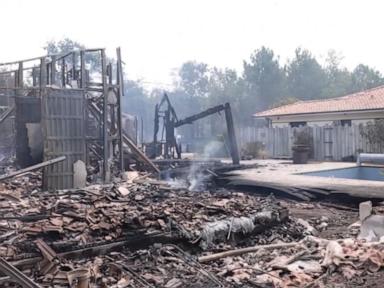
Mass evacuations across Southern and Western Europe aren't a distant warning anymore—they're happening right now on a scale the continent has never seen before.
Over 200,000 residents and tourists in France and Spain have fled their homes, vacation rentals, and campsites in a desperate attempt to outrun massive, self-sustaining wildfires tearing through dry pine forests and rural villages. For a closer look into this area, we suggest: this related article.
If you're tracking emergency travel alerts or trying to understand why European fire response systems are suddenly buckling, here's what's actually driving this crisis, how local authorities are responding, and what travelers and residents need to do right now.
What Triggered the Evacuations in Southwestern France and Central Spain
In southwestern France, the crisis centers on the Gironde and Landes departments near Arcachon Bay. A series of intense, shifting blazes grew so fast that French authorities had to order a total evacuation of the popular Cap Ferret peninsula. Because flames threatened the main road connecting the peninsula to the mainland, emergency teams resorted to using boats and ferries to rescue hundreds of trapped vacationers from local piers. For further background on this issue, in-depth analysis is available at The New York Times.
By Friday evening, French Interior Minister Laurent Nuñez confirmed that a sudden wind shift turned the Gironde inferno into a massive, self-sustaining mega-fire. The blaze consumed over 140 square kilometers of woodland—an area larger than the city of Paris—and began pushing eastward toward the Bordeaux metropolitan region. So far, French officials report that over 141,000 people have been evacuated or placed under strict lockdown across Gironde and neighboring Landes.
Across the border in Spain, the government declared a state of national emergency as multiple mega-fires threatened communities outside Madrid and the neighboring province of Ávila. Two major fires merged into a single wall of fire north of the capital, with a third active blaze threatening to join. Spanish Interior Ministry officials confirmed that over 60,000 people have been evacuated or ordered to confine themselves indoors as dry winds push smoke directly into populated zones.
Regional leaders in Madrid termed the current wave of destruction the worst wildfire event in the area's history, pointing out that relentless heatwaves and extreme winds created a perfect storm for runaway combustion.
Why European Firefighters Are Struggling to Contain the Blazes
Traditional firefighting tactics fail when a wildfire achieves "self-sustaining" status. When ambient air temperatures soar and humidity drops into single digits, pine needle litter and dense underbrush act like gunpowder.
Here are the specific factors creating operational gridlock across Europe's emergency management teams:
- Simultaneous Ignition Points: Instead of battling one isolated burn, crews in France and Spain are fighting over 30 distinct active wildfires at the exact same time.
- Thermal Updrafts and Spotting: High-velocity winds carry burning embers up to two miles ahead of the main fire perimeter, igniting new spot fires behind established containment lines.
- Infrastructure Bottlenecks: Narrow coastal roads, dense forest passes, and summer tourist traffic create massive gridlock during mandatory evacuations.
Both French President Emmanuel Macron and Spanish Prime Minister Pedro Sánchez appealed directly to European Union neighbors for emergency aerial reinforcement. Water-dumping Canadair aircraft from Croatia, Greece, and Italy, along with specialized Air Tractors from Portugal and heavy-lift Black Hawk helicopters from Slovakia, have been dispatched to reinforce overworked local crews on the ground.
What You Need to Do If You're Traveling or Residing in Affected Regions
If you currently live in or plan to travel through southern or western France, central Spain, or nearby regions in Italy, relying on standard travel itineraries is a major mistake.
- Monitor Official Civil Protection Alerts: Download local emergency apps (such as SAIP in France or local Protección Civil channels in Spain) rather than relying on social media rumors. Pay immediate attention to broadcasted SMS emergency alerts.
- Follow Evacuation Orders Without Delay: If local authorities issue a pre-evacuation or voluntary departure notice, leave immediately. Roads clog fast once an mandatory order hits, and power grid failures often follow close behind.
- Verify Travel and Accommodations Daily: Major rail routes and regional highways near Bordeaux, Arcachon, and northern Madrid are experiencing sudden closures. Contact transport operators and booking agencies before heading out.
- Prepare a Go-Bag: Keep essential documents, prescription medications, portable battery packs, N95 masks (for smoke filtration), and plenty of bottled water in an easily accessible bag near your front door.
- Comply With Local Fire Bans: Avoid all open flames, outdoor grilling, or operating spark-emitting equipment anywhere near rural or forested ground until official fire danger levels drop back to normal.