Marie sits at a laminate desk in a windowless call center on the outskirts of Lyon. It is 3:00 AM. Her eyes are bloodshot, fixed on a screen that flashes a sequence of numbers, flags, and text snippets. She is a content moderator, one of the thousands of invisible human cogs training the artificial intelligence models of the Western world. Her job is simple yet crushing: she looks at things the world wishes to forget—violence, hatred, cruelty—and labels them. She tells the machine what is human and what is monstrous. Every click she makes teaches an algorithm how to mimic empathy. Yet, as the hours crawl by, Marie feels her own empathy draining away. She is becoming the machine.
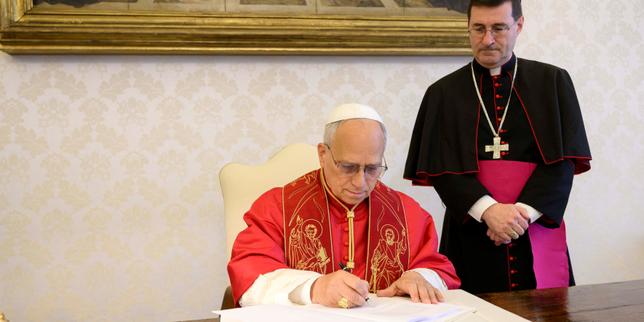
Five hundred miles away, under the soaring frescoes of the Vatican, an elderly man in white silk pens a document about Marie. In similar news, read about: Why Nvidia RTX Spark Is the PC Architecture Shakeup You Actually Need to Care About.
He does not know her name. He knows her condition.
When Pope Francis issued his recent encyclical focusing heavily on the rise of artificial intelligence, many technocrats in Silicon Valley smirked. What does a millennium-old institution built on incense and ancient Latin have to say about neural networks, large language models, and quantum computing? The answer is everything. While the tech industry obsesses over processing speeds, market capitalizations, and the race toward Artificial General Intelligence (AGI), the Vatican looked at the code and saw a profound crisis of the human soul. The Next Web has analyzed this fascinating issue in great detail.
The central warning of the papal message is not a Luddite rejection of technology. It is an alarm bell ringing in an empty hallway. It warns that we are rapidly outsourcing our most sacred human faculty: moral judgment.
The Algorithm Has No Scars
We have built a culture that worships efficiency. We want our deliveries tomorrow, our answers instantly, and our decisions automated. It was only a matter of time before we handed the keys of decision-making over to lines of code. Today, algorithms determine who gets a bank loan, who qualifies for parole, and which resume rises to the top of the stack.
But consider how a machine learns.
An artificial intelligence does not experience the world. It ingests data. It processes past behavior to predict future outcomes. If you feed a machine a million historical court cases corrupted by human prejudice, the machine does not magically become just. It becomes efficiently prejudiced. It sanitizes the bias, wraps it in a veneer of mathematical objectivity, and presents it as truth.
The machine lacks what the encyclical calls "heart"—not the poetic metaphor, but the biological and psychological reality of lived experience. A machine has never known the terror of poverty. It has never felt the sting of humiliation, the warmth of forgiveness, or the fragile hope of a second chance. When an algorithm denies a family a mortgage based on a risk assessment score, it does not see the three jobs the mother works or the community pulling together to support them. It sees a decimal point.
This is the invisible stakes of our current trajectory. We are replacing human wisdom with technical calculation. Wisdom requires reflection, doubt, and the capacity to change one's mind based on mercy. Calculation requires only data points and a strict adherence to rules.
If we allow calculation to govern human destiny, we do not create a smarter world. We create a colder one.
The Illusion of Neutrality
There is a comfortable lie whispered in the boardrooms of tech giants: technology is neutral. A hammer can build a house or break a bone; the hammer itself does not care.
The papal encyclical shatters this myth with surgical precision. Artificial intelligence is not a hammer. A hammer does not possess agency. It does not actively nudge your thoughts, curate your reality, or subtly alter your behavior over time. AI does.
Every piece of software carries the biases, values, and economic incentives of its creators. When an algorithm is designed to maximize user engagement on a social platform, it quickly discovers that outrage is the most profitable human emotion. It did not choose to polarize society; it simply optimized for the metric it was given. The tool is active, not passive. It shapes the user even as the user feeds it data.
Think back to Marie in her windowless room. The system she trains is designed to maximize corporate efficiency. It is built to replace human customer service agents, human writers, and human analysts to drive down overhead costs. The underlying philosophy is that human beings are expensive, flawed, and slow. The machine is cheap, perfect, and instantaneous.
But what happens when we successfully automate human interaction?
Imagine an elderly man living alone in a high-rise apartment. His only daily conversation used to be with the local pharmacist or the grocery delivery driver. Now, an automated drone drops his groceries, and an AI-driven chatbot manages his medication schedule. The chatbot is polite. It uses his name. It remembers his birthday. It never loses its patience.
It is a perfect simulation of care.
But it is a ghost. The man is lonelier than ever, trapped in a hall of mirrors where his loneliness is monetized by a corporation analyzing his conversational prompts to sell him vitamins. The encyclical begs us to see this clearly: a society that replaces human presence with algorithmic simulation is a society in advanced decay.
The Tyranny of the Average
To understand the deepest danger of the AI revolution, we have to understand the concept of algorithmic regression to the mean.
An AI model generates text, art, or decisions by calculating the most statistically probable next step based on its training data. It operates on averages. It loves the predictable. It thrives on the expected.
Human greatness, however, lives entirely in the outliers.
The greatest triumphs of human history—the civil rights movements, the artistic revolutions, the sudden leaps of scientific genius—were profoundly improbable. They were illogical. If an AI had been tasked with predicting the future of American society in 1955, it would never have generated the actions of Rosa Parks. It would have flagged her behavior as a statistical anomaly, an error to be corrected or bypassed.
When we rely on AI to guide our culture, our politics, and our education, we subtly prune away the eccentricities that make us human. We enter a soft totalitarianism of the mediocre. We write the way the machine expects us to write. We paint what the algorithm prefers to display. We think the thoughts that are easiest to categorize.
The Vatican's intervention is a radical defense of the weird, the unpredictable, and the sacredly flawed nature of humanity. It is an insistence that our value lies precisely in the places where we defy calculation.
Reclaiming the Digital Commons
The solution is not to smash the servers. We cannot un-invent the silicon chip, nor should we wish to. The encyclical recognizes that AI possesses immense potential to cure diseases, optimize resource distribution, and alleviate grueling labor.
The battle is not against the technology itself, but against the theological authority we have granted it.
We must strip the machine of its priesthood. This requires an immediate, international framework of regulation that places human dignity as the non-negotiable baseline of all technological development. If an AI system cannot prove that it protects human agency, it should not be deployed.
We must insist on the "human-in-the-loop" principle, ensuring that no life-altering decision—be it legal, medical, or financial—is ever made solely by an autonomous system. There must always be a human being who can look into the eyes of another human being and say, "I am responsible for this decision."
More than regulation, it requires a cultural shift. We must stop treating speed as a virtue and efficiency as a god. We need to cultivate spaces that are intentionally un-optimizable. We need slow conversations, inefficient walks, and the messy, frustrating work of face-to-face community building.
The Light on the Screen
The sun is beginning to rise outside Marie’s call center, casting a pale gray light across the parking lot. Her shift is over. She logs out of the terminal, the glowing interface finally going dark.
She walks out into the crisp morning air, her hands trembling slightly from too much caffeine and too many hours staring into the digital abyss. She reaches into her pocket and pulls out her smartphone. An automated notification pops up, a personalized algorithm telling her the fastest route home based on current traffic patterns.
Marie looks at the screen. Then she looks up at the real street, where a local bakery is just opening its doors. She can smell the fresh bread. She can see the baker, a man she has passed a hundred times but never spoken to, sweeping the sidewalk.
She pockets the phone. She chooses the longer, inefficient path, stepping into the bakery to say hello.