The media is currently hyperventilating over the prospect of a US troop withdrawal from German soil. Pundits paint a picture of a crumbling world order, a defenseless Europe, and a triumphant Kremlin. They are wrong. Most analysts are trapped in a 1990s mindset, treating the presence of 35,000 American service members as a security blanket that can never be washed.
The reality? The US military presence in Germany has become a crutch that actively weakens European defense. It encourages fiscal irresponsibility in Berlin and maintains a geopolitical imbalance that no longer serves American interests. Pulling the plug isn’t an act of isolationism; it is the forced evolution of an alliance that has grown soft and complacent.
The Myth of the Security Gap
The loudest argument against withdrawal is that it creates a "power vacuum." This assumes that without American boots in Rhineland-Palatinate, the continent is essentially an open door. This is a fundamental misunderstanding of modern warfare and regional demographics.
Europe is not a collection of fractured city-states. It is a massive economic bloc with a combined GDP that rivals the United States and dwarfs Russia. The idea that Germany, the industrial heart of Europe, cannot defend its own borders without a permanent American garrison is an insult to German engineering and economic might.
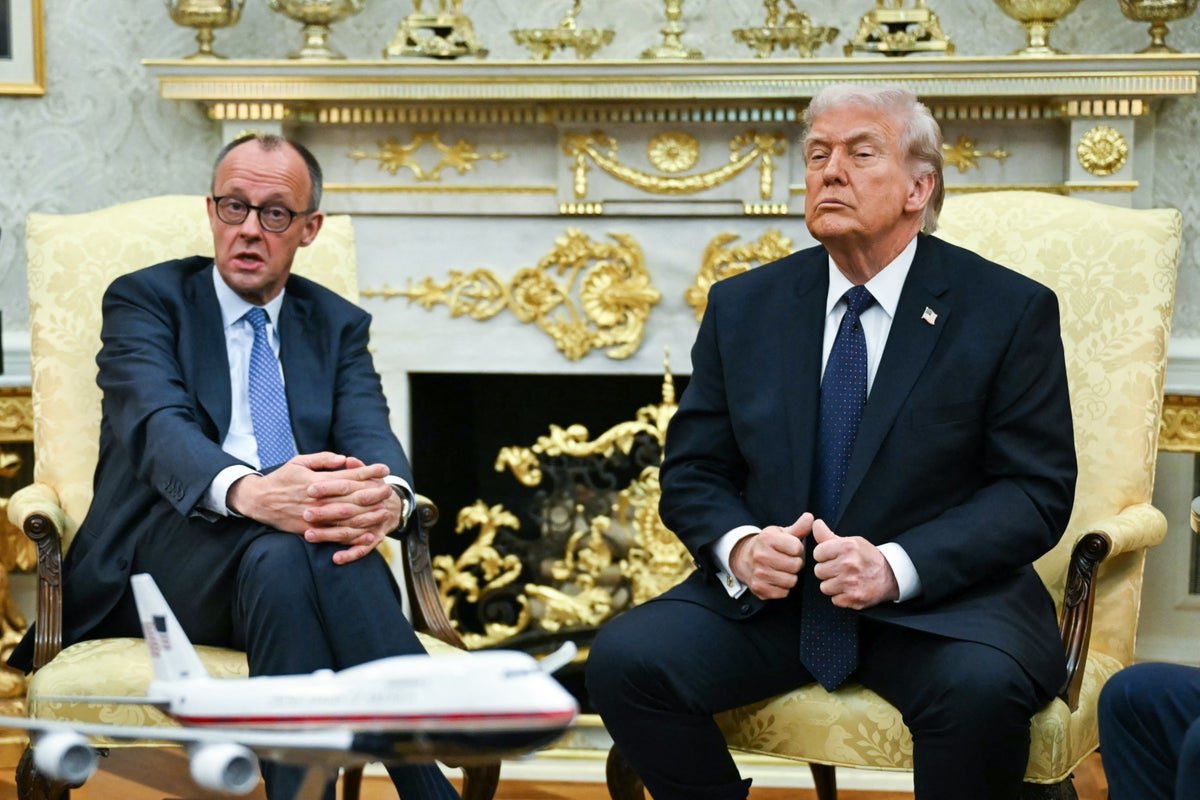
When Chancellor Friedrich Merz took office, the rhetoric shifted toward "European sovereignty." However, rhetoric is cheap. Sovereignty is bought with defense budgets, industrial output, and the political will to lead. As long as the US provides a low-cost security insurance policy, Berlin has zero incentive to actually build a military that works. The "security gap" isn't a lack of soldiers; it’s a lack of necessity. Remove the US troops, and the necessity becomes absolute.
Subsidizing the German Surplus
Let’s talk about the money. For decades, the US has effectively subsidized the German social safety net by footing the bill for regional security. Every dollar the US spends maintaining Ramstein Air Base is a dollar the German government doesn’t have to spend on its own procurement.
In the private sector, if a partner consistently fails to meet their contractual obligations while you continue to provide the service for free, you aren't a partner—you’re a marksman’s target. NATO’s 2% of GDP guideline has been treated as a polite suggestion by Berlin for years. Even with recent increases, the pace of modernization is glacial.
A troop reduction is a cold, hard audit of the transatlantic relationship. It forces a correction in the "free-rider" problem that has plagued NATO since the Cold War ended. By shifting these forces, the US can focus on the Indo-Pacific or more strategic hubs closer to actual points of friction, rather than maintaining a legacy footprint in a country that is effectively a peaceful, wealthy hinterland.
Logistics vs. Optics
Most people think of troop levels as a scoreboard: more troops equals more safety. This is a primitive way to view 21st-century logistics. The US military is no longer a static force meant to hold a line in the Fulda Gap. It is a rapid-response entity.
The value of Germany to the US military isn't about defending German soil; it’s about the infrastructure—hospitals like Landstuhl and transport hubs like Ramstein. You don't need 35,000 permanent residents to maintain a logistical node. You need a skeleton crew and high-speed connectivity.
Moving troops isn't "abandoning allies." It’s optimizing assets. From a purely operational standpoint, having a massive concentration of force in a single, predictable location is a liability in an era of long-range precision strikes. Dispersal is survival.
The Merz Factor and the New Atlanticism
The tension between Washington and Chancellor Merz is often framed as a personality clash. It’s deeper than that. It represents a fundamental shift in how the US views its role as the world's policeman.
The old guard wants to maintain the status quo because it’s comfortable. It’s easy to keep doing what we’ve done since 1945. But the "New Atlanticism" requires a partnership of equals, not a protectorate. Merz has been vocal about a more assertive Europe. Fine. Let him have it.
True partnership requires skin in the game. If Germany wants to be a leader in European affairs, it must lead in the one area it has avoided for eighty years: hard power. A US withdrawal isn't a "clash"; it's an invitation for Germany to finally grow up and occupy its natural position as a regional hegemon.
The Risks of Doing Nothing
The downside of maintaining the current troop levels is far more dangerous than the risks of leaving. By staying, the US enables a cycle of European dependency. We are essentially the parents of a 40-year-old who still lives in the basement and spends his paycheck on hobbies because we pay the rent.
- Atrophy of Will: The longer the US stays, the more the European public believes defense is someone else's problem.
- Strategic Distraction: Every asset tied down in a safe, stable Germany is an asset that isn't countering emerging threats in the Pacific.
- Political Resentment: The presence of foreign troops is a constant talking point for extremist parties on both the left and right in Germany. It fuels anti-American sentiment.
Imagine a scenario where the US moves 15,000 troops to Poland and the Baltic states. Suddenly, the defense of Europe is no longer a theoretical exercise handled in a comfortable base in Stuttgart. It becomes a front-line reality that Berlin cannot ignore.
Stop Asking the Wrong Question
The question isn't "Should we stay or should we go?"
The question is "Why are we still there?"
If the goal is to deter aggression, a mobile, tech-heavy force is more effective than a static infantry presence. If the goal is to support an ally, then we should treat that ally as an adult capable of defending their own house.
The "lazy consensus" says that any withdrawal is a gift to adversaries. I argue that a weak, dependent, and militarily stagnant Europe is a much bigger gift. Strength comes from responsibility. It’s time to hand that responsibility back to its rightful owners.
The era of the American shield is over. It’s time for the European sword.