The air in the Palazzo del Cinema usually smells of salt spray, expensive espresso, and the electric, frantic anxiety of three thousand people holding their breath at once. It is a specific kind of silence. When the lights dim at the Venice Film Festival, the world outside—the cruise ships groaning in the lagoon, the frantic clicking of paparazzi shutters on the Lido—simply ceases to exist. There is only the glow of the screen and the weight of the judgment that follows.
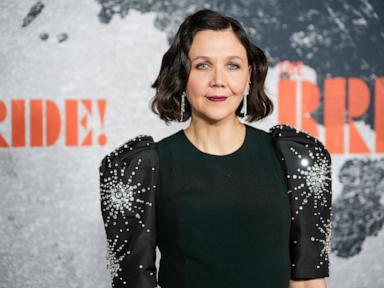
This year, that judgment belongs to Maggie Gyllenhaal.
The announcement that Gyllenhaal will serve as the President of the International Jury for the 82nd Venice International Film Festival isn't just a standard industry promotion. It is a statement of intent. In an era where cinema is often reduced to "content" or "assets" to be consumed on a glowing rectangle in a pocket, Venice remains the high altar of the art form. To lead the jury there is to be the final arbiter of what deserves to be etched into history.
The Weight of the Gavel
Imagine, for a moment, the physical reality of this task. For ten days, Gyllenhaal will sit in the flickering darkness, watching two dozen films from the world’s most ambitious directors. She won’t be watching them as a fan or a casual observer. She will be looking for the soul of the medium.
The jury president isn't just a figurehead. They are the conductor of a very volatile orchestra. Gyllenhaal will lead a panel of diverse, often opinionated filmmakers and actors through closed-door deliberations where tempers flare and artistic philosophies collide. They are tasked with awarding the Golden Lion—the highest honor the festival bestows.
Past presidents like Cate Blanchett or Julianne Moore have spoken about the peculiar haunting that happens in those deliberation rooms. You aren't just picking a "best" movie; you are defining the cultural zeitgeist of the year. You are deciding whose career is catapulted into the stratosphere and whose years of labor will remain a footnote. It is a massive, invisible pressure.
From the Lens to the High Chair
Gyllenhaal’s appointment feels earned in a way that transcends her acting pedigree. We have seen her evolution. She spent decades as the indie darling who wasn't afraid of the jagged edges of the human psyche, from the submissive longing in Secretary to the crumbling exhaustion of a sister in The Dark Knight.
But the real shift—the one that makes her the perfect candidate for the Lido—happened when she stepped behind the camera. Her directorial debut, The Lost Daughter, didn't just premiere at Venice; it stripped the audience bare. It was a film about the "unspoken" parts of motherhood, the parts that aren't pretty or marketable. It won the Best Screenplay award at this very festival in 2021.
She understands the vulnerability of the creator. She knows what it’s like to stand on that stage with a heart hammering against her ribs, waiting to see if a room full of strangers understands the secret she’s been trying to tell them through a lens.
The Politics of the Golden Lion
The Venice Film Festival is the oldest film festival in the world, and it carries that history like a heavy, velvet cloak. It has always been a place where the political and the poetic meet. When Gyllenhaal takes her seat at the center of the jury table, she isn't just looking at cinematography or acting beats. She is navigating a landscape of global narratives.
The Golden Lion has a habit of predicting the future. Whether it was Joker signaling a shift in how we view the "blockbuster" or Nomadland capturing the lonely, fractured heart of modern labor, the jury's choice ripples outward.
Gyllenhaal’s own artistic DNA is rooted in a fierce, intellectual curiosity. She doesn't lean toward the easy answer. In her acting and her directing, she has consistently gravitated toward characters who are difficult to love but impossible to ignore. This suggests a jury that won't play it safe. We can expect a lean toward the visceral, the cerebral, and perhaps the polarizing.
The Invisible Stakes of the Lido
There is a myth that film festivals are just glitz and red carpets. The truth is much more desperate. For many of the international filmmakers arriving in Venice, this is the only shot they have. A nod from Gyllenhaal’s jury can mean the difference between a film getting a global distribution deal or disappearing into a digital vault, never to be seen again.
Think of the hypothetical young director from an emerging cinema market—someone who mortgaged their life to finish a film. To them, Maggie Gyllenhaal isn't just a movie star. She is the gatekeeper.
She carries the hopes of the outliers. Her career has been defined by a refusal to fit into the "starlet" mold. She has been the outsider, the provocateur, and the intellectual. Now, she is the establishment, but an establishment that feels like it still has dirt under its fingernails from the actual work of making art.
The Quiet Power of the President
The role of Jury President is often a balancing act. You have to find a consensus among people who might have fundamentally different ideas about what "good" means. One juror might value technical perfection; another might only care about the emotional gut-punch.
Gyllenhaal has always possessed a certain stillness. Watch her in any interview or any scene; she listens with her whole body. That is the skill that will be most tested in the coming months. She has to hear what the films are saying, and then she has to hear what her fellow jurors are screaming—or whispering.
The festival directors, led by Alberto Barbera, chose her because she represents the bridge between Hollywood’s prestige and Europe’s avant-garde. She is the rare talent who is equally comfortable at an Oscar luncheon and a gritty, experimental screening in a basement in Berlin.
The Lights Go Down
When the 82nd edition kicks off, the eyes of the world will be on the red carpet. They will see the gowns, the tuxedos, and the flashbulbs reflecting off the Adriatic. But the real story will be happening in the dark.
It will be happening in the silence between Maggie Gyllenhaal and the screen. It will be in the notes she scribbles in the dim light and the way she looks at a frame and sees the ghost of the person who made it.
She is no longer just a performer or a director. For one brief, intense window of time, she is the protector of the flame. She is the one tasked with making sure that in a world of endless noise, the right voices are finally heard.
The Golden Lion is waiting. And Maggie Gyllenhaal is ready to decide who gets to carry it home.