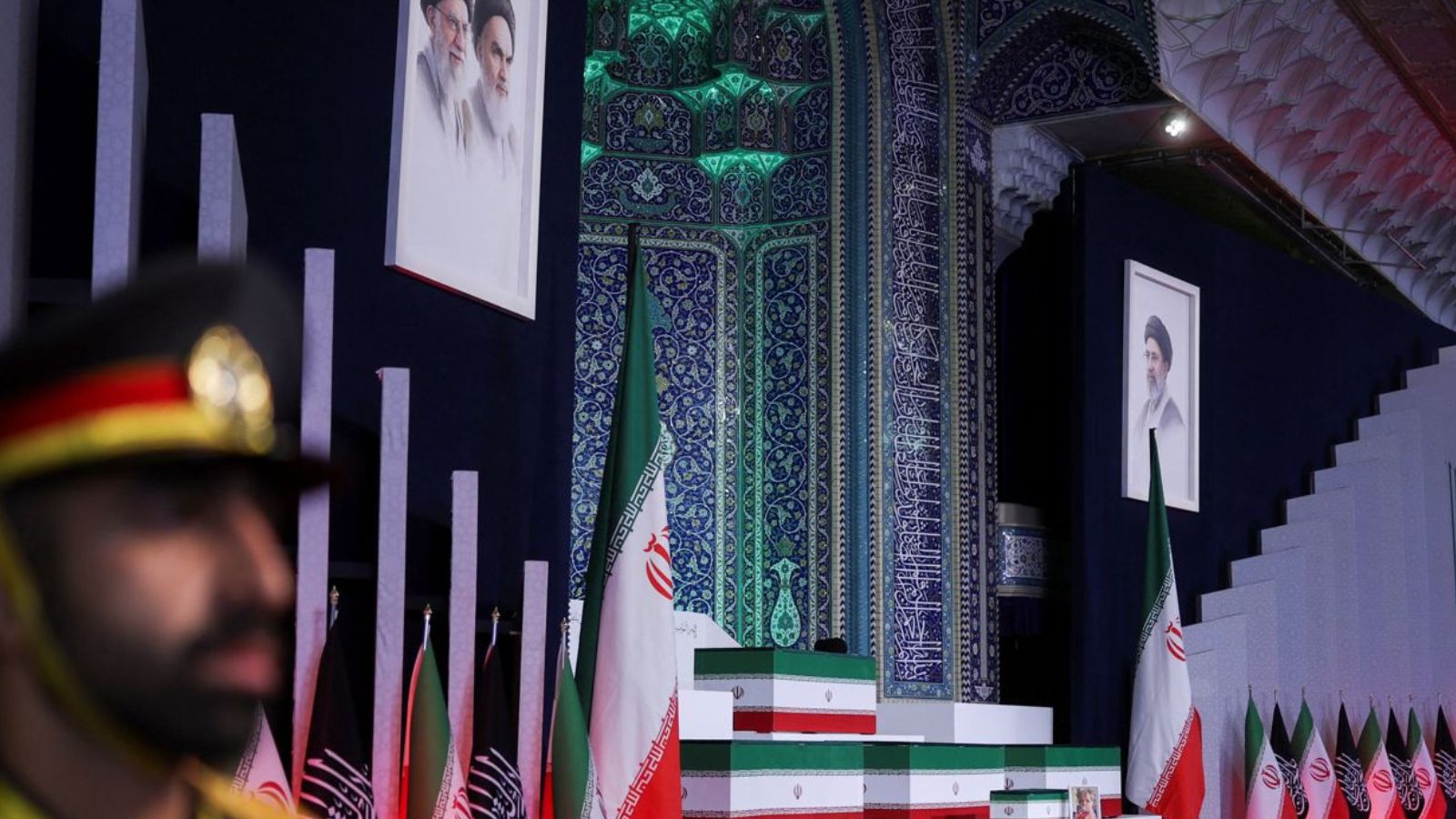
Four months after joint U.S. and Israeli precision airstrikes decapitated Iran's leadership, the Islamic Republic is moving ahead with a massive, multi-day state funeral for its late Supreme Leader, Ayatollah Ali Khamenei.
If you're trying to figure out why a burial originally scheduled for March is only happening now, you aren't alone. The active war situation forced Iran to delay the event. Now, an uneasy ceasefire and a temporary de-escalation in the Strait of Hormuz have given the regime enough breathing room to orchestrate a massive public demonstration. This isn't just a burial. It's a high-stakes political theater designed to project power, show that the regime can still command the streets, and signal continuity under his son and successor, Mojtaba Khamenei.
The geopolitical weight of this event is enormous. Millions of regional participants are flooding into Iran. Major international delegations are arriving under heavy security. Let's break down the actual schedule, the logic behind the multi-city tour, and why India is sending a balanced diplomatic team to navigate this explosive regional dynamic.
The Full Funeral and Route Itinerary
Iran's National Funeral and Farewell Ceremony Committee has planned a grueling six-day schedule spanning five cities across two countries. This regional tour serves a dual purpose. It satisfies the immense religious devotion of regional Shia populations and acts as a massive logistics test for a post-war Iranian state.
- July 3 to July 4 (Friday – Saturday): The public farewell ceremonies kick off at the Imam Khomeini Grand Mosalla Complex in Tehran. Foreign dignitaries and elites began paying their respects on Friday afternoon.
- July 5 (Sunday): The bodies of the late Supreme Leader and family members killed in the same strike—including his daughter and granddaughter—remain in state at the Mosalla for a second day of public mourning.
- July 6 (Monday): The main public funeral procession takes place through the streets of Tehran. The capital's Grand Bazaar, local gyms, and businesses face mandatory closures to clear paths for expected crowds.
- July 7 (Tuesday): The procession moves to the holy city of Qom. Public prayers will be offered over the casket by senior religious scholars, anchoring the new leadership's legitimacy within the theological establishment.
- July 8 (Wednesday): In a massive logistical twist, the body travels to Iraq. Yielding to months of persistent requests from Iraqi Shia tribes and political leaders, the funeral train heads to the holy shrines of Najaf and Karbala. The Iraqi government is coordinating the tight security timeline for these processions.
- July 9 (Thursday): The tour concludes back in Iran. The final burial ceremony will take place at the Imam Reza Shrine in Mashhad. This aligns with the eve of the martyrdom anniversary of Imam Sajjad, a highly symbolic date for the regime.
India Balanced Diplomatic Strategy
Prime Minister Narendra Modi received a direct, personal invitation from Iranian President Masoud Pezeshkian to attend the funeral. He didn't go. Officially, the Prime Minister's pre-planned diplomatic itinerary to Indonesia, Australia, and New Zealand made an appearance impossible. But look closer and you see a masterclass in strategic autonomy.
Delhi isn't ignoring Iran, but it isn't alienating Washington or Tel Aviv either. Instead, India sent a carefully calibrated, high-level delegation reflecting its deep ties to Tehran and its large domestic Shia population.
Bihar Governor Syed Ata Hasnain and Minister of State for External Affairs Pabitra Margherita are leading the official government delegation. They flew out of Delhi on a special state flight to offer formal floral tributes.
The political representation doesn't stop with the ruling party. The Iranian regime cast a wide net with its invitations, reaching out to opposition leaders to ensure a broad display of diplomatic solidarity. While Congress President Mallikarjun Kharge declined due to schedule conflicts, he specifically nominated former External Affairs Minister Salman Khurshid to fly out as his personal representative.
Prominent regional figures from Jammu and Kashmir are also participating. People's Democratic Party (PDP) President Mehbooba Mufti accepted her invitation, calling it a historic opportunity to pay respects. Aga Syed Hassan Mosavi Al Safavi, president of the J&K Anjuman-e-Sharie Shian, joins the delegation to carry the sentiments of India's Shia community.
The Geopolitical Stakes in Tehran
Iran's rulers claim this funeral is a direct referendum on the survival of the Islamic Republic. They're trying to outdo the historic 1989 funeral crowds of Ayatollah Ruhollah Khomeini, bragging to state media that they've prepared 50 million loaves of bread, 5,000 mosques, and hundreds of schools to handle up to 35 million regional pilgrims. They've even laid free fiber-optic internet hubs across Tehran to keep communication lines open.
But look beneath the official propaganda, and the internal fractures are bleeding through. The economy is absolutely devastated by the recent war. Many ordinary, non-religious Iranians are furious about the astronomical costs of this week-long spectacle. Security forces remain on high alert, terrfied of both potential stampedes and sudden domestic anti-regime protests, which were violently suppressed just six months ago.
Furthermore, a massive question mark hangs over the new Supreme Leader, Mojtaba Khamenei. Wounded in the very strikes that killed his father, the younger Khamenei hasn't been seen in public since inheriting power on March 8. State media hints he might skip the public processions altogether due to extreme security risks.
While the U.S. and Iran have agreed to a temporary de-escalation in the Strait of Hormuz to let the funeral proceed, the region remains a powder keg. Representatives from Russia, China, Pakistan, and Qatar are watching every movement in Tehran this week. How this funeral plays out over the next six days will tell us everything we need to know about the stability of Iran's new regime.
If you are tracking international reactions or security updates regarding the ongoing state processions, monitor the official updates from the Ministry of External Affairs or follow verified regional press dispatches out of Tehran and Baghdad.