You've probably heard that the crisis in Xinjiang is winding down. The headlines have faded. The mass internment camps that dominated global news cycles a few years ago are mostly quiet, some even dismantled or converted. Beijing wants you to believe the "vocational training" experiment is over and peace has returned to northwest China.
It's a lie.
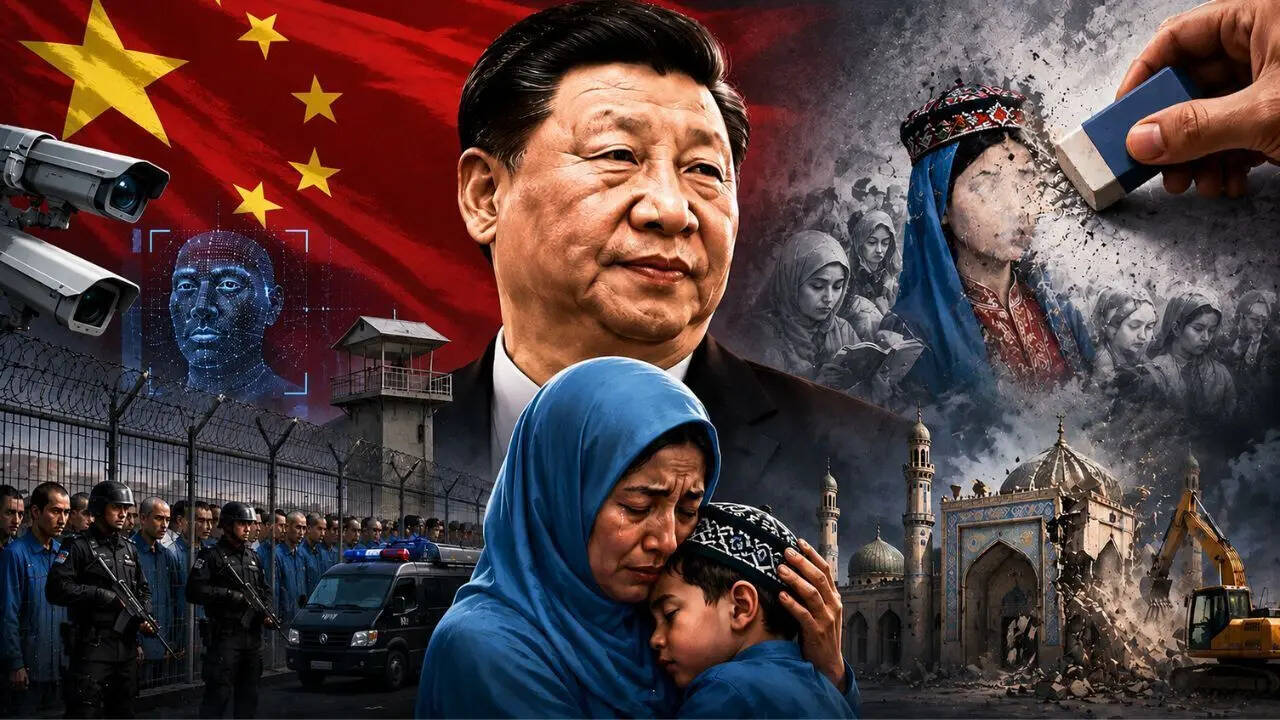
The reality is much quieter, and far more terrifying. The campaign against the Uyghurs hasn't stopped; it has evolved. We've entered a new, deeply calculated phase of social engineering designed to erase an entire culture from the inside out, without the messy optics of razor-wire camps. Beijing traded mass detention for legal assimilation, family separation, and total linguistic erasure.
If you think the threat has passed, you're missing the true scope of what's happening right now in 2026.
The Illusion of Empty Camps and the Reality of Permanent Prisons
Let's look at the numbers because they don't lie. While the temporary "re-education" centers have seen a reduction in foot traffic, the formal judicial system has picked up the slack.
Data compiled by researchers shows a massive spike in formal prison sentences. Between 2017 and 2022, official Chinese data revealed that over 578,000 people were prosecuted in Xinjiang. With a conviction rate that practically sits at 100%, those people didn't go home. They went to actual prisons.
An analysis by the Financial Times tracked 579 detention compounds across the region. The state still boasts an active prison and detention capacity for roughly 627,000 people. That means one in every 40 residents in Xinjiang can be locked away simultaneously.
The strategy shifted from temporary brainwashing to permanent criminalization. If a Uyghur citizen had a religious text, a map, or even just fitness equipment that local authorities deemed suspicious, they weren't sent to a camp for a few months. They were handed a ten-year prison sentence for terrorism or "picking quarrels."
The camp system was a shock to the system. The current prison network is a permanent fixture of life.
Stealing the Cradle Through Total Boarding School Enrolment
You can't destroy a culture just by locking up adults. You have to stop the culture from passing to the next generation. That's exactly what the state is doing through a sweeping, aggressive expansion of mandatory boarding schools.
In southern Xinjiang, where the Uyghur population is most concentrated, government documents reveal a chilling reality. In some counties, up to 90% of children are enrolled in these state-run institutions. We aren't talking about high schoolers. This system targets preschoolers. Toddlers are being separated from their parents at the most formative stages of life.
Inside these schools, the native tongue is effectively dead. Mandarin is the mandatory, exclusive language of instruction. Kids lose their native vocabulary in a matter of months. Linguist Abduweli Ayup has documented how quickly these young children lose the ability to communicate with their own grandparents.
It's a deliberate, systematic severing of the linguistic thread that connects these families. When you control what a child speaks, you control how they think.
The Nationwide Legalization of Forced Assimilation
If you want to know where this is going next, look at the legislation passed just months ago. On March 12, 2026, China’s National People’s Congress adopted the new "Law on Promoting Ethnic Unity and Progress," set to take effect on July 1, 2026.
This isn't a regional policy anymore. This law codifies forced assimilation at the national level. UN experts have already sounded the alarm, warning that the law transforms what used to be local, experimental crackdowns into binding nationwide obligations.
What does this mean on the ground? It gives the state the absolute right to define what counts as "acceptable cultural expression." It explicitly promotes the "change of conventions" and "new trends," which is code for erasing traditional Uyghur customs, dress, and community gatherings.
Even worse, Article 54 of this new law gives citizens the explicit right to report on neighbors or family members who "undermine ethnic unity." It turns everyday citizens into state informants, embedding paranoia into the living rooms of every minority family.
Erasing the Physical Landscape of Faith
Faith used to be visible in Xinjiang. Not anymore. The Mosque Rectification Program has systematically scrubbed Islamic architecture from the landscape.
Over 100 major mosques have been completely flattened or stripped of their defining features since the campaign escalated. Domes are torn down. Minarets are leveled. Arabic script is replaced with Communist Party slogans.
The prominent scholar Rahile Dawut, who disappeared into the state's custody, once remarked that if you remove these shrines and mosques, people lose contact with the earth. They lose their history.
That's the point. By destroying neighborhood mosques and locking up local imams—who make up a disproportionate percentage of those serving long prison terms—the state channels the remaining religious population into a few heavily monitored, state-run facilities. Religion doesn't happen organically anymore. It happens under the gaze of a facial-recognition camera.
How to Track and Respond to the New Phase of Repression
The days of looking for sprawling camp construction on satellite imagery are mostly over. To understand the crisis today, you need to look at different indicators.
If you want to monitor or take action against this crisis, focus your attention on these three areas:
Supply Chain Audit Inspections
Stop looking just for factory floor coercion. Examine the corporate ties to state-run boarding school funding and construction. Companies operating in China must prove their regional supply chains aren't benefiting from the structural displacement of Uyghur families.Support Diaspora Documentation Initiatives
Organizations like the Xinjiang Victims Database rely on public crowdsourcing and open-source intelligence to track individuals who transition from camps to formal prisons. Contributing to or funding these registries keeps the pressure on global policymakers.Advocate against Transnational Repression
The 2026 Ethnic Unity Law explicitly includes provisions (like Article 63) to target critics outside of China. Watch for increased surveillance, digital harassment, and intimidation of Uyghur activists in your own country, and demand local law enforcement treat transnational harassment as a severe national security issue.
The silence coming out of Xinjiang isn't peace. It's the sound of a culture being systematically dismantled under the cover of law.