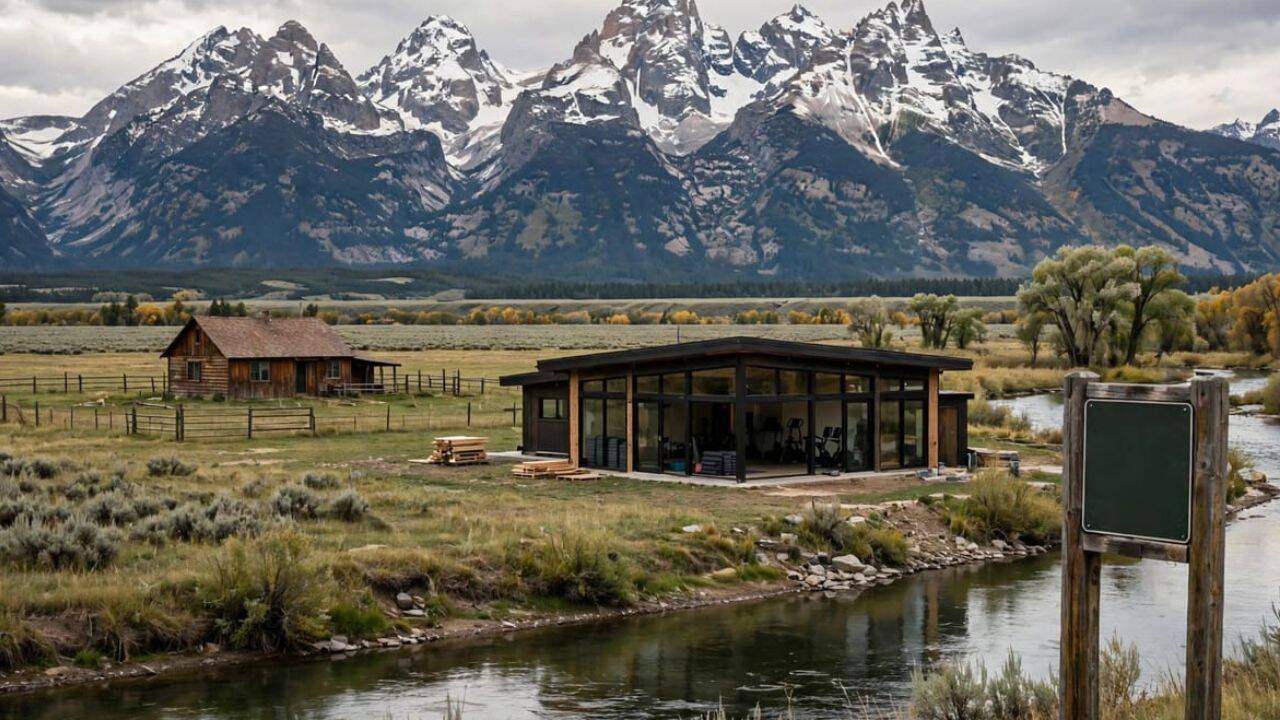
Can you build a guest house without a kitchen on land governed by a conservation easement and claim it isn't a real residence? A Wyoming landowner tried that exact argument, and a federal appeals court shut it down completely.
The dispute centers on a classic rural property battle in the American West. Landowners love the massive tax breaks that come with conservation easements, yet they frequently chafe at the building restrictions attached to those deals decades later. When a Wyoming landowner's kitchenless guest house claim was rejected by a federal appeals court, it sent a clear warning to property owners everywhere who think creative floor plans can outsmart strict land-use contracts.
What Actually Happened in the Wyoming Guest House Dispute
Conservation easements are binding legal agreements that permanently limit uses of the land to protect its conservation values. They stay with the property forever, even when the land sells to a new buyer.
In this Wyoming case, the property was encumbered by a conservation easement that strictly capped the number of residential structures allowed on the parcel. The landowner wanted to add another building—a structure intended for guests—without violating the residential cap. To get around the restriction, the owner left out a kitchen. The legal theory was simple enough on paper. If a building doesn't have cooking facilities, it isn't a dwelling or a residence under standard building codes, which means it shouldn't count toward the easement's strict limit on houses.
The land trust holding the easement didn't buy it. Neither did the lower federal court, and the federal appeals court backed them up.
Judges look at the plain meaning and overall intent of conservation contracts rather than technical loopholes. A building designed for people to sleep in, relax in, and stay overnight functions as living quarters. Stripping out a stove and a refrigerator doesn't magically turn a guest cabin into an agricultural barn or a tool shed.
Why the Kitchenless Loophole Fails in Federal Appeals Courts
Property owners try this trick all the time. I've seen landowners argue that a structure is an "art studio," a "writer's cabin," or a "storage loft" simply because it lacks a full kitchen or a 220-volt stove hookup.
Courts rarely fall for it, and there are three big reasons why this defense collapses under scrutiny.
- Intent overrides plumbing and appliances. Federal courts interpret conservation easements using state contract law principles. In Wyoming, as in most states, courts look at the four corners of the document to determine what the original parties intended to protect. If the easement aims to limit human footprint and residential density, adding sleeping quarters defeats that purpose regardless of where guests eat breakfast.
- Accessory structures have strict definitions. Most easements allow agricultural outbuildings—like hay barns, tack rooms, or equipment sheds—because those structures support working landscapes. A guest house with bedrooms and bathrooms clearly serves human habitation, not cattle ranching.
- Precedent favors conservation goals. Over the last twenty years, appellate courts have consistently ruled against technical workarounds that expand residential square footage on protected land. Allowing a kitchenless house would open the floodgates for landowners to build sprawling "bunkhouses" and "pool houses" that function just like extra homes.
Honest assessment? Trying to beat a land trust on a technicality like missing kitchen cabinets almost always burns through six figures in legal fees just to end up with a court order forcing you to tear the building down or gut the interior.
How Conservation Easements Actually Restrict Building Rights
To understand why the federal appeals court took such a hard line, you have to look at how these easements work in the real world. Wyoming has millions of acres under conservation easements, held by groups like the Wyoming Stock Growers Land Trust, The Nature Conservancy, and the Jackson Hole Land Trust.
When a landowner donates or sells a conservation easement, they give up specific development rights—most notably the right to subdivide the land or build additional houses. In exchange, the original owner often receives substantial federal income tax deductions under Internal Revenue Code Section 170(h), along with lower estate taxes.
The Building Envelope Trap
Almost every modern conservation easement designates a specific "building envelope." This is a mapped-out area—maybe two to five acres out of a thousand-acre ranch—where all residential structures must sit.
Even inside that building envelope, the contract usually specifies:
- The maximum number of primary residences allowed.
- Whether a secondary guest house is permitted at all.
- Hard caps on total square footage across all habitable buildings.
- Strict prohibitions on commercial rentals or short-term vacation stays.
If your deed says "one single-family residence," you get one house. You don't get one house plus a kitchenless guesthouse, a detached mother-in-law suite, and a luxury bunkhouse.
Why Local Zoning Definitions Don't Save You
A common mistake landowners make is pulling definitions from county zoning ordinances or the International Residential Code (IRC). Under many local municipal codes, a "dwelling unit" is legally defined as a building containing permanent provisions for living, sleeping, eating, cooking, and sanitation.
Landowners look at that checklist and think they've found a golden ticket. Take out the cooking element, and it's not a dwelling unit!
That logic completely misses the difference between public zoning laws and private restrictive covenants. County zoning sets the bare minimum floor for public safety and land use. A conservation easement is a private, voluntary contract that imposes much stricter rules than county law. Even if Teton County or Sheridan County lets you build a kitchenless studio without a residential permit, your private easement contract still blocks it.
Common Mistakes Buyers Make With Restricted Western Land
If you're shopping for ranch land or recreational acreage in Wyoming, Montana, or Colorado, you're going to run into conservation easements. They're everywhere. And buyers routinely walk into expensive legal traps because they don't read the fine print before closing.
Assuming you can negotiate changes later. People often buy restricted land thinking they'll just call the land trust after closing and ask for an amendment to add a guest cabin. Land trusts are bound by federal tax law and strict accreditation standards from the Land Trust Alliance. They literally cannot grant amendments that give away private benefits or weaken conservation values without risking their nonprofit tax status.
Relying on real estate agent summaries. Listing descriptions frequently say things like "room for a guest house" or "great spot for a cabin" without checking whether the easement's square footage cap is already maxed out by the main house. Never trust a marketing flyer over the recorded deed.
Ignoring baseline documentation reports. When an easement is created, the land trust compiles a massive Baseline Documentation Report filled with photos, maps, and inventories of every existing fence, shed, and cabin on the property. If a building isn't in that report and isn't explicitly authorized by the deed, the land trust will spot it on their annual aerial or on-site inspection.
What You Should Do Before Building on Easement Land
If you already own land with a conservation easement—or you're under contract to buy a parcel—don't guess what you're allowed to build. Guessing is how people end up in federal appeals court.
Pull the recorded Grant of Conservation Easement from the county clerk's office and read the exact definitions section. Look closely at how the document defines "structure," "residence," "habitable space," and "agricultural building." Pay close attention to whether the restriction limits the number of buildings or the total square footage of all structures combined.
Before you hire an architect or pour a concrete slab, submit formal written plans to the easement holder. Almost every conservation easement includes a mandatory notice-and-approval clause requiring you to get written sign-off from the land trust before starting construction. Getting a written approval letter protects you from future litigation, whereas asking for forgiveness after framing a kitchenless guest house will almost certainly land you on the losing side of a federal judgment.


