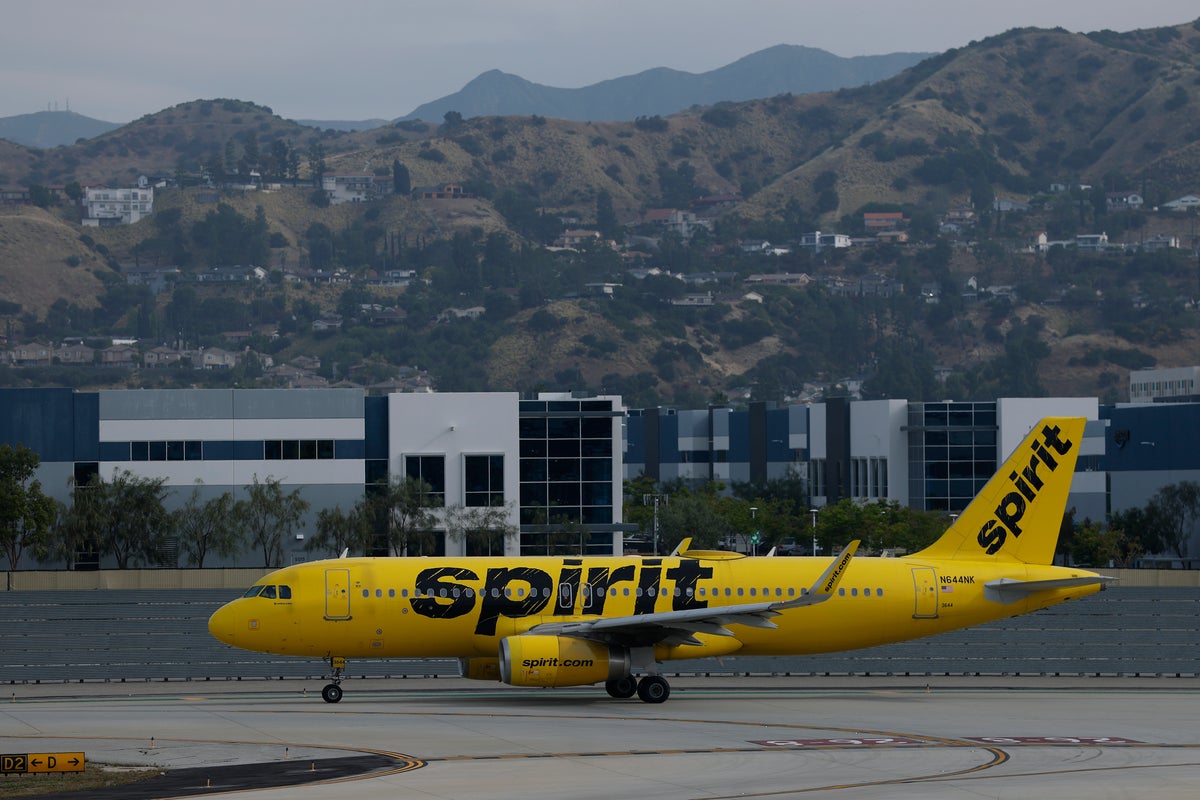
The cabin of a Spirit Airlines Airbus A320 is rarely described as a cathedral, but for a college student heading home for Thanksgiving or a grandmother visiting a newborn in Fort Lauderdale, those bright yellow seats represent something holy: access. They represent the democratization of the clouds. Now, that yellow paint is chipping. The engines are cooling. The math has finally become more turbulent than the flights themselves.
Spirit Airlines is currently staring into the abyss of liquidation, a corporate death spiral that has forced its leadership to knock on the door of the Trump administration with a plea for an emergency bailout. The catalyst is a familiar villain—soaring fuel costs—but the tragedy is far more complex than a simple gas bill. This is a story of a business model built on razor-thin margins finally meeting a world that has grown too expensive to inhabit.
Consider Sarah. She is a hypothetical passenger, but she exists in every terminal in America. She’s a freelance graphic designer who hasn't seen her parents in two years because her rent in Queens ate her savings. She finds a $49 fare to Florida. She knows she’ll be charged for water. She knows her knees will hit the seat in front of her. She doesn't care. To Sarah, Spirit isn't a "budget carrier." It is a bridge.
If Spirit disappears, that bridge collapses.
The Mathematics of Gravity
The airline industry has always been a high-stakes gamble played with kerosene and prayer. But for Spirit, the gamble was specific: keep the base fare lower than a dinner for two and make up the difference in "ancillary revenue." Every checked bag, every printed boarding pass, and every "Big Front Seat" upgrade was a brick in the wall keeping the company afloat.
Then the world changed.
Global instability and supply chain hiccups sent the price of jet fuel screaming upward. For a legacy carrier like Delta or United, these spikes are painful but manageable through diverse revenue streams and corporate contracts. For Spirit, fuel isn't just an expense. It is the predator. When the price of a barrel of oil rises, the "ultra-low-cost" model begins to look like a suicide pact. You cannot sell a ticket for $39 when the fuel required to move that seat costs $45.
The company is now facing the very real prospect of liquidation. This isn't a reorganization where they come out leaner on the other side. This is the "everything must go" sale. The planes get sold to competitors. The routes vanish. The 12,000 employees—the flight attendants who have mastered the art of the witty safety briefing and the mechanics who keep aging birds in the air—face a cold, immediate silence.
A Plea to the Oval Office
The request for a bailout from the Trump administration isn't just about money. It is a desperate bid for time. The airline is arguing that its collapse would create a monopoly for the "Big Four" carriers, leading to a vertical spike in ticket prices across the entire industry. They are positioning themselves not as a failing business, but as a public utility for the working class.
There is a bitter irony here. Spirit tried to save itself through a merger with JetBlue, a deal that was blocked by the Department of Justice on the grounds that it would hurt competition. The government argued that by absorbing Spirit, JetBlue would remove the lowest price point from the market. Now, by blocking that merger, the government may have inadvertently ensured that the lowest price point disappears anyway—leaving behind nothing but a carcass and higher fares for everyone else.
Imagine the boardroom in Florida right now. The air is thick with the scent of cheap coffee and expensive panic. Executives are staring at spreadsheets where the red ink looks like a crime scene. They aren't just looking at fuel costs; they are looking at a debt load that has become a millstone. They are asking the federal government to step in and stop the bleeding, citing the "essential" nature of their service.
But bailouts are politically radioactive. To the critic, this is rewarding a "bottom-feed" business model that failed to prepare for a rainy day. To the supporter, this is about the single mother who needs to fly to a funeral and can't afford a $600 seat on a legacy carrier.
The Invisible Stakes of the Budget Sky
We often joke about Spirit. We laugh at the "extra" fees and the tight seating. But those jokes are a luxury of the middle class. For a significant portion of the American population, the "unbundled" fare was the only way to participate in the modern world.
When an airline like Spirit faces liquidation, the ripple effect moves through the economy in ways we don't immediately see. Regional airports in cities like Myrtle Beach or Latrobe, Pennsylvania, rely on these yellow planes for their very existence. Small businesses near those gates—the newsstands, the car rental counters, the local cafes—live and die by the Spirit flight schedule.
If the bailout doesn't come, those airports go quiet. The "Spirit Effect"—the phenomenon where legacy carriers drop their prices to compete with the budget guy—evaporates. Suddenly, the $400 flight to see a dying relative becomes an $800 flight. People stay home. Connections are lost. The world becomes a smaller, more expensive place.
The technical reality is bleak. Spirit has been losing money for years, struggling to find its footing in a post-pandemic economy where travelers are suddenly willing to pay more for comfort. The "revenge travel" trend favored the luxury carriers. People wanted the champagne, not the nickel-and-dime experience. Spirit was left holding a bag that no one wanted to pay $35 to carry.
The Human Cost of a Cold Engine
Think of the pilots. They spent years and hundreds of thousands of dollars in training to sit in those cockpits. They are not just "bus drivers in the sky." They are professionals who navigate storms and mechanical glitches to get people home. In a liquidation scenario, they don't just lose a job; they lose their seniority, their career trajectory, and their stability in an industry that is notoriously unforgiving.
Think of the ground crews in the heat of Las Vegas or the humidity of Orlando. They are the ones who feel the brunt of passenger frustration when things go wrong. They are now working in the shadow of a giant question mark. Every time they wave a plane toward the runway, they have to wonder if it's the last time they’ll wear that uniform.
The Trump administration now faces a choice that defines the tension of modern American capitalism. Do you save a company to protect the consumer's wallet, or do you let the market's "creative destruction" take its course? If you save Spirit, you set a precedent that any airline with a bad quarter can come to the taxpayer for a lifeline. If you let it die, you tell the Sarahs of the world that flight is once again a privilege for those with "real" money.
The numbers on the balance sheet are stagnant, but the reality on the ground is vibrating with anxiety. Fuel prices continue to hover like a vulture. Debt payments are looming like a storm front.
The yellow planes are still flying for now. You can see them from the highway, bright spots against the blue, carrying people to weddings, to jobs, to new lives, and to final goodbyes. But the engines are sounding a different note lately. It’s a lower, more desperate hum. It is the sound of a company running out of air, praying for a gust of wind from Washington to keep them from hitting the hard, unforgiving earth.
The tragedy isn't just in the bankruptcy filing. It’s in the silence that follows when a bridge is burned because we couldn't agree on who should pay for the tolls.