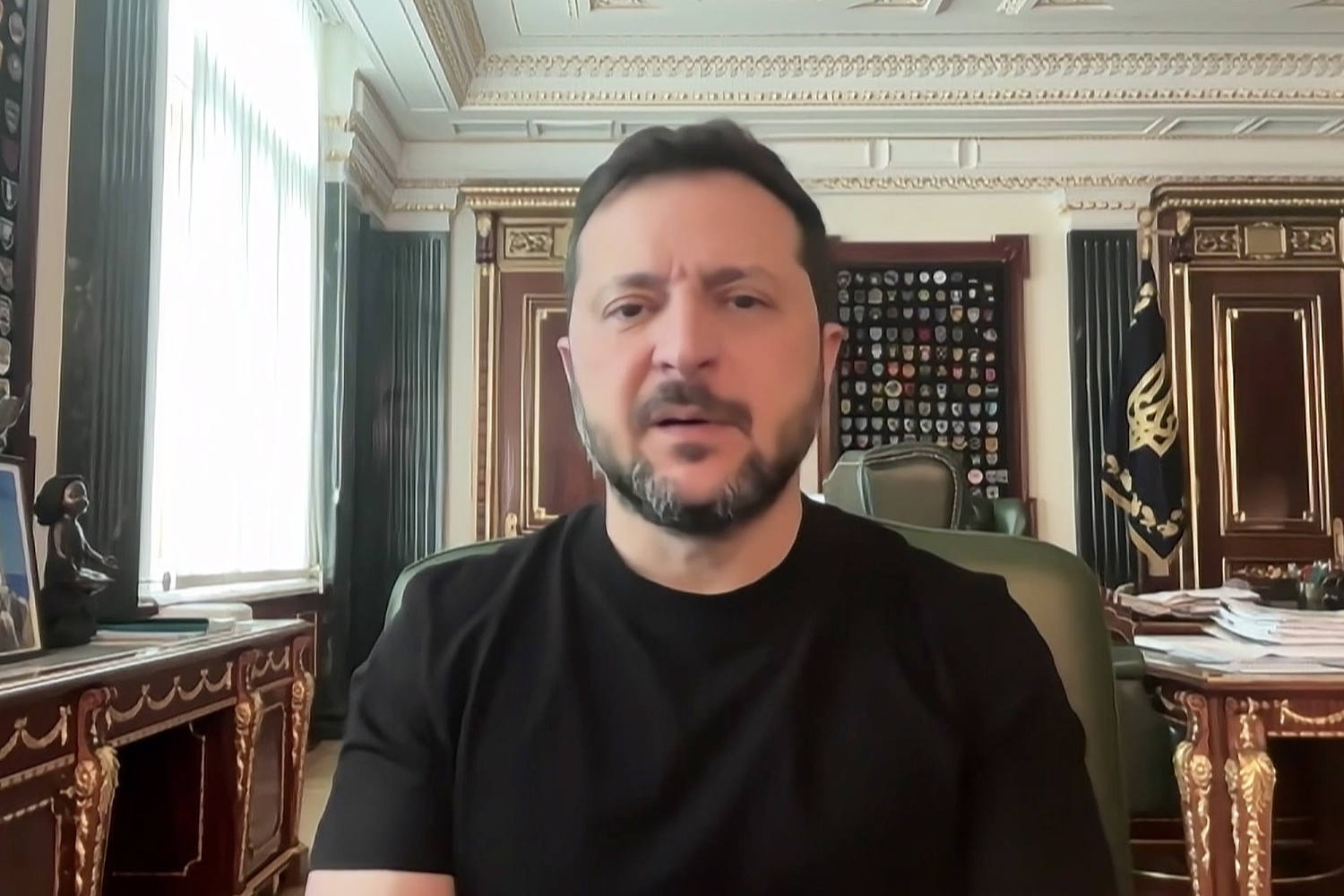
Volodymyr Zelenskyy has repeatedly warned that any shift by Washington toward Moscow’s narrative or demands would be a historic mistake with consequences far beyond Eastern Europe. For Kyiv, the core danger is not merely losing a diplomatic ally at the negotiating table. It is watching the post-Cold War rulebook against territorial conquest get rewritten in real time, turning sovereign borders into bargaining chips for great-power accommodation.
When a wartime president reaches for the phrase "historic mistake," he is usually speaking to two audiences at once. The first is the immediate circle of policymakers in Washington weighing sanctions relief, aid conditionality, or pressured ceasefire terms. The second is history itself, which tends to judge statesmen not by the neatness of their diplomatic compromises, but by whether those compromises planted the seeds of a larger war.
The Strategic Fear Behind Kyiv’s Warning
To understand why Zelenskyy frames U.S. alignment with Vladimir Putin’s priorities as a generational error, look at what a tilt toward Moscow actually entails in practice. It rarely arrives as a formal treaty proclaiming friendship with the Kremlin. More often, it takes shape through incremental concessions: pressing Ukraine to trade unoccupied or contested territory for promises of security, narrowing the path to NATO membership, easing economic pressure on Russian energy and finance, or echoing Moscow’s framing that the war is a regional border dispute rather than an assault on sovereignty.
From Kyiv’s vantage point, every one of those steps rewards coercion. If borders can be redrawn through sustained military attrition and political exhaustion, the deterrence that kept European frontiers relatively stable for decades erodes. Smaller states from the Baltic to the Indo-Pacific take notice. A security guarantee or international norm only holds weight when major powers enforce it even when enforcement becomes expensive and politically unpopular.
There is also a domestic survival calculation that outsiders sometimes overlook. For Zelenskyy, accepting terms widely seen in Ukraine as capitulation to Putin is not just a policy choice; it threatens internal cohesion, legitimacy, and the morale of troops holding trenches under relentless drone and artillery fire. Calling a U.S. tilt toward Moscow a historic mistake is a way of raising the stakes before concessions harden into reality.
Credibility Travels Faster Than Weapons
Washington’s leverage in global crises has always rested on a combination of material power and perceived reliability. Munitions and intelligence matter enormously on the battlefield. Yet allies and adversaries alike constantly read the political signals coming out of the White House and Congress.
If Washington appears eager to accommodate a leader who invaded a neighbor and staged sham annexations, allies across Europe and Asia begin hedging. Some may spend more on their own defenses or seek bilateral insurance policies. Others may conclude that American commitments carry expiration dates tied to electoral cycles. Once credibility erodes, rebuilding it takes years of costly proof, and sometimes even that is not enough.
Why Washington Debates Accommodation
A veteran observer of foreign policy knows that warnings about historic mistakes rarely stop arguments driven by domestic politics and resource fatigue. In Washington, debates over Ukraine and Russia are shaped by competing theories of risk, not simply goodwill or ill will toward Kyiv.
One camp argues that prolonged conflict carries escalating dangers—nuclear brinkmanship, industrial strain on Western defense stockpiles, and a diversion of attention and hardware from other theaters such as East Asia. Proponents of a negotiated settlement often contend that wars end through compromise rather than total victory, and that pushing for maximalist goals risks an open-ended quagmire with no clear exit.
Another camp sees accommodation with Putin as an illusion that invites greater instability. In this view, regimes built on grievance and revisionism treat concessions as proof of Western weakness rather than signs of statesmanship. History offers mixed lessons here, which is precisely why the argument persists. Diplomats can point to cases where hard-nosed bargaining froze a conflict and prevented escalation, while critics point to appeasement episodes where buying short-term quiet only raised the price of eventual confrontation.
The Trap of Misreading Moscow’s Intentions
A recurring flaw in foreign policy analysis is projecting Western cost-benefit logic onto a leadership operating under different incentives. Observers in capitals far from the front lines often assume that if costs rise high enough, or if a face-saving off-ramp is offered, Moscow will settle for a stable equilibrium.
That assumption frequently misses how authoritarian power is maintained. For the Kremlin, external struggle and grievance serve internal control functions that quiet diplomacy can disrupt. Even when tactical pauses or ceasefires are attractive for regrouping forces or splitting Western unity, long-term objectives rarely vanish overnight simply because a Western envoy proposes a compromise.
Consider a hypothetical example to see how negotiation dynamics can tilt. Suppose a mediator proposes freezing front lines in exchange for vague security assurances and partial sanctions relief, without binding enforcement mechanisms. On paper, both sides stop shooting and claim a diplomatic breakthrough. In practice, one side can use the pause to rearm, rebuild defense production, and test political resolve in neighboring capitals, while the other faces intense pressure not to resume fighting. That asymmetry is why Kyiv views certain "pragmatic" formulas as traps rather than solutions.
What History Actually Teaches About Great-Power Deals
Politicians love invoking history, though they rarely read it with the patience it deserves. When leaders warn of a historic mistake, they are usually gesturing toward moments when great powers settled disputes over the heads of smaller nations and paid for it later.
Yet history is not a neat ledger of parables. Sometimes spheres-of-influence arrangements did tamp down friction for a stretch. Other times, great-power deals collapsed the moment local grievances or shifting power balances tested them. What separates lasting settlements from fragile truces is rarely clever phrasing on a communique; it is whether the underlying incentives to attack have been contained.
| Approach | Core Logic | Primary Risk | Effect on Kyiv |
|---|---|---|---|
| Sustained Backing and Pressure | Raise costs on aggression until Moscow accepts credible limits | High financial and political cost; risk of prolonged war | Preserves bargaining leverage and sovereign survival |
| Pressured Territorial Compromise | Trade land or status now to stop fighting and reallocate focus | Rewards force; invites future coercion once rebuilt | Deep political shock and long-term vulnerability |
| Diplomatic Freeze Without Enforcement | Halt active combat while leaving core disputes unresolved | Fragile truce; potential regrouping and renewed conflict | Uncertain security with high risk of renewed war |
Gray Areas Nobody Likes to Admit
Honest analysis requires acknowledging uncomfortable gray areas instead of pretending the choices are frictionless. Ukraine faces severe manpower, fiscal, and infrastructure pressures that cannot be wished away by speeches alone. At the same time, Western democracies face real budgetary trade-offs, voter fatigue, and legitimate questions about what sustainable end-states look like years into a grueling war.
Recognizing those constraints does not make Zelenskyy’s warning wrong. A policy can be born of real exhaustion and still produce terrible long-term outcomes. The danger lies in confusing short-term political convenience in a capital thousands of miles away with durable security in a region where borders and survival are fought over every day.
The Real Stakes Beyond the Front Line
When Zelenskyy warns against the U.S. taking Putin’s side, he is also challenging how Washington defines its own national interest. Is the United States a power that helps set boundaries against coercive revisionism, or a power willing to ratify outcomes shaped by force whenever the bill feels too steep?
Every major foreign policy shift leaves fingerprints across alliances, trade routes, and deterrence calculations. Partners watch how Washington treats a country fighting to remain independent, and adversaries watch just as closely. A miscalculation in how pressure is applied—or who gets the benefit of the doubt—rarely stays confined to one capital or one crisis.
The hardest part of statecraft is judging consequences before they arrive in full. If Washington tilts toward Moscow’s terms and the bet fails, the cost will not be measured in punditry or press briefings, but in a far more dangerous world where borders belong to whoever can seize and hold them.