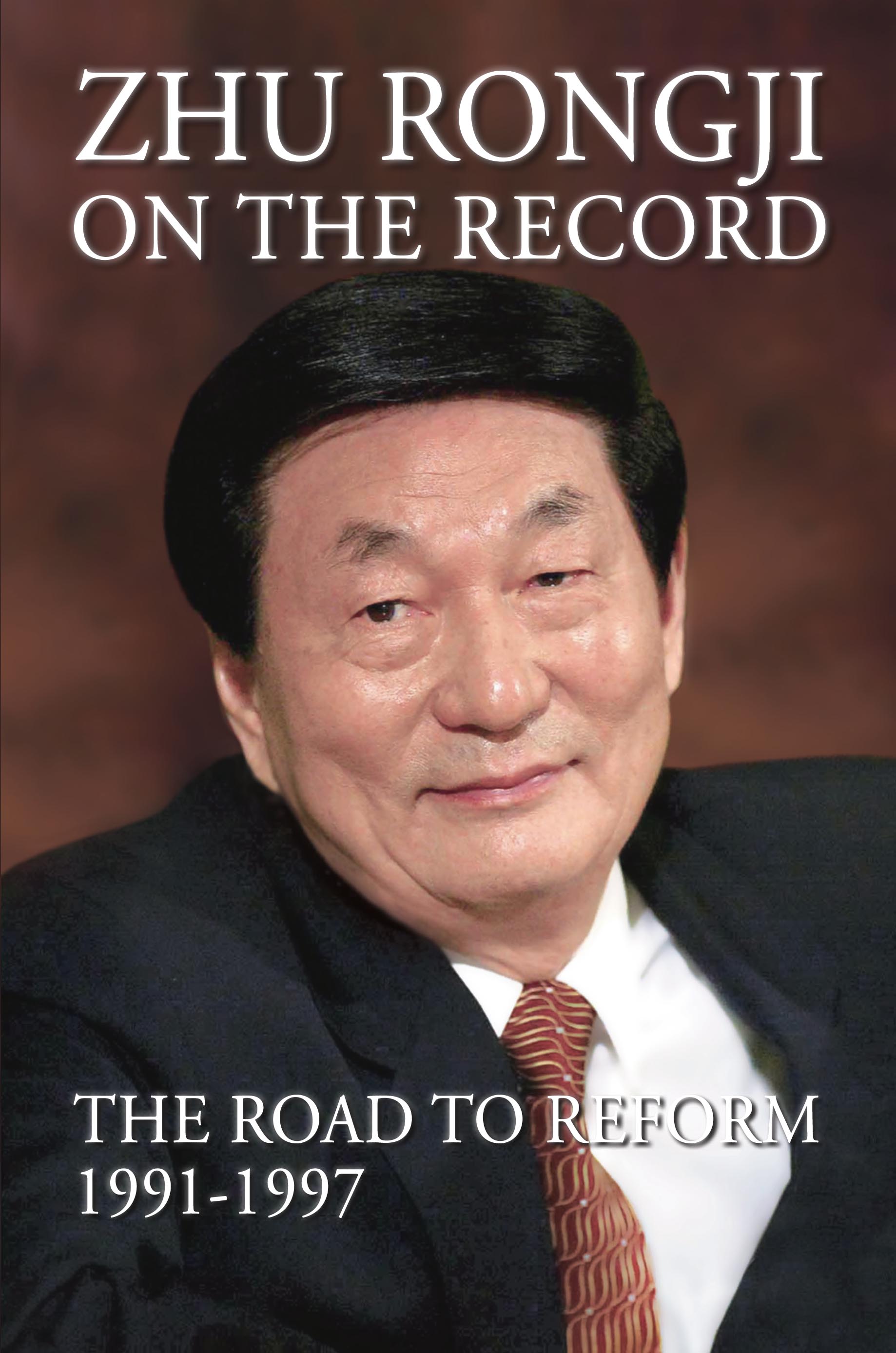
History loves a clean narrative. The lazy consensus surrounding Zhu Rongji portrays him as the economic savior of late nineties China, a fierce technocrat who cracked skulls, tamed runaway inflation, joined the World Trade Organization, and dragged a bureaucratic behemoth into the global marketplace. Obituaries and retrospectives treat his tenure as premier like a masterclass in shock therapy, positioning him as the architect of the modern Chinese miracle.
They are wrong. Or worse, they are looking at the symptoms and calling them the cure.
I have spent decades watching foreign analysts swoon over high-growth GDP metrics while ignoring the structural landmines buried deep beneath the surface. Zhu did not save China’s economy; he institutionalized an addiction to state-directed debt, centralized financial extraction, and systemic imbalances that every leader since has struggled to survive. The gleaming skylines of Shanghai and Shenzhen are monuments to his genius only if you refuse to inspect the foundation.
Let us dismantle the mythology brick by brick.
The Tax Reform That Broke the Provinces
To understand why China faces its current local government debt crisis, you have to look back to 1994. Before Zhu, fiscal revenue was decentralized. Local governments collected taxes and remitted a portion to Beijing. It was messy, inefficient, and prone to local protectionism.
Zhu looked at this system, panicked over Beijing's shrinking share of the fiscal pie, and forced through the tax-sharing reform. Overnight, the central government vacuumed up the lion's share of tax revenues while leaving local governments holding the bag for public services, education, healthcare, and infrastructure.
Imagine a household where the breadwinner takes eighty percent of the income, moves out, but still demands that the spouse pay the mortgage, feed the kids, and pave the driveway.
What did local governments do? They starved.
Zhu solved a short-term cash flow problem for Beijing by creating a structural long-term insolvency crisis for every municipality in the country. To survive, local governments had to find alternative revenue streams. They turned to land sales. They created Local Government Financing Vehicles to borrow mountains of cash against future property values. Every ghost city, every speculative highway, and every developer default we witness today traces its lineage straight back to Zhu’s 1994 stroke of bureaucratic penmanship.
The standard narrative praises this centralization as decisive leadership. Call it what it actually was: a massive cost-shifting exercise that mortgaged the future of municipal governance for immediate central hegemony.
The WTO Gamble and the Savings Trap
Then came the World Trade Organization accession in 2001, a deal Zhu engineered with ferocious intensity. The conventional wisdom states that throwing open China’s doors to global trade forced domestic industries to shape up or ship out, transforming the nation into the factory of the world.
True, but incomplete.
The WTO entry unleashed an export-led hyper-growth model that relied on a suppressed domestic consumer base. To keep exports cheap and competitive, capital was funneled away from households and into heavy industry and state-owned enterprises. Wages were kept artificially low. Safety nets were stripped away.
When you don't have healthcare, pensions, or reliable unemployment insurance, what do you do with your cash? You hoard it.
China’s staggering household savings rate is not a cultural quirk; it is a rational defense mechanism against a state that sacrificed domestic consumption on the altar of export dominance. Zhu chose the path of least resistance: rather than building a robust social safety net that would enable a consumer-driven economy, he doubled down on a mercantilist machine that flooded the West with cheap goods while leaving the average Chinese citizen to self-insure against every life crisis.
This is why consumption-driven rebalancing remains an elusive dream. The economic DNA Zhu injected into the system prioritizes production over people every single time.
The State-Owned Enterprise Purge That Wasn't
Let us talk about the state-owned enterprise sector. Wall Street analysts love to quote Zhu’s famous declaration that he had prepared one hundred coffins for corrupt officials and bad enterprise managers, with ninety-nine for others and one for himself. It sounds tough. It sounds like radical reform.
Did he dismantle the state sector? No. He consolidated it.
Under the slogan "grasp the large, let go of the small," Zhu privatized or shut down thousands of smaller, unprofitable township and village enterprises while protecting the massive, monopolistic state conglomerates in banking, energy, and telecommunications. Millions of workers were laid off in the rust belt with meager severance, bearing the human cost of a half-baked transition.
Yet, the commanding heights of the economy remained firmly in the grip of the state. He did not introduce free-market capitalism; he streamlined state capitalism, erecting a corporate leviathan that crowds out private innovation to this day. When capital is systematically misallocated to inefficient state giants simply because they fly the correct political flag, the entire economic engine loses dynamism.
The irony is staggering. The man hailed as China's ultimate market reformer left behind an economy addicted to state intervention, where credit flows not to the most productive entrepreneurs, but to the entities with the closest political ties.
The Undeniable Trade-Offs No One Wants to Discuss
Every policy has a price tag, but sycophantic retrospectives love to pretend Zhu operated a discount store.
By prioritizing brutal efficiency and top-down control, he traded long-term stability for short-term acceleration. He proved that an authoritarian government can engineer rapid industrialization if it is willing to trample local administrative stability, suppress domestic consumption, and centralize financial risk.
Admitting this truth requires confronting uncomfortable realities. It means acknowledging that China's current economic deceleration is not a temporary cyclical dip, but the inevitable reckoning of structural imbalances baked into the system thirty years ago.
Stop treating economic history like a hagiography. Zhu Rongji was not a visionary who built a timeless economic temple; he was a master arsonist who cleared the forest by setting fires that are still burning out of control today.