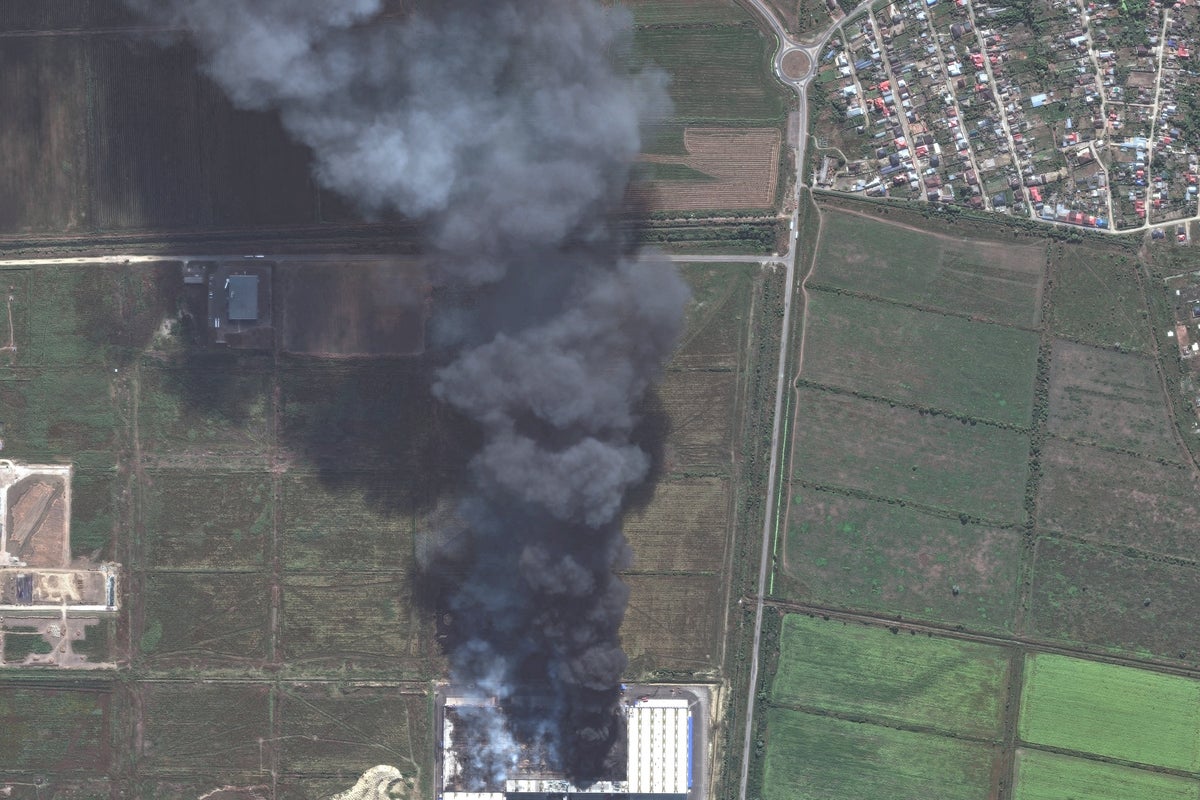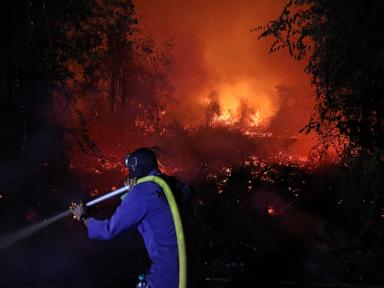
Every dry season, the script repeats itself with clockwork predictability. Satellite images light up red, smoke drifts across international borders into Malaysia, and panicked headlines decry the return of the Southeast Asian haze. Immediately, the knee-jerk chorus demands action. Politicians scramble, contracts are signed, and heavy water-bombing aircraft are dispatched to stage an aerial spectacle.
It makes for compelling television. A massive Ilyushin or Bombardier roaring low over a towering wall of flames, dumping thousands of gallons of water onto an inferno, looks like real work. It feels like humanity fighting back.
It is also an absolute waste of aviation fuel.
I have spent years watching agencies burn through millions of dollars on high-altitude theater while the actual disaster spreads below the spray line. When the lazy consensus dictates that bigger planes and more water drops will solve the recurring haze crisis, someone has to state the obvious: aerial firefighting is a band-aid on a gushing arterial wound. Worse, it creates a dangerous moral hazard that lets bad actors off the hook.
The Physics Problem Nobody Wants To Admit
Water evaporates long before it hits the burning peat.
That is the inconvenient truth of tropical peatland fires. Unlike a timber fire in the temperate forests of the Pacific Northwest or southern Europe, an Indonesian peat fire does not just burn the canopy. It burns underground. The fuel source is ancient, carbon-dense organic matter accumulated over millennia, buried meters beneath the surface.
When relative humidity drops and peat dries out, it becomes a subterranean charcoal grill. You can dump a hundred thousand liters of water from a C-130 Hercules onto the surface, and a fraction of a percent will actually penetrate the smoldering humus layer. The rest hits the canopy, evaporates in the thermal updraft, or runs off the surface harmlessly.
Imagine a scenario where you try to extinguish a charcoal briquette buried under five feet of dry soil by standing on a ladder and spraying it with a garden hose. That is essentially what air-tankers are doing over Sumatra and Kalimantan.
Yet, ministries keep renting these white elephants. Why? Because optics matter more than outcomes.
The Moral Hazard Of The Quick Fix
When governments rely on aviation to fight fires, they signal to commercial concessionaires and smallholders that prevention is optional. If the state is going to bail out agricultural mismanagement with a fleet of water bombers every August, why invest in high water-table maintenance, canal blocking, or community-based fire brigades?
The economics are perverse. Millions of dollars flow into short-term charter contracts with foreign aviation providers, draining budgets that should be allocated toward the tedious, unglamorous work of hydrology management. You cannot fly your way out of a drainage problem. The haze crisis persists not because we lack enough planes, but because millions of hectares of carbon-rich peat were recklessly drained for palm oil and pulpwood production in the first place.
Drained peat is an environmental powder keg. Until governments stop treating the symptom—the smoke crossing the Malacca Strait—and start treating the cause—low water tables in dried-out concessions—the aerial firefighting industry will remain a lucrative, self-perpetuating scam.
What Actually Works Is Boring
Nobody wants to read a press release about canal blocking.
Restoring tropical peatlands requires rewetting. It requires heavy civil engineering on the ground: constructing wooden or concrete dams across drainage canals, raising the water table, and keeping the peat saturated year-round. When peat is wet, it simply does not burn. Period.
Community-led early warning systems and localized rapid-response units equipped with shallow well pumps and heavy-duty hoses can suppress an ignition point within hours of its start. They do not cost tens of thousands of dollars per flight hour. They cost a fraction of an air-tanker contract, and they actually reach the underground burn zone.
The heavy hitters in fire ecology have been saying this for decades. You manage fire with water on the ground, not water from the clouds.
Stop Asking The Wrong Questions
When journalists ask why governments were caught flat-footed by the haze again, they usually ask: "Why didn't they deploy the air-tankers sooner?"
That is the wrong question entirely.
The question should be: "Why are we still allowing corporations to drain carbon sinks that should never have been touched, only to spend public money spraying water into the sky to cover up the political cowardice?"
Until we stop funding the aviation circus and start forcing concession owners to maintain year-round hydrological integrity, every dollar spent on aerial firefighting is just another investment in smoke and mirrors.
Put the checkbook away, ground the tankers, and fix the ditches.