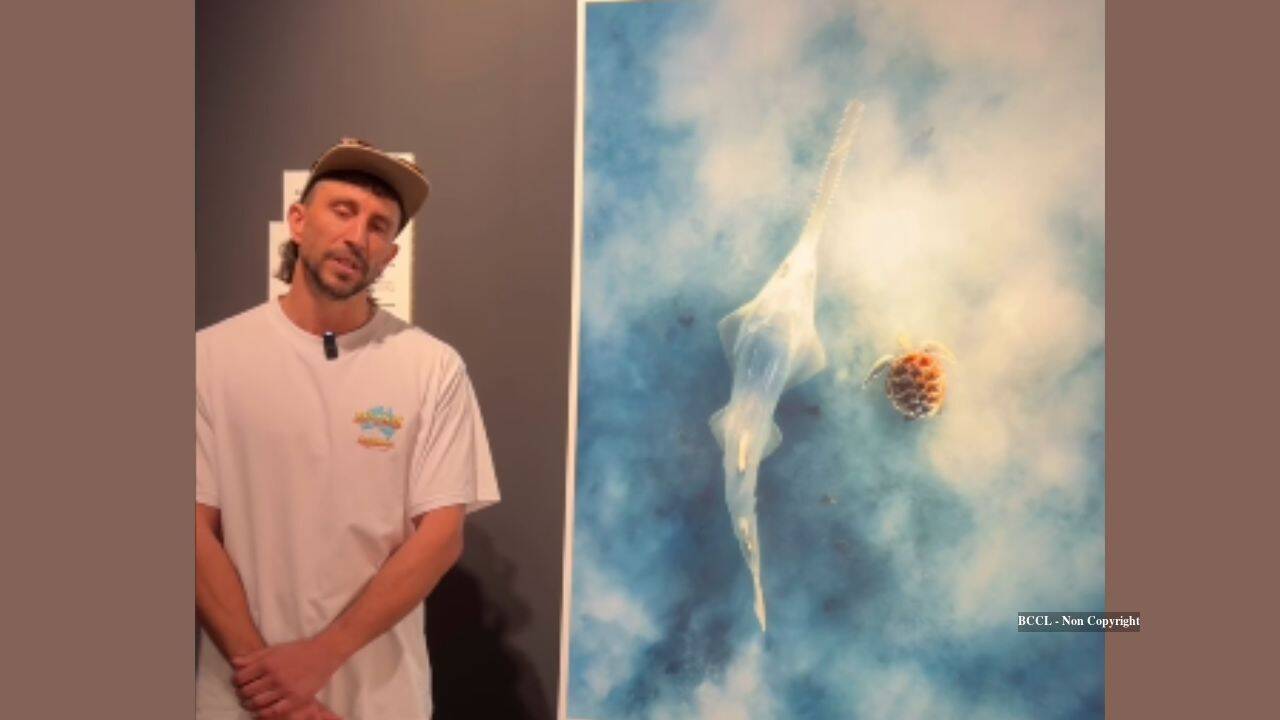
Capturing critically endangered marine fauna via unmanned aerial vehicles requires optimizing a strict operational equation balancing battery degradation, transmission distance, and environmental unpredictability. When photographer Matt Deakin secured the top prize at the 2026 Australian Geographic Nature Photographer of the Year competition with an image of a green sawfish and sea turtles in the Pilbara region, the resulting public discourse focused heavily on the visual novelty. Beneath the surface appeal lies a complex intersection of field logistics, optical physics in shallow aquatic environments, and the hard data surrounding population bottlenecks for Pristis zijsron. Deconstructing this award-winning capture reveals the precise physical constraints that dictate high-stakes wildlife documentation in remote aquatic sectors.
The Operational Cost Function of Remote Aerial Reconnaissance
Deploying commercial aerial technology two and a half kilometers offshore introduces severe mechanical variables. The physical constraints governing lithium-polymer power cells establish a rigid boundary condition for field operators. At a three percent residual charge threshold, voltage sag under load can trigger immediate emergency landing protocols, turning an observation window into a deterministic countdown.
The mechanics of this failure mode involve three primary variables:
- Discharge curves under sustained motor load against coastal headwinds.
- Signal attenuation over saltwater channels at extended telemetry ranges.
- Thermal throttling of processing units during high-luminance midday sessions.
When the green sawfish emerged from deep water into the shallows, the operational margin had already evaporated. The decision matrix required balancing the probability of total equipment loss against the expected value of documenting a critically endangered elasmobranch in an undisturbed benthic zone. Standard wildlife documentation protocols typically dictate immediate retrieval upon hitting low-power states. Violating this heuristic yielded an asset of rare documentary value precisely because the structural risk forced a compressed, unedited compositional choice.
Biomechanical Realities of the Green Sawfish
Public confusion regarding the authenticity of the frame, with frequent accusations of artificial intelligence generation, stems from a fundamental misunderstanding of elasmobranch morphology and water-column light diffusion. The green sawfish possesses a flat, elongated rostrum lined with modified teeth, used for excavating benthic prey and stunning schooling fish. In shallow, sunlit northern Australian waters, suspended calcium carbonate and fine quartz sand create a high-albedo substrate that acts as a natural diffuser.
The optical physics governing this environment eliminate harsh shadows, rendering subjects suspended in the water column nearly translucent. This ghost-like visual signature is an artifact of pure water clarity interacting with overhead solar radiation at specific tidal exchange rates. The presence of green turtles alongside the sawfish is not an arbitrary coincidence of frame sharing, but a reflection of overlapping habitat utilization indices. Both species rely on shallow coastal shelves and intertidal seagrass nurseries for foraging and transitional movement.
Quantifying Conservation Impact Metrics
Awards within nature photography act as valuation mechanisms for public attention, shifting capital and policy focus toward neglected ecological niches. The green sawfish is classified globally as critically endangered, having suffered severe population contractions due to historical commercial netting, entanglement in shark control gear, and coastal habitat modification.
Media amplification of award-winning imagery functions as a non-monetary public subsidy for conservation biology. Quantifying the conversion rate of aesthetic appreciation into active habitat protection policy remains a persistent challenge in environmental science. Traditional media coverage often sentimentalizes these encounters, reducing rigorous ecological distress to human-interest narratives about dying batteries. A structural analysis of the species' vulnerability requires shifting the focus from the dramatic execution of the photograph to the systemic degradation of northern Australian estuaries.
Declining mangrove buffers and altered freshwater outflow regimes pose existential threats to juvenile sawfish survival. These juveniles depend on low-salinity estuarine nurseries where physiological stress is minimized during their first developmental years. Documenting mature or sub-adult specimens in open coastal waters highlights active movement corridors, providing marine ecologists with empirical datapoints regarding migration routes that remain largely unmapped.
Execute systematic telemetry tagging programs across the Pilbara and Kimberley coastal zones to correlate aerial visual sightings with long-term acoustic tracking data, bypassing reliance on serendipitous drone encounters to map remaining breeding populations.