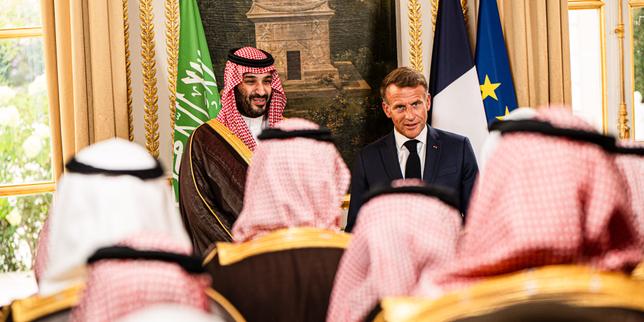
Capital allocation follows predictable geographic pathways when sovereign funds seek European consumer markets. The announcement regarding a six billion euro capital injection from Saudi Arabia into three amusement parks near Paris forces an evaluation of foreign direct investment mechanics within heavily regulated Western service sectors. Large-scale tourism developments in mature economies rarely succeed through sheer financial weight. Instead, success depends on regulatory arbitrage, zoning negotiations, infrastructure integration, and the management of high fixed-cost assets against seasonal demand curves.
This analysis deconstructs the economic architecture of the proposed development, examining the structural hurdles, capital expenditure vectors, and regional market saturation risks that define theme park operations in the Île-de-France region. Meanwhile, you can explore similar developments here: The Ledger of Consequences And Why Washington Is Closing the Last Door.
The Île-de-France Leisure Market Equilibrium
The Parisian metropolitan region is already anchored by a dominant leisure asset in Disneyland Paris, supplemented by domestic properties like Parc Asterix and Mer de Sable. Introducing three new parks backed by six billion euros alters the regional capacity baseline significantly. To understand the viability of this capital commitment, one must analyze the unit economics of European destination parks.
Theme parks operate on high fixed-cost bases combined with variable labor, maintenance, and intellectual property licensing costs. Profitability relies on secondary spend per capita, including food, beverage, hospitality, and merchandise, which typically accounts for forty to fifty percent of total top-line revenue in mature destinations. To see the complete picture, we recommend the detailed analysis by Investopedia.
The Île-de-France market presents a distinct operational constraint: seasonality. Unlike year-round operations in tropical climates, Parisian regional parks face compressed revenue windows driven by weather patterns. Winter months exhibit depressed attendance, forcing operators to maintain capital-intensive assets while operating at reduced capacity utilization.
A six billion euro outlay implies a scale comparable to major multi-park resort destinations. For context, this capital figure approaches the total historical capital expenditure of major European resort expansions over decades. Deploying this sum efficiently requires a clear differentiation strategy to avoid cannibalizing existing regional demand or triggering direct price competition with entrenched incumbents.
Capital Allocation Vectors And Infrastructure Dependencies
Injecting six billion euros into three separate park assets distributes the capital pool across distinct operational verticals. A standard allocation model for such developments divides expenditure into three primary buckets: intellectual property acquisition or creation, civil engineering and construction, and digital infrastructure for guest flow management.
Total Capital Pool: 6 Billion Euros
├── Asset 1: Immersive Entertainment Infrastructure (~40%)
├── Asset 2: Hospitality and Real Estate Integration (~35%)
└── Asset 3: Regional Transit and Utility Connectivity (~25%)
The construction phase faces severe friction within the Île-de-France urban planning framework. The Schéma Directeur de la Région Île-de-France enforces strict environmental protections, agricultural land preservation, and urban sprawl containment. Acquiring contiguous acreage capable of supporting three distinct parks requires navigating complex land-use designations, local municipal opposition, and regional environmental impact assessments.
Furthermore, transport infrastructure dictates park throughput. A development of this magnitude cannot rely on existing highway capacity without creating systemic congestion on the Francilienne or arterial routes connecting to Charles de Gaulle and Orly airports. A substantial portion of the capital must therefore subsidize or co-fund regional rail links, station expansions, or dedicated shuttle networks. Without seamless transit integration, attendance caps imposed by local authorities will constrain the return on invested capital.
Regulatory Arbitrage And Sovereign Investment Dynamics
Foreign direct investment from sovereign wealth funds into European Union member states faces rigorous scrutiny under foreign subsidy regulations and national security screening mechanisms. While entertainment infrastructure does not touch critical defense sectors, large-scale real estate acquisition and regional economic integration invite regulatory oversight regarding state aid and market dominance.
The strategic rationale for the investor involves portfolio diversification and brand projection. Domestic economic transformation agendas prioritize the development of native entertainment hubs, yet international expansion serves a dual purpose: securing hard-asset yields in stable jurisdictions and exporting cultural or tourism soft power.
However, Western service sector assets operate under stringent labor laws, collective bargaining agreements, and safety standards. The operational model used in Middle Eastern leisure developments cannot be transposed directly to France. European labor regulations dictate rigid working hours, mandatory benefits, and powerful union representation, all of which directly impact the operational expenditure profile of labor-heavy service operations.
The financial success of the venture hinges on intellectual property monetization. Independent parks without globally recognized intellectual property face immense customer acquisition costs. Building proprietary franchises requires sustained marketing expenditure and faces high consumer switching costs. Conversely, licensing established global brands incurs heavy royalty fees that compress net operating margins. The strategic choice between licensing legacy properties and developing original concepts remains the primary variable determining long-term equity value.
Operational Risk Matrix And Demand Elasticity
Consumer discretionary spending in Europe remains vulnerable to macroeconomic volatility, inflationary pressures, and shifting disposable income metrics. Capital-intensive leisure assets carry high operating leverage; small drops in attendance translate into disproportionate contractions in operating income due to fixed debt service and depreciation schedules.
Macroeconomic Shocks
├── Inflationary Pressures on Input Costs (Labor, Energy)
├── Compression of Consumer Discretionary Budgets
└── Result: Margin Compression on High Fixed-Cost Assets
Energy costs represent an escalating expenditure line item for modern theme parks, particularly those incorporating climate-controlled indoor attractions, water rides, and extensive lighting arrays. European energy markets exhibit structural volatility, exposing large-scale facilities to sudden margin compression during supply disruptions.
To mitigate these exposure vectors, the operational design must incorporate dynamic pricing models, advanced crowd analytics to optimize labor deployment, and diversified revenue streams that extend the average length of stay beyond a standard day-trip model. Integrating multi-day resort hotels and conference facilities shifts the asset class closer to a mixed-use real estate model, dampening the cyclicality inherent in pure day-visitor parks.
The execution timeline will serve as the definitive test of the strategy. Mega-projects in Europe are notoriously susceptible to schedule overruns driven by administrative appeals and environmental litigation. Investors must maintain adequate liquidity reserves to absorb prolonged pre-construction phases without degrading the core asset quality.
Strategic Execution Playbook
The deployment of six billion euros into the Parisian leisure market must adhere to a phased execution sequence to protect invested capital against structural delays and market saturation.
The primary operational phase requires securing municipal zoning approvals and regional transit commitments before breaking ground on vertical construction. Capital should be sequestered in low-risk yield-bearing instruments while legal frameworks are finalized, minimizing cash drag during regulatory review cycles.
The second phase demands the establishment of strategic partnerships for intellectual property deployment. Rather than relying on unproven concepts, securing licensing agreements with globally recognized studios mitigates early-stage marketing friction and secures baseline attendance projections.
The final operational phase involves rolling out dynamic pricing infrastructure and integrated resort hospitality assets. By capturing high-margin overnight stays and ancillary spend, the operating entity insulates its revenue model from pure day-visitor volatility and establishes a resilient cash flow profile capable of weathering regional economic contractions.