Marcus adjusted the straps of his thermal imaging backpack, his boots sinking into the damp mud of the Cascade foothills. It was 4:00 AM. Somewhere in the dense, freezing brush ahead, a seventy-year-old hiker with dementia had been missing for fourteen hours. Every minute mattered. Hypothermia is a quiet killer.
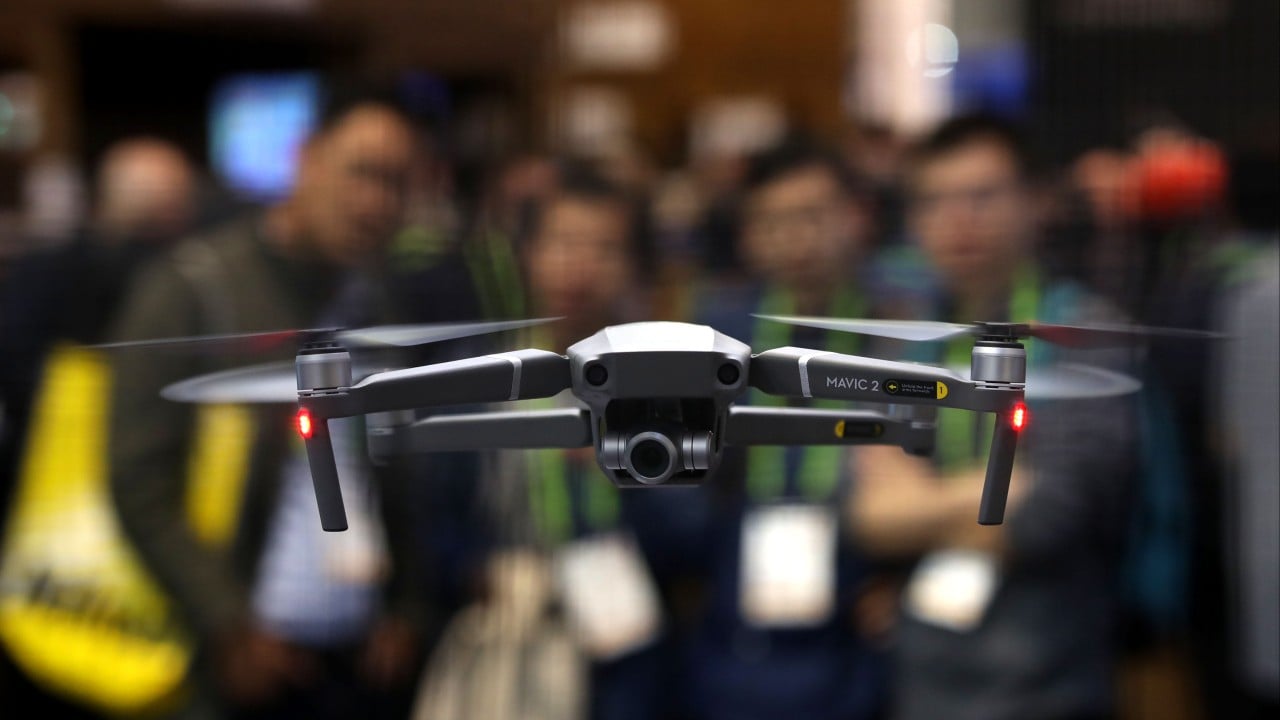
Marcus reached into the back of his truck and lifted his drone. It was a standard, commercial quadcopter, lightweight, reliable, and incredibly smart. With a flick of his thumb, the machine leaped into the air, its rotors humming like a swarm of angry bees. Within twelve minutes, the drone’s infrared camera flagged a faint, pulsing heat signature beneath a canopy of Douglas firs. Marcus radioed the ground crew. The hiker was found. Alive.
That drone was manufactured in Shenzhen, China.
Right now, inside the wood-paneled rooms of Washington D.C., lawmakers are pushing forward legislation that could effectively ground Marcus’s drone forever. They want to ban Chinese-made unmanned aerial vehicles (UAVs) from American skies. The arguments sound logical on paper, wrapped in the urgent language of national security and economic independence. But on the ground, in the mud, the view is entirely different.
The United States is trying to build a fortress in the clouds. The problem is, we forgot how to build the bricks.
The Ghost in the Machine
The political anxiety driving this movement is not entirely fabricated. Imagine a piece of technology that sees everything you see, maps critical infrastructure, and sends data across an invisible digital web.
The Countering DJI Drones Act targets the world’s largest drone manufacturer, DJI, which commands over 70% of the global commercial drone market. Lawmakers fear a nightmare scenario where the Chinese government could force companies to hand over data, mapping American bridges, power grids, and crop yields. They worry about software backdoors. They worry about vulnerabilities.
But fear is an abstract luxury. For public safety agencies, utility workers, and local farmers, reality is concrete.
Consider the math of a rescue operation. A standard American-made drone with comparable thermal capabilities often costs three to four times more than its Chinese counterpart. For a major metropolitan police department, that price gap is an annoying line item in a budget. For a volunteer search-and-rescue team in rural Montana, it is an insurmountable wall.
If you force these agencies to ground their Chinese fleets today, the sky does not fill with American alternatives. The sky just goes empty.
The Innovation Chasm
We like to think of American tech dominance as an absolute truth. We built the silicon chips, we pioneered the internet, we mastered the smartphone. But drone manufacturing is a different beast entirely. It requires a hyper-dense ecosystem of component suppliers, battery innovators, and specialized software engineers.
Shenzhen built that ecosystem over three decades. If a drone designer in China needs a slightly lighter carbon-fiber arm or a more efficient brushless motor, they do not order it from across an ocean. They drive twenty minutes down the road to a specialized factory.
The US drone industry, by contrast, resembles a scattered archipelago. We have brilliant software designers and high-end military contractors building multi-million-dollar defense systems. What we lack is the middle tier. We lack the messy, cutthroat, high-volume manufacturing lines that turn raw plastic and rare-earth magnets into a reliable $2,000 tool.
The proposed bans are designed to act as a sudden catalyst. By cutting off the Chinese supply, Washington hopes to create a vacuum that American entrepreneurs will rush to fill. It is a classic protectionist play: starve the competitor to feed the home team.
The strategy contains a massive, blinding flaw. You cannot legislate an supply chain into existence overnight.
The Collateral Damage on the Ground
Sarah stands in the middle of a neat row of corn in Iowa, squinting up at the midday sun. She is an agronomist, using specialized multispectral drones to spot crop diseases before they destroy an entire harvest. This technology allows her to apply pesticides with surgical precision, saving thousands of dollars and keeping chemicals out of the local water supply.
When Sarah looks at the debate in Washington, she sees a disconnect that borders on tragic.
The drones American companies currently produce are heavily geared toward the defense sector. They are built for rugged tactical reconnaissance, designed to meet strict military specifications. They are heavy, complex, and extraordinarily expensive. They are not built for a farmer checking on corn rust, or a surveyor mapping a new housing development, or a roofing contractor inspecting hail damage.
If the ban takes full effect, Sarah faces a grim choice. She can buy an American drone that does less for triple the price, or she can stop using drone data altogether and return to traditional, slower, more wasteful methods of farming.
This is the hidden tax of the drone ban. It is a tax paid not by foreign entities, but by American small businesses, emergency workers, and innovators who have integrated these flying computers into their daily survival.
A Question of Sovereignty
The debate ultimately forces us to confront a uncomfortable question about what independence actually means. Is a country truly secure if it protects its data but cripples its operational efficiency?
American drone companies are trying to scale up. Companies like Skydio and Brinc are making incredible strides, building impressive hardware and pushing the boundaries of autonomous flight software. They are hiring American workers and securing domestic supply chains. This is vital, necessary work. If the US completely loses the ability to manufacture small robotics, we cede a critical piece of the future.
But forcing this transition through immediate, sweeping bans is like ripping the training wheels off a bicycle while riding down a steep hill. It causes a crash.
The transition needs to be an evolution, not a guillotine. Heavy federal subsidies for domestic component manufacturing, tax incentives for public safety agencies to transition over time, and strict data-security auditing for existing foreign fleets would protect both national security and the people who rely on these tools today.
Instead, the current political climate favors the blunt instrument of prohibition. It is faster. It looks better on a campaign flyer. It creates a simple narrative of us versus them.
The Long Journey Back to Earth
The sun was fully up by the time Marcus got back to his truck. The missing hiker was in the back of an ambulance, wrapped in blankets, sipping hot coffee. Marcus packed his drone back into its foam casing. He ran his hand over the scuffed plastic shell.
To the politicians in Washington, this object is a geopolitical threat, a chess piece in a cold war fought with tariffs and data protocols. To Marcus, it is just the thing that found a cold, terrified old man in the dark.
We can build a domestic drone industry that rivals any in the world. We have the engineering talent, the capital, and the ambition. But that future is built in laboratories and factories, through years of sustained investment and gritty, unglamorous manufacturing work. It is not built by passing a law that suddenly leaves those who save lives staring up at an empty, unreachable sky.
Marcus turned the ignition key, the truck cabin warming up as he drove away from the mountains, leaving the quiet wilderness behind him.