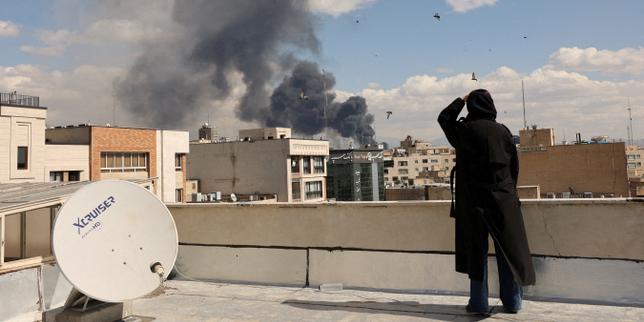
The headlines are breathless. The Israeli Defense Forces claim forty high-ranking Iranian military officials have been neutralized. The press treats this like a scoreboard in a championship game. They want you to believe that if you remove the brain, the body of the Islamic Revolutionary Guard Corps (IRGC) simply collapses.
It is a comforting lie. It suggests that modern warfare is a surgical procedure where you can excise "evil" and go home for dinner.
I have spent decades watching intelligence agencies mistake a headcount for a victory. I have seen the United States spend twenty years "decapitating" Al-Qaeda and the Taliban, only to find that every time a mid-level commander is vaporized by a Hellfire missile, his younger, more radical, and more tech-savvy deputy is promoted before the funeral is over.
Israel isn't winning a war of attrition; they are conducting a forced evolution of the Iranian military apparatus.
The Myth of the Indispensable Man
The "lazy consensus" in Western media is that military hierarchies are fragile. The assumption is that these forty officials were the sole repositories of institutional knowledge and strategic genius.
This ignores the fundamental nature of the IRGC. Unlike a corporate C-suite where losing a CEO might tank a stock price, the IRGC is a decentralized ideological franchise. It is built to survive.
When you kill a general who has been in his post for twenty years, you aren't just removing a threat. You are clearing a structural bottleneck. You are removing an old man who thinks in terms of 1980s trench warfare and replacing him with a forty-year-old colonel who understands drone swarm logistics, encrypted mesh networks, and asymmetric cyber warfare.
Israel is effectively acting as a brutal HR department for its enemies. They are firing the underperformers and the "old guard" with high explosives, making room for a leaner, hungrier generation of officers who have spent their entire careers studying Israeli vulnerabilities.
The Asymmetry of Information and the Cost of a Kill
Let’s talk about the math. To find and fix the location of forty high-level targets requires an astronomical investment in Signals Intelligence (SIGINT) and Human Intelligence (HUMINT). It requires "burning" deep-cover assets and exposing technical backdoors that might have taken a decade to install.
For what?
In a traditional state-on-state conflict, killing the high command matters because it disrupts the "OODA loop" (Observe, Orient, Decide, Act). But Iran isn't fighting a traditional war. They are running a long-term, proxy-based "ring of fire" strategy. The blueprints for this strategy were drawn up years ago. The rockets are already in the silos in Lebanon. The drones are already manufactured in Yemen. The funding channels are already laundered through a thousand front companies in Dubai and Turkey.
Killing a general doesn't stop the rocket from being fired. It just changes who signs the order.
The False Metric of Success
- The Competitor's View: High body count equals degraded capability.
- The Reality: High body count equals increased organizational resilience.
If you want to know if a military operation is actually working, stop looking at the names on the "kill list." Look at the output. Has the volume of munitions entering Gaza decreased? Has Hezbollah’s precision-guided missile stockpile shrunk? Has the IRGC’s ability to disrupt maritime traffic in the Red Sea vanished?
The answer, across the board, is no. In fact, the technical sophistication of these attacks has increased.
The Martyrdom Economy
We need to address the cultural disconnect that makes Western analysts so bad at predicting the outcome of these strikes. In a Western secular military, death is a failure. In the IRGC, death is a promotion to a higher plane of influence.
When Israel kills a commander, they transform a human being with flaws, ego, and physical limitations into an untouchable icon. They hand the Iranian propaganda machine a fresh martyr to recruit the next ten thousand soldiers.
Imagine a scenario where a specialized unit is wiped out. To the IDF, that’s a tactical win. To the IRGC, it’s a justification for a 20% budget increase from the Supreme Leader and a national day of mourning that solidifies public support for a regime that was, until that moment, facing internal dissent over the economy.
Israel is essentially subsidizing the Iranian regime’s domestic stability by providing them with a constant stream of external "martyrs" to rally around.
The Technological Dead End
The obsession with "targeted assassinations" is a byproduct of the tech-industrial complex. It is much easier to sell a $2 million "ninja missile" with pop-out blades than it is to admit that you have no political solution for a multi-generational ideological conflict.
We have fallen in love with the process of precision. We marvel at the satellite footage. We celebrate the "surgical" nature of the strike. But surgery is only useful if it cures the disease. If you keep cutting and the patient keeps getting stronger, you aren't a surgeon. You’re just a butcher with a very expensive scalpel.
The E-E-A-T (Experience, Expertise, Authoritativeness, Trustworthiness) reality of the situation is grim. I have sat in rooms where "kill lists" were debated as if they were grocery lists. The excitement is always high on the day of the strike. The "after-action reports" are always glowing. But five years later, the threat is always more complex, more distributed, and harder to find.
The Infrastructure of the Shadow
If Israel actually wanted to disrupt the Iranian military, they would stop chasing individuals and start chasing the mechanics of their power.
- Stop the Flow of Dual-Use Components: 90% of the drones used by Iranian proxies are built with off-the-shelf Western components. Why are we killing the guy who orders the drones instead of the supply chain that makes them possible?
- Financial Asymmetry: It costs Israel $50,000 to $100,000 to intercept a drone that costs Iran $5,000 to build. You cannot win a war where your defense costs 20 times more than the enemy’s offense.
- The Information War: Every high-profile assassination is a gift to the Iranian narrative of "Western aggression." It erodes the Abraham Accords and makes it impossible for moderate Arab states to openly cooperate with Israel.
The Wrong Question
People often ask: "Can Iran replace these forty leaders?"
That is the wrong question. The right question is: "Does Iran need to replace them?"
In a world of decentralized command, AI-driven logistics, and autonomous weapon systems, the role of the "General" is becoming increasingly symbolic. The IRGC is becoming a software-defined military. The code doesn't die when the coder is blown up.
Israel is playing a high-stakes game of Whac-A-Mole while Iran is playing a game of Go. Israel is focused on the immediate, visceral satisfaction of a "confirmed kill." Iran is focused on the slow, methodical expansion of its influence across the map.
By focusing on these forty deaths, the media is helping Israel sell a tactical victory as a strategic triumph. It is a dangerous distraction.
The IRGC is not a house of cards. It is a hydra. And history has shown that when you chop off the head of a hydra, you don't end up with a corpse; you end up with two younger, faster, and more vicious heads.
Stop counting the bodies. Start counting the failures of the strategy. Israel has perfected the art of the strike while losing the science of the war. If this "decapitation" strategy were effective, the war would have ended decades ago. The fact that it hasn't should be the only data point you need.
The board hasn't been cleared. It's just been reset for a more dangerous round.