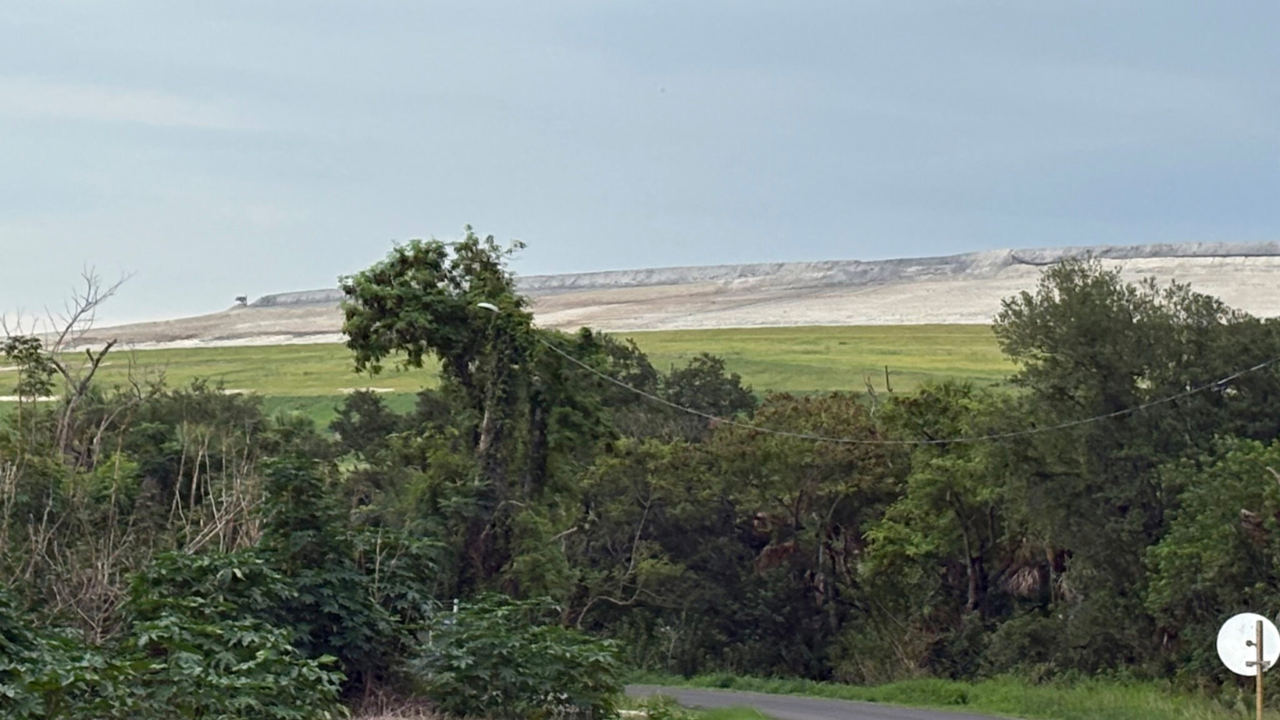
Living within sight of a massive radioactive waste pile changes how you view a Sunday afternoon. When you know that millions of tons of industrial byproduct sit behind aging earthen walls just miles from your home, every heavy rainstorm feels like a countdown.
Florida communities living near phosphogypsum stacks aren't dealing with abstract environmental politics. They are dealing with the very real, very physical threat of toxic containment failures. If you want to understand why local residents are on edge, you have to look past corporate PR statements and examine what actually happens when these mountainous piles of fertilizer waste start to give way.
The Reality Behind Florida Gypstacks
To understand the fear, you have to look at what these piles actually are. Phosphogypsum is a byproduct of turning mined phosphate rock into phosphoric acid for commercial fertilizer. For every single ton of acid you produce, you get roughly five tons of this radioactive waste.
Companies pile this waste into massive mounds known locally as gypstacks. These stacks aren't small piles. They cover hundreds of acres and rise hundreds of feet into the Florida sky. Worse still, they contain low levels of radioactive materials like radium-226, which has a radioactive decay half-life of 1,600 years. They also hold massive holding ponds filled with process wastewater loaded with heavy metals, acids, and excess nutrients.
When people worry about a radioactive waste pile threatening their neighborhood, they aren't imagining science-fiction mutations. They are worried about structural collapse, groundwater contamination, and the destruction of local waterways.
Lessons From Past Disasters
You can't talk about these fears without mentioning Piney Point. Back in 2021, a leak in the containment wall liner at the former phosphogypsum plant in Manatee County triggered a full-blown state of emergency.
Officials had to pump hundreds of millions of gallons of contaminated wastewater straight into Tampa Bay to keep the containment dams from suffering a catastrophic collapse. The resulting discharge pumped heavy nitrogen and phosphorus loads into the estuary, triggering massive algae blooms and devastating fish kills. Hundreds of local households had to evacuate on short notice.
It wasn't an isolated incident either. Sinkholes opened beneath other stacks in the past, dumping millions of gallons of polluted process water directly into the Floridan aquifer. When history shows you that containment liners fail and dams crack, residents have every right to demand better answers.
Why Expansion Proposals Spark Outrage
Companies like Mosaic continue to push for permits to expand existing waste sites, arguing that current industrial operations require more capacity. For local communities, hearing that a company wants to make an existing radioactive waste pile larger is terrifying.
Every new ton added to a stack increases the structural load. Every expanded pond creates another surface area for rainfall to accumulate during hurricane season. Environmental organizations and local residents consistently push back against these expansions, pointing out that piling more waste onto aging infrastructure is a ticking clock.
What Regulators and Companies Say
Industry representatives maintain that these sites are heavily regulated under state and federal guidelines. They point to double-lined retention ponds, groundwater monitoring wells, and engineered closure plans designed to isolate the waste permanently.
Yet, trust in these assurances remains low. When oversight relies on monitoring aging infrastructure built decades ago, residents feel like they are bearing all the risk while corporations reap the rewards.
Protecting Vulnerable Communities
If you live near an industrial zone or want to understand how to track these environmental threats in your own backyard, you have to look at actionable steps. Local activism groups like Tampa Bay Waterkeeper and ManaSota-88 provide transparent tracking of permit applications and public hearings.
- Check public notices from the Florida Department of Environmental Protection regarding local industrial permits.
- Attend county commission meetings where local zoning and emergency evacuation plans are updated.
- Support independent water quality monitoring groups that test local estuaries independently of corporate reporting.
Ignoring the problem won't make the stacks shrink. Until federal and state regulators find a safe, permanent alternative to stacking millions of tons of radioactive fertilizer waste above our primary drinking water aquifer, the fear hanging over these Florida communities isn't going away.
:max_bytes(150000):strip_icc()/ar-American-Cheese-taste-test-horizon-4x3-54cc339550cd44b9a818c17bdfd5428d.jpg)