The Silicon Bridge
Hong Kong has transformed from a global financial hub into the primary terminal for the illicit flow of restricted technology into Russia. Despite international pressure, the city’s unique corporate laws and proximity to manufacturing hubs allow it to function as a giant, unregulated clearinghouse for dual-use electronics. Thousands of shell companies, often existing only on paper, facilitate the shipment of high-end semiconductors and microchips that eventually power Russian drones and missiles. This is not a glitch in the system; it is the system working exactly as designed by those profiting from the conflict.
The mechanics of this trade rely on a "middleman" architecture. A Russian buyer doesn't order directly from a US manufacturer. Instead, a shell company in Hong Kong places the order, receives the goods, and re-exports them to a third party in Central Asia or Turkey before the cargo finally crosses the Russian border. By the time Western regulators flag the transaction, the company has folded, and three new ones have appeared in its place.
The Shell Company Factory
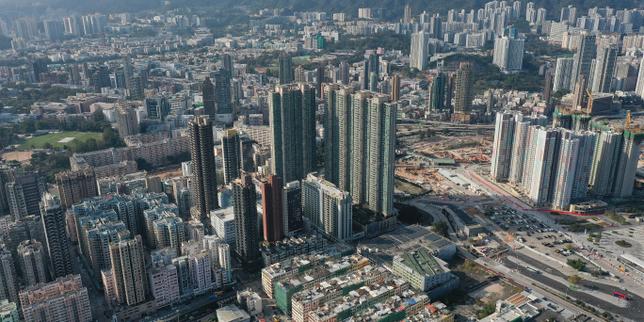
The ease of doing business in Hong Kong has become a weapon. In the time it takes to drink a cup of coffee, an operative can register a new firm in the Central District with little more than a passport and a nominal fee. These entities often share the same "secretary" addresses—single office suites that house hundreds of different corporations.
Investigating these entities reveals a pattern of "disposable" commerce. Many of these firms have no physical presence, no employees, and no history. They exist for a single purpose: to receive a shipment of high-priority chips, such as Field Programmable Gate Arrays (FPGAs) or high-frequency processors, and flip them. Because Hong Kong remains a free port with minimal export controls on general electronics, these shipments often leave the territory without a second glance from local customs.
The volume is staggering. Since 2022, while direct trade from the West to Russia cratered, Hong Kong’s exports of sensitive electronics to "neutral" countries surged by triple digits. It is a statistical anomaly that points directly to one conclusion: the city is the central nervous system of Russia's external procurement network.
The Semiconductor Shell Game
To understand how a chip manufactured in Texas ends up in a Kh-101 cruise missile, one must follow the money through the winding alleys of Wan Chai. The transaction typically bypasses the SWIFT banking system. Instead, payments are processed through small, specialized banks or via cryptocurrency, making them nearly invisible to US Treasury monitors.
Russia’s reliance on Western silicon is an open secret. Its domestic industry cannot produce the sub-7-nanometer chips required for precision guidance systems. Therefore, they must steal, smuggle, or buy them through proxies. Hong Kong provides the perfect camouflage. It offers a sophisticated legal framework that protects "business confidentiality," preventing foreign investigators from easily peering into the ownership structures of these mystery exporters.
Logistics of a Ghost Shipment
When a shipment of semiconductors arrives at the Kwai Tsing Container Terminal, it is often labeled as "office equipment" or "consumer electronics." Local authorities, focused on maintaining the city's status as a rapid-transit hub, rarely inspect transit cargo unless there is a specific tip-off.
- Arrival: Goods arrive from global manufacturers under the guise of local distribution.
- Transfer: The ownership of the pallet is transferred three or four times within 48 hours.
- Export: The goods are re-manifested for a destination like Kyrgyzstan or Uzbekistan.
- Diversion: Once the goods reach their destination, they are trucked across the border into Russia.
This "broken transit" strategy ensures that the original manufacturer has plausible deniability, and the final recipient is buried under layers of paperwork.
Why Washington Cannot Stop the Flow
The United States and its allies find themselves in a game of whack-a-mole. Every time the Department of Commerce adds a Hong Kong firm to the Entity List, the operators simply move their inventory to a new corporate shell. The process is so automated that sanctions struggle to keep pace with the speed of global logistics.
Furthermore, there is a lack of political will within the Hong Kong government to clamp down on this activity. Following the 2020 National Security Law, the city’s alignment with Beijing has hardened. Since China does not officially recognize Western sanctions against Russia, local authorities see no legal basis to block these shipments. In their view, these are legal commercial transactions between private parties. This creates a legal sanctuary for those looking to profit from the war.
The Complicity of Global Logistics
It isn't just shadowy shell companies involved. Global logistics giants and shipping lines are the unwitting, or sometimes indifferent, mules of this trade. A shipping container doesn't know what's inside it. As long as the paperwork matches the weight and the fees are paid, the box moves.
The burden of due diligence has shifted to the manufacturers. Companies like Intel, AMD, and Texas Instruments are now expected to track their products through the entire secondary market—an impossible task once a component is sold to a legitimate-looking distributor in Asia. Once the product enters the "gray market," the manufacturer loses all visibility.
The Profit Margin of Prohibited Goods
The markup on smuggled chips is enormous. A processor that retails for $500 in the US can fetch $3,000 on the Russian black market. This 600% profit margin covers the cost of bribes, shell company registrations, and circuitous shipping routes many times over. For a small trading firm in Hong Kong, the incentive to break the law is far greater than the risk of a slap on the wrist from a foreign government.
The Weak Link in the Global Financial Shield
If the chips are the hardware of this operation, the Hong Kong banking sector is the software. While major international banks like HSBC or Standard Chartered have rigorous compliance departments, a secondary tier of smaller banks and money changers operates with far less scrutiny.
These institutions often facilitate "mirror trades" or use complex offshore accounts in the British Virgin Islands to mask the Russian origin of the funds. They operate in the shadows of the world's most sophisticated financial center, using the city’s reputation for stability to legitimize transactions that would be blocked elsewhere.
A Systemic Failure of Oversight
The reality is that the international community overestimated the power of financial sanctions. We assumed that cutting Russia off from the West would starve its military. We didn't account for the resilience of the Hong Kong conduit. The city has effectively decoupled from Western regulatory norms while maintaining its infrastructure.
This isn't just about Russia. It’s a blueprint for how any sanctioned nation can maintain access to high-tech components. If you have enough cash and a foothold in a free-trade zone like Hong Kong, you can buy anything. The "Silicon Bridge" is more than a loophole; it is a permanent feature of the new global economy, where geopolitical borders are easily bypassed by a well-placed shipping container and a few digital signatures.
The End of Plausible Deniability
The data is now too clear to ignore. Every recovered Russian drone contains the fingerprints of the Hong Kong trade route. Every missile fragment tells the story of a chip that traveled through the South China Sea. The question is no longer whether this is happening, but whether the West is willing to take the drastic step of sanctioning the Hong Kong financial system itself—a move that would have catastrophic consequences for the global economy.
Until then, the shipments will continue. The shell companies will keep multiplying. And the hardware of war will keep flowing through the world's most efficient bypass. You can track the shipments yourself if you have the right access to bill-of-lading databases; the names change, but the destinations remain the same.
Start by auditing the shipping manifests of any "electronics wholesaler" registered in the last 24 months at a shared office address in Tsim Sha Tsui.