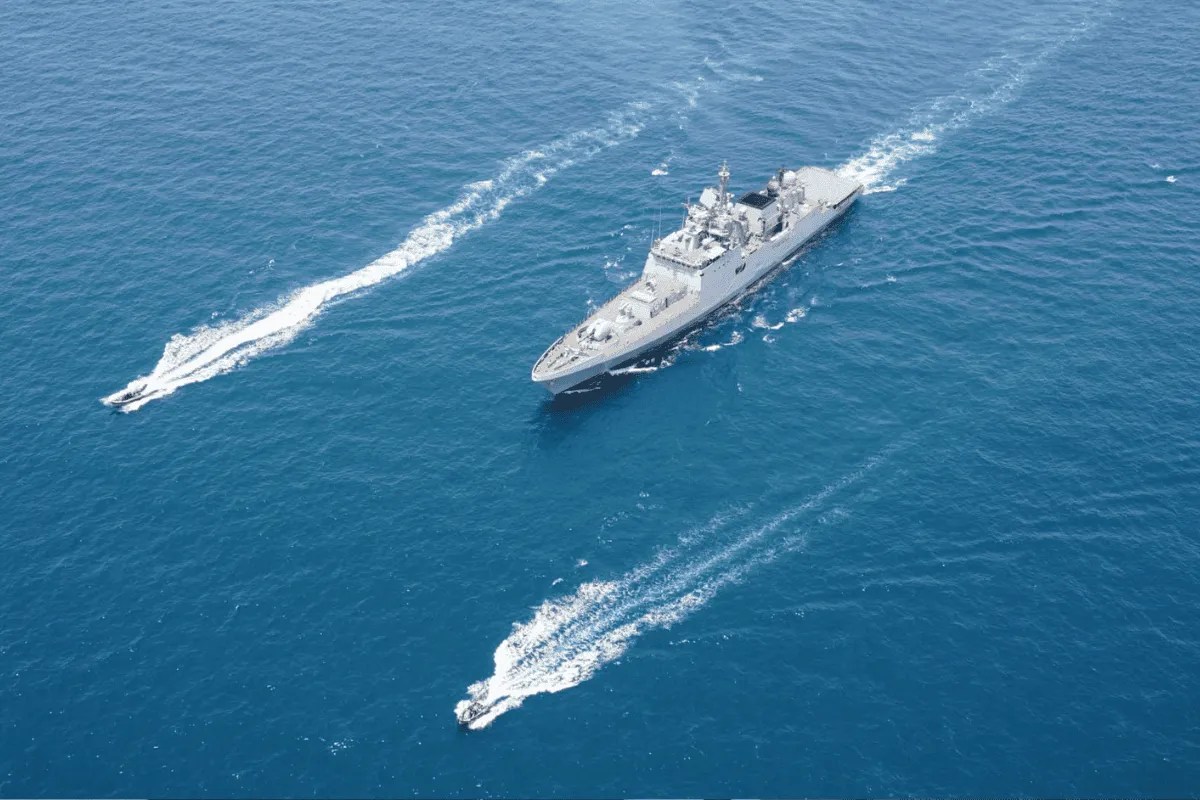
Turkey issued its sharpest warning yet to Moscow and Kyiv in late October 2026, demanding an immediate halt to attacks on commercial vessels in the Black Sea and reserving the right to pursue legal action whenever Turkish-linked ships are struck. Strip away the diplomatic phrasing, and Ankara is drawing a line under a maritime corridor that has quietly become the deadliest commercial waterway on earth. More than 30 seafarers have been killed in the Black Sea over the course of 2026 alone, while transits through the Bosphorus have plunged sharply as drones, drifting mines, and missiles turn cargo hulls into collateral damage.
Most coverage treats Turkey's intervention as a simple diplomatic rebuke—a frustrated mediator scolding two belligerents for ruining grain and oil trade. That reading misses the structural trap Ankara built for itself. For nearly five years, Turkey has claimed credit for keeping the Russia-Ukraine war contained by strictly enforcing the Montreux Convention and championing "regional ownership". Now, unmanned surface vessels and aerial drones are hitting ships inside NATO waters off Bulgaria and Romania, exposing the gap between controlling a narrow strait and policing an open sea. Recently making headlines lately: चीन और अमेरिका की 'साझेदारी' का भ्रम क्यों हर बार टूट जाता है.
Why the Straits Chokehold No Longer Protects Commercial Trade
The 1936 Montreux Convention gives Turkey sovereign control over the Dardanelles and the Bosphorus. In February 2022, Ankara invoked the treaty's wartime provisions to restrict warship transits, blocking non-littoral navies from sending vessels into the Black Sea and pairing that move with informal understandings meant to limit naval escalation. On paper, that gatekeeper role looks decisive. Defense Minister Yasar Guler has repeatedly argued that strict Montreux enforcement stopped the conflict from spilling across the wider region.
In practice, modern maritime warfare bypassed the choke point. Neither Russia nor Ukraine needs a large surface fleet cruising through the Bosphorus to choke off commercial traffic. Cheap aerial drones, sea drones, and moored or drifting mines operate from coastal launch sites, small boats, and shallow approaches. When a drone strikes a merchant hull off the Romanian coast—as happened in early October 2026, sinking a Turkish-owned corn carrier—or when three drones hit a Greek-owned, Liberian-flagged container ship inside Bulgaria's exclusive economic zone weeks later, Montreux offers zero kinetic shield. More details regarding the matter are detailed by Reuters.
Shipowners do not wait for formal declarations of war at sea. They read hull insurance quotes, crew union advisories, and port congestion logs. By October 2026, ship entries through the Bosphorus had dropped 41% compared with a year earlier, while total two-way transits fell 38%. A 38% contraction in a chokepoint carrying food, fertilizer, and energy is not a minor disruption. It is a slow strangulation of regional commerce.
The Anatomy of an Undeclared Maritime Attrition Campaign
Watch how the escalation works on the water and you see two overlapping strategies feeding each other. Since July 2026, Russia has intensified missile and drone strikes against Ukraine's main export gateways—Odesa, Chornomorsk, and Pivdennyi—driving merchant captains away from Ukrainian berths. Over the same period, Ukrainian strikes have targeted vessels, ports, and terminals tied to Russian oil and grain exports, squeezing Moscow's fuel revenues.
Neither side admits to targeting neutral civilian crews. Both claim they are hitting military logistics, dual-use infrastructure, or sanction-evading export chains. Yet commercial ships operate in tight corridors with overlapping ownership structures. A single hull can fly a Liberian flag, carry a Greek manager, load Ukrainian grain, and employ Filipino or Turkish sailors. When a drone operator or minefield miscalculates—or treats any vessel approaching a rival port as fair game—the bill lands on civilian mariners.
Legal attribution lags far behind weapon speed. Even when Bulgarian officials pointed toward Russia as the likely culprit in October 2026 strikes inside Bulgarian waters, they acknowledged they could not prove responsibility.
That ambiguity is precisely what makes Turkey's legal threat complicated. Ankara told Moscow and Kyiv it reserves every legal right when Turkish-flagged or Turkish-owned ships are hit. Lawyers can file claims, freeze assets where jurisdiction allows, and build evidentiary dossiers. None of that stops a £20,000 sea drone from breaching a single-hulled freighter at midnight.
Turkey's Dual-Track Gamble Between Moscow and NATO
To understand why Ankara stopped at a warning rather than deploying naval escorts, look at its balancing act. Turkey is a NATO member, yet it has spent years preserving diplomatic and economic channels with Moscow while supplying drones and diplomatic backing to Kyiv. That posture gave Ankara unique leverage during the 2022 grain corridor talks and allowed it to position itself as indispensable.
It also created a credibility test. Under Ankara's doctrine of regional ownership, Black Sea security belongs primarily to littoral states—specifically Turkey, Bulgaria, and Romania alongside the other coastal states. In April 2026, Turkey announced an Istanbul-based Maritime Component Command to prepare for post-conflict stability and a Black Sea Task Force, emphasizing that naval platforms would come from the three littoral NATO allies. Alongside Sofia and Bucharest, Ankara already runs a joint mine-countermeasures task group.
Mine-hunting is grueling, slow work. Clearing stray munitions does not stop incoming air or surface drones launched hundreds of kilometers away. If Turkey shifts from mine clearing and diplomatic proposals to active air-and-sea escorting of merchant convoys, its ships enter the direct firing line of Russian or Ukrainian defenses. Doing so would wreck the exact neutrality and backchannel credibility Ankara relies on to mediate.
At the same time, refusing to act leaves NATO allies Bulgaria and Romania watching drones hit commercial ships inside their own economic zones while Turkey insists non-littoral NATO navies stay out under Montreux. You cannot monopolize maritime security architecture and outsource physical protection to hope.
What Maritime Insurers and Traders Actually Watch
Boardrooms in London, Piraeus, and Istanbul do not trade on press releases from Sofia or Ankara. They watch four hard indicators:
- War risk premiums and P&I club exclusions: Protection and indemnity clubs adjust coverage vessel by vessel. Once underwriters treat the entire western basin as a high-war-risk zone, charter rates spike and smaller operators exit.
- Subsea infrastructure alerts: In late October 2026, defense chiefs from Turkey, Romania, and Bulgaria explicitly flagged the protection of critical underwater infrastructure. Pipelines and data cables sit exposed beneath the same waters where surface drones operate.
- Port throughput at Odesa, Chornomorsk, and Pivdennyi: Missile and drone pressure on Ukrainian terminals dictates whether grain moves by sea or backs up onto overloaded rail and Danube barge routes.
- Verification mechanisms for civilian corridors: A ceasefire proposal only moves cargo if underwriters trust that neither side will strike a vessel that deviates from a mapped lane due to weather or mechanical trouble.
Consider a hypothetical shipping firm operating a 40,000-deadweight-ton bulk carrier between Constanta and Istanbul. Even without a direct hit, a single nearby drone interception triggers hull inspections, crew refusal clauses, and a multi-day detour. Multiply that delay across hundreds of voyages and the economic damage compounds faster than any blockaded strait.
Why Diplomatic Ultimatums Stall Without Enforcement
Ankara's renewed ceasefire proposal asks Moscow and Kyiv to halt attacks on commercial vessels and guarantee safe grain shipments. Moscow has tied any Black Sea shipping arrangement to broader negotiations and Western pressure on Kyiv. Kyiv views maritime strikes as essential leverage against Russian energy exports and naval logistics.
Neither capital feels compelled to surrender a working tool because Ankara sounds stern. For Turkey's warning to bite, littoral states would need shared radar fusion, rapid drone-interception rules of engagement, and transparent incident reporting that strips away plausible deniability. Without physical deterrence backing the legal threat, the Black Sea remains what it has become: a contested battleground where commercial crews pay the price for a war they did not start.