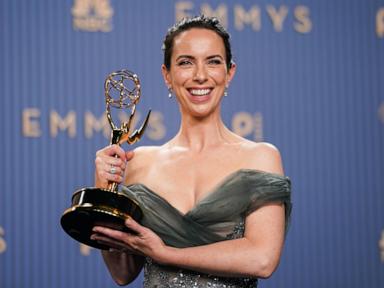
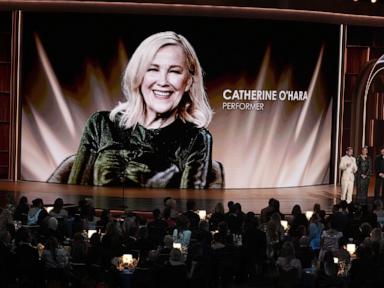
The television industry spent years treating the Primetime Emmy Awards as a predictable coronation ceremony where legacy cable networks and established prestige monoliths routinely traded trophies behind closed doors. When the 78th Primetime Emmy Awards rolled out its winners list, featuring major victories for streaming upstarts like Apple TV+ and HBO Max's aggressive medical and drama slates, it became glaringly obvious that the old guard had lost its grip on the cultural steering wheel. Shows like Widow's Bay sweeping multiple major categories alongside gritty hospital dramas like The Pitt signal a brutal, necessary reckoning for a medium that spent too much money chasing algorithmic safety and not enough taking creative risks.
To understand why this shift happened, one must look past the glittering red-carpet broadcasts and examine the shifting financial architectures of modern production studios. Traditional networks are bleeding linear subscribers at an unsustainable rate, forcing parent companies to prioritize global streaming retention over prestige vanity projects that play well to a localized voter base in Los Angeles. When Academy voters hand major statues to inventive genre entries or dark character studies instead of safe, middle-of-the-road historical dramas, they are reacting to an audience that has infinite choices and zero patience for creative stagnation. For an alternative look, consider: this related article.
The mechanics of Emmy voting have always relied heavily on aggressive FYC (For Your Consideration campaigns, where studios spend millions of dollars dining voters, mailing promotional screeners, and hosting lavish panel events. For decades, legacy broadcast networks and premium cable pioneers held an absolute monopoly on these lobbying apparatuses. They knew precisely which buttons to push, which committees to target, and how to weaponize industry nostalgia.
However, the rapid ascension of platform-agnostic creators fractured those cozy backroom alliances. Tech conglomerates with bottomless balance sheets built parallel campaign machines that completely outspent traditional studios, turning the nomination process into an arms race of unprecedented scale. Yet money alone cannot buy cultural resonance. The voters, weary of cookie-cutter formulas and predictable biographical miniseries, began rewarding shows that felt genuinely dangerous. When Jean Smart takes home yet another trophy for Hacks or newcomers break through in fiercely contested acting categories, it reflects a voting bloc that is increasingly hostile to creative complacency. Further analysis on this matter has been provided by Rolling Stone.
Consider the dramatic series category, which has historically served as a barometer for national mood. For years, the gold standard required a slow-burn, morally compromised antihero navigating a bleak prestige landscape. The 2026 winners list explicitly rejected that exhausted template in favor of propulsive storytelling, medical realism, and high-stakes speculative fiction. Viewers are exhausted by real-world cynicism; they want narrative velocity coupled with rigorous emotional intelligence. Shows that failed to deliver an immediate, undeniable hook found themselves shut out entirely, regardless of how much capital their distributors poured into marketing.
Another overlooked factor driving this transformation is the generational turnover within the Television Academy itself. Older members who anchored the voting blocks of the 1990s and 2000s have gradually yielded influence to younger, internationally diverse professionals who grew up consuming media across fragmented digital ecosystems. These newer voters hold zero reverence for traditional gatekeepers. They do not care about network prestige or historical pedigree. They care about execution, representation, and whether a piece of art captures the fractured reality of contemporary life.
This democratization of taste has created a volatile marketplace where a modest streaming entry can cannibalize the audience share of a multi-million-dollar franchise overnight. Studios that fail to adapt their development pipelines to this new reality face a grim financial cliff. Greenlighting expensive, risk-averse content is no longer a viable hedge against obsolescence. The Academy has effectively codified a new Darwinian standard: evolve the narrative vocabulary or watch your multi-million-dollar investment vanish into the digital noise.
As the dust settles on this year's ceremony, the long-term implications for Hollywood are coming into sharp focus. Production budgets are tightening across the board, executive suites are purging middle management, and creative risk is once again being weighed against hard data metrics. But if the 78th Emmys proved anything, it is that audiences and voters alike can still smell authenticity from a mile away—and they are no longer willing to reward anything less than the absolute truth of the screen