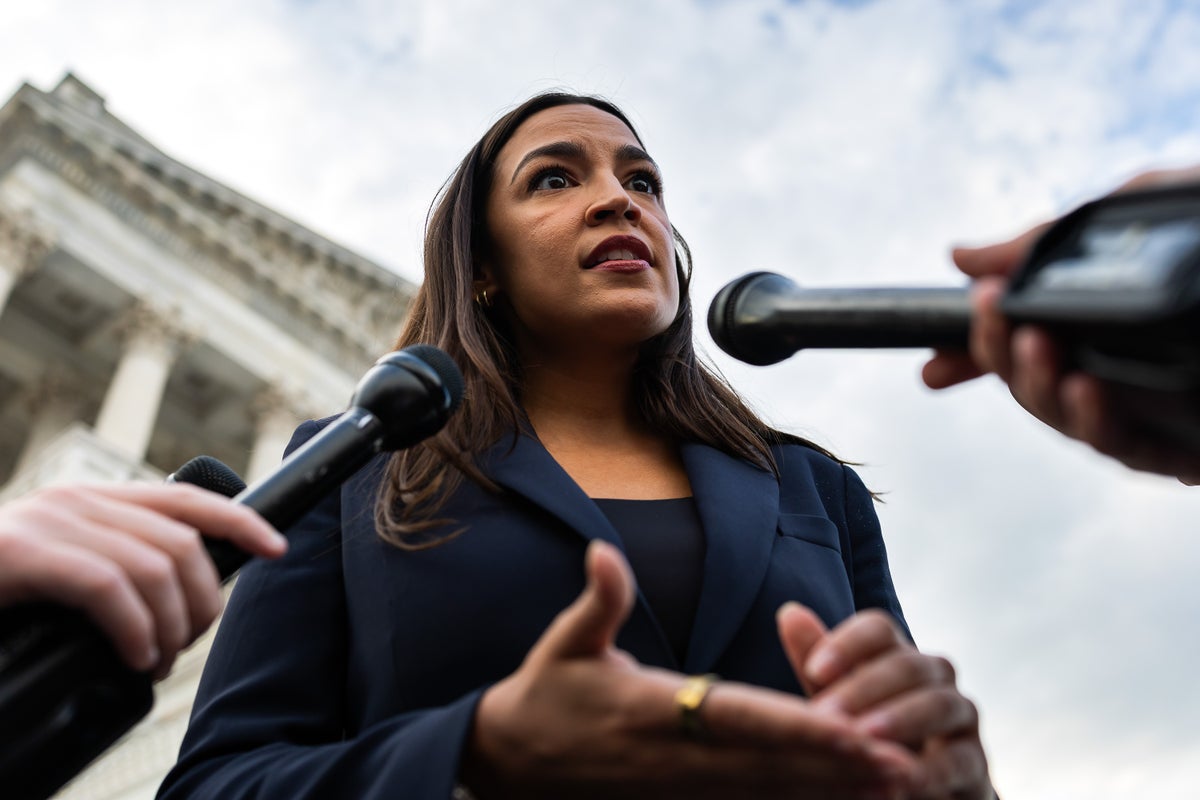
The rhetorical clash over artificial intelligence infrastructure hit a new peak when Representative Alexandria Ocasio-Cortez suggested placing a massive server farm at Mar-a-Lago, responding directly to Donald Trump’s declaration that communities resisting these facilities risk remaining backwards and poor. Beneath the sharp political banter lies a grinding physical reality. America’s electrical grid is straining under the weight of the digital revolution, and the friction between national ambitions and local endurance is escalating faster than utilities can upgrade transformers.
When the White House frames the nationwide expansion of digital warehouses as a vital defense against international competitors, it speaks an urgent economic language. Yet the citizens living down the road from proposed megawatt complexes hear a different message entirely. They hear the endless, low-frequency hum of cooling fans. They see local water tables drop to sustain million-gallon liquid cooling systems. They worry about their monthly utility bills climbing higher to subsidize corporate compute power. If you liked this post, you might want to look at: this related article.
This friction has birthed unusual political alignments. Traditional conservative strongholds and progressive enclaves alike are finding common ground in local zoning boards, pushing back against developers armed with billions in venture capital.
The Physics of Power Deficits
To understand why a simple quip about a Florida resort struck a national nerve, look at the sheer scale of modern server demands. A single hyperscale complex often draws as much electricity as a mid-sized American city. Traditional grid infrastructure, built decades ago for predictable industrial and residential consumption, was never engineered to handle the concentrated, 24-hour load of hundreds of thousands of AI accelerators running at peak capacity. For another perspective on this development, check out the recent update from NPR.
Utilities across the country are caught in an impossible bind. Meeting the sudden surge requires building new transmission lines and generation capacity, projects that take years of regulatory filings and environmental reviews. Meanwhile, tech conglomerates want power delivered yesterday. When federal leaders push to fast-track these facilities, local utility commissioners are left managing the immediate fallout of spiking wholesale power prices and dwindling reserve margins.
Consider a hypothetical town of thirty thousand residents located near a newly designated tech corridor. Before the servers arrived, local substation capacity sat comfortably at seventy percent utilization. Within six months of the facility coming online, the localized draw pushes transformers past their thermal limits, forcing emergency rolling adjustments and drawing sharp protests from homeowners who suddenly face brownouts during summer heatwaves.
The Political Cost of Progress
The administration’s strategy relies heavily on voluntary assurances, such as ratepayer protection pledges designed to ensure corporations fund their own grid upgrades. Skepticism remains high among local taxpayers who have seen similar promises fall short in past industrial booms.
When national figures dismiss local resistance as a lack of economic vision, they misunderstand the nature of the protest. It is not an aversion to wealth or employment. It is a rational calculation of local costs versus distant rewards. The high-paying technical positions associated with modern cloud architecture rarely go to the residents living beside the perimeter fence. Instead, those communities inherit the acoustic pollution, the strained water infrastructure, and the underlying vulnerability of a compromised local power supply.
State capitals are already responding to this pressure. Legislative bodies from the Northeast to the Sunbelt are debating mandatory moratoriums, stricter zoning boundaries, and mandatory energy-offset requirements that force operators to build dedicated generation sources rather than tapping public supplies.
The digital infrastructure rush is no longer just a technical procurement challenge or a Wall Street growth story. It has transformed into a referendum on who carries the physical burden of the nation's technological ambitions. Until policymakers find a way to reconcile the raw power requirements of the server racks with the day-to-day security of local neighborhoods, the battle lines drawn between Washington boardrooms and backyard property lines will only harden.
This video provides a broadcast segment covering the political exchange between Washington figures regarding data center development and community pushback.
http://googleusercontent.com/youtube_content/1