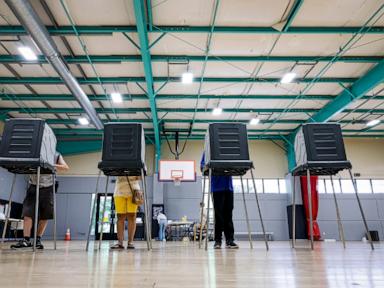
The machinery of election doubt is humming well ahead of November, powered by unverified claims about noncitizen voting that serve a dual political purpose: energizing a base and laying the structural groundwork to contest unfavorable outcomes.
As the midterm elections approach, the narrative surrounding ineligible individuals casting ballots has shifted from fringe internet theory to the center of executive branch policy. Federal agencies, including the Department of Homeland Security and the Department of Justice, are actively leaning into mass challenges of state voter rolls. Yet beneath the heavy rhetoric of election security lies a messy collision of administrative overreach, error-prone database matching, and political posturing that threatens to disenfranchise lawful citizens long before a single ballot is counted.
The Anatomy of a Data Phantom
To understand how claims of hundreds of thousands of illicit registrations materialize, one must look closely at how administrative lists are handled. Federal officials have leaned heavily on programs like the Systematic Alien Verification for Entitlements database to cross-reference state voter files. On paper, matching records sounds precise. In practice, large-scale database matching is notoriously vulnerable to false positives.
Consider a hypothetical scenario common in modern data administration. Two individuals share a similar surname, a matching birth date, or historical address records in a commercial database. When federal systems sweep through millions of files without manual verification, administrative updates that failed to follow a citizen through a move or a naturalization process get flagged as red alerts.
Independent experts and election administrators have repeatedly pointed out that these raw matches are statistical smoke rather than concrete proof of malfeasance. When states perform rigorous, boots-on-the-ground audits of flagged entries, the vast majority evaporate into clerical errors, software glitches at motor vehicle agencies, or outdated federal records.
Yet, nuance rarely survives the political cycle. High-ranking officials weaponize raw, unvetted matching totals in prime-time speeches, transforming administrative discrepancies into systemic threats. By the time election boards verify the records and clear eligible voters, the political damage is already done. The public seed of doubt has been planted.
Pre-Election Pressure and Legal Gridlock
The strategy extends far beyond public speeches. The legal landscape leading into the midterms is choked with emergency injunctions and federal mandates designed to alter mail-in voting procedures and voter roll maintenance. Recent actions by the Supreme Court easing restrictions on executive branch efforts to police mail-in ballots have injected acute uncertainty into state-level administration.
Local election clerks find themselves caught in an impossible crossfire. Federal authorities threaten criminal prosecution for noncompliance with aggressive roll-cleansing directives, while federal courts simultaneously block rushed implementation plans that risk stripping legitimate voters from the system.
The timing is far from accidental. Federal laws historically mandate quiet periods ahead of major elections precisely to prevent chaotic purges that lead to accidental disenfranchisement. Injecting mass challenges into this window guarantees friction. When databases clash and administrative deadlines collide, lines lengthen, provisional ballots multiply, and post-election uncertainty metastasizes.
The Pre-Emptive Result Challenge
The ultimate utility of the noncitizen voting panic is not preventing unauthorized ballots—which academic studies and historical audits prove occur at an infinitesimal rate—but establishing a ready-made pretext for challenging tallies.
When political figures condition their supporters to believe that voter rolls are saturated with ineligible participants, every close margin transforms into proof of corruption. It shifts the burden of proof onto local officials who must spend precious post-election days defending routine administrative accuracy against coordinated campaigns of suspicion.
The strategy creates a self-fulfilling cycle of distrust. Fabricate administrative panic, force last-minute legal interventions that strain local resources, point to the resulting procedural confusion as evidence of a broken system, and use that manufactured chaos to justify the next wave of challenges.
As November draws nearer, the noise will only intensify. Beneath the legal briefs and the prime-time warnings, the core mechanics of state-level elections remain resilient, guarded by layered physical security and bipartisan local oversight. But keeping that reality front and center requires cutting through a deliberate fog designed to make routine administration look like a crisis.
For a closer look at how federal agencies are ramping up these efforts ahead of the midterms, watch this report from The National Desk on YouTube.