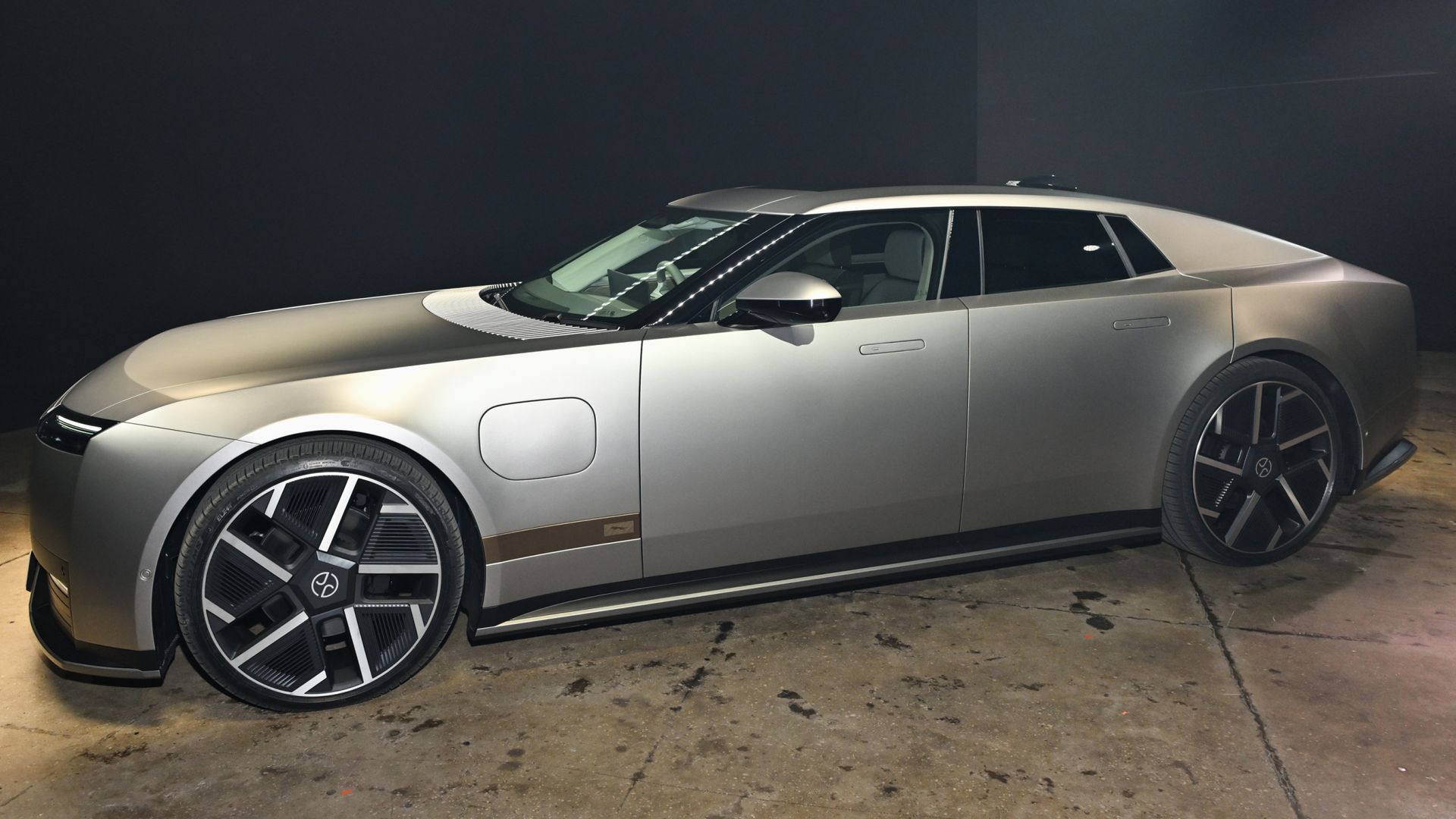
Two years after Jaguar lit its own marketing playbook on fire, the British automaker finally rolled out a real electric car. Meet the Type 01, a four-door electric grand tourer revealed in New York on October 6, 2026.
If you've been following this saga, you know the backstory isn't subtle. In late 2024, Jaguar dropped a "Copy Nothing" rebrand film packed with colorful outfits, abstract art, and zero cars. Elon Musk famously asked on X, "Do you sell cars?" Right behind the ad campaign came a brutal product blackout—Jaguar shut down production of almost its entire existing lineup before replacements were ready.
Now the Type 01 is here, slated for order books in early 2027 and deliveries in the second half of the year, with U.S. pricing pegged around $130,500 (roughly £120,000). That answers Musk's question. It doesn't automatically erase two years of whiplash.
Why Jaguar's new electric car arrives under a cloud
Let's be honest about what happened here. Jaguar didn't fail because electric grand tourers are dead. It stumbled because it treated brand identity like a fashion magazine cover while leaving its showrooms empty.
When Jaguar wound down internal combustion production in 2024 without a ready electric replacement, dealers across Europe and the UK were left with almost nothing to sell. Reports from Autoblog noted fewer than 50 Jaguar registrations in Europe in a single month during 2025. You can't convert curiosity into cash when buyers walk onto a lot and find bare floors.
Even the creative direction felt disconnected from hardware. Industry observers pointed out that Jaguar's design studio created the Type 00 concept—which debuted in Miami in December 2024 in Miami Pink and London Blue—while an external agency handled the much-mocked launch video. Managing director Rawdon Glover defended the push as "fearless creativity" inspired by David Bowie and Vivienne Westwood, and he openly expected as many as 85% of existing Jaguar customers to walk away.
Expecting 85% churn isn't a typo. It was an admission that Jaguar was deliberately abandoning its old buyer base.
What the Type 01 actually brings to the table
Strip away the Twitter jokes and culture-war noise, and the hardware story gets much more interesting. Jaguar says the Type 01 will be the most powerful and technologically advanced production Jaguar ever built, designed, engineered, and manufactured in the UK.
Look back at the Type 00 concept clues from late 2024 to see where Jaguar's engineering head is at:
- A dedicated electric architecture built from the ground up rather than adapted from petrol platforms.
- Targets around 478 miles of range on the concept spec, with rapid charging promising roughly 200 miles in 15 minutes.
- Cabin theater that leans into bespoke luxury—think butterfly doors, floating wool-blend seats, and hand-finished brass accents running down the interior.
Compare that to Jaguar's older I-PACE, which topped out around 246 miles of range and sat awkwardly between mainstream EVs and six-figure luxury rivals. By pushing the Type 01 up to roughly $130,500, Jaguar is aiming squarely at ultra-luxury GT territory rather than fighting Tesla or German volume players on price.
There's a safety net underneath all this. Parent company JLR leans heavily on Land Rover profits, which gave leadership room to endure a multi-year sales drought at Jaguar without immediate existential panic. Most automakers don't get that luxury.
The misconceptions everyone gets wrong about this rebrand
People love simple villains, so two myths dominate every conversation about Jaguar's electric pivot.
First, critics claim the rebrand alone destroyed Jaguar's sales. That's backwards. A viral ad didn't empty dealer lots; shutting down petrol and diesel production before building the next EV generation did. Marketing amplifies what you have. If you have zero cars on sale, even a brilliant campaign turns into a punchline.
Second, fans of classic British motoring assume luxury buyers won't touch an electric GT. Not true—Porsche proved electric sports sedans and wagons can command serious money, even if EV demand fluctuates across markets. Look at Autoblog or Motor1 coverage of JLR's transition, and the real question isn't whether EVs can be luxurious. It's whether affluent buyers trust a brand that spent two years lecturing them while offering nothing to test drive.
Meanwhile, rivals aren't waiting around. Lamborghini ruled out an EV before the end of the decade, and McLaren signaled hesitation about rushing into battery-only supercars because buyers still want petrol engines. Jaguar is betting the opposite way: all-in on electric, upmarket, and unapologetically weird.
What buyers and brand builders should watch next
If you're shopping in the six-figure luxury EV space—or watching Jaguar as a business case study—don't judge the Type 01 by 2024's ad tweets. Judge it by what happens when real money hits the table in 2027.
- Check verified real-world range and charging curves once independent road tests drop, not just concept numbers.
- Watch early 2027 order disclosures and late-2027 delivery volumes to see whether new ultra-luxury buyers replace the legacy crowd Jaguar wrote off.
- Compare total ownership costs, service network readiness, and resale confidence against established electric flagships before putting down a deposit.
For anyone running a brand or product launch, the takeaway is even sharper: never decouple your story from your inventory. Build the car first, let people touch it, and let the product earn the swagger.