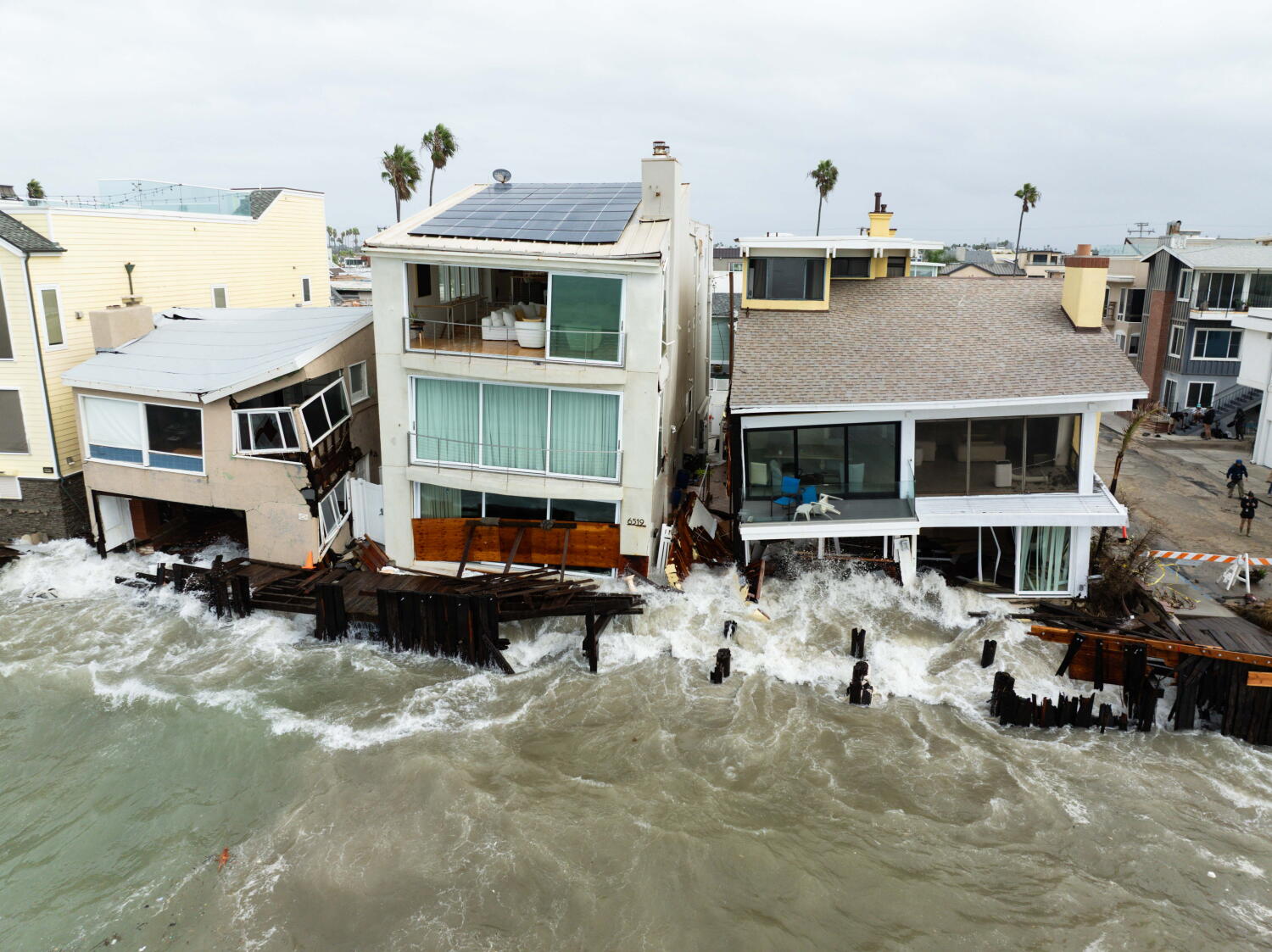
Millions in public and private capital poured into Long Beach coastal infrastructure cannot permanently stop rising sea levels because ocean displacement is driven by planetary thermal expansion and ice sheet melt that municipal budgets cannot reverse. Local engineering projects can buy time, buffer storm surges, and protect specific blocks for decades, yet they operate inside physical limits set far beyond city hall. Anyone treating a seawall or pump station as a permanent cure is mistaking delay for victory.
I have watched coastal municipalities spend decades chasing certainty with concrete, steel, and optimistic engineering models. Every flood cycle brings a fresh wave of press releases promising resilience, followed quietly by revised elevation numbers when the tide gauges keep climbing. In Long Beach, where industrial port operations, dense residential neighborhoods, oil extraction legacy sites, and sandy beaches sit side by side along the Pacific, the gap between financial scale and geophysical reality is wide enough to swallow entire budgets.
The Math of Ocean Rise Versus City Budgets
Money buys materials, permits, labor, and pumps. It does not alter the volume of water warming across the Pacific Basin or the rate at which polar ice sheds mass into the global ocean.
When municipal leaders announce tens or hundreds of millions of dollars for coastal protection, the numbers sound immense on a local ledger. Spread across miles of shoreline, aging storm drains, marina bulkheads, and low-lying neighborhoods, those millions shrink fast. A single major pump station upgrade or segment of reinforced shoreline can absorb tens of millions before a single king tide tests the seam.
Sea level rise is not a one-time event with a clear finish line like repaving a highway or replacing a bridge deck. It is a continuous baseline shift layered on top of tides, seasonal swell, El Nino fluctuations, and extreme storm surges. Building a barrier to yesterday's high-water mark leaves the next decade exposed; building to a moving target means costs compound while the physical margin for error narrows.
There is also a structural mismatch in how cities finance infrastructure. Municipal bonds, grant cycles, and political terms run on years or election cycles, while shoreline change unfolds across generations. Officials face intense pressure to fund visible projects that look decisive right now, even when long-term inundation curves point toward much harder choices later.
Engineering Limits Along a Working Coast
Concrete is strong. The ocean is patient.
Long Beach is not a pristine, empty stretch of coast where planners can simply retreat inland or shape dunes at will. It is a complex, heavily modified urban and industrial waterfront. Port facilities, terminals, rail corridors, roads, underground utilities, and neighborhoods are tightly packed along low-lying ground.
Hard armoring such as seawalls, revetments, and bulkheads can block waves and raise the threshold for nuisance flooding. Yet hard structures carry built-in trade-offs that rarely make the ribbon-cutting speech. Wave energy hitting a vertical wall reflects downward and outward, scouring sediment at the base and accelerating beach narrowing in front of the barrier.
No beach means no natural wave dissipation. When sand disappears in front of a seawall, the wall itself faces direct wave pounding that it was never meant to endure long-term.
Subsurface conditions complicate the picture even further. Coastal ground is porous and interconnected. Water does not politely wait for a surface wall to be overtopped when storm surges or high tides coincide with heavy rain and saturated soil. Groundwater intrusion and drainage backflow can push water up through storm systems and low spots behind a barrier even when the front face holds.
Protecting a single parcel or stretch of shoreline can shift water pressure or flood risk onto neighboring areas that lack the same elevation or drainage capacity.
Consider a hypothetical example of a neighborhood block protected by a newly raised street curb and localized pump. If adjacent streets remain lower or lack matching drainage capacity, water during a peak high tide combined with heavy local runoff can still pool in low driveways, back up into storm lines, or isolate access routes even if the main barrier never breaches. That kind of partial protection creates a false sense of security that catches residents off guard during compound events.
Why Slow Adaptation Beats Panic Spending
Throwing bigger checks at short-term fixes is rarely the sharpest move. Smarter adaptation starts with honesty about what money can actually buy.
Every dollar spent on the coast falls into one of three practical buckets: protection, accommodation, or managed retreat. Protection tries to hold the line with walls, levees, or beach nourishment. Accommodation accepts periodic water intrusion and adapts buildings, utilities, and streets to live with it. Managed retreat gradually moves high-risk assets and structures out of harm's way over time.
Most public debates fixate on protection because it feels familiar and defensive. Yet over-investing in rigid barriers in places where long-term water levels will eventually surpass them can trap public money in sunk costs. A seawall built for today's constraints can become an expensive obstacle if a broader redesign is needed twenty years later.
Nature-based solutions, such as restoring wetlands, marshes, and living shorelines where space allows, offer real value by absorbing wave energy and supporting ecosystems. Still, even healthy marshes are not magic shields. If sea levels rise faster than sediment can accumulate and wetlands can migrate inland, squeezed marshes drown against development behind them.
What Investors and Residents Miss
Financial headlines often treat coastal spending as proof that property and infrastructure are safe. That is a dangerous misreading of risk.
Infrastructure investment lowers risk within a defined design envelope. It does not erase exposure outside that envelope. A project engineered to handle a specific combination of tide and surge can still be overwhelmed when a king tide, high surf, and heavy rain arrive on the same day.
Insurance markets, lending standards, and maintenance schedules eventually catch up to physical reality. Even when a wall holds back surface flooding, rising water tables can corrode buried infrastructure, stress foundations, and raise long-term upkeep costs that never show up in the initial construction price tag.
Residents and business owners also tend to judge flood risk by past experience rather than forward trajectory. Having seen dry streets during most sunny afternoons, people understandably discount gradual shifts until water crosses a threshold that repeats every year.
Hard Choices Ahead for Coastal Cities
Pretending millions can stop the ocean is comforting politics. It is terrible planning.
Real leadership in a coastal city means pairing honest risk maps with disciplined spending. Instead of funding scattered piecemeal fixes that look impressive on paper while leaving weak links exposed, planners have to prioritize critical lifelines, upgrade stormwater systems that can handle backflow, and set clear triggers for when holding a line no longer makes financial or physical sense.
Gray areas are everywhere in coastal policy. No single blueprint fits every block, pier, or residential street, and abrupt displacement carries heavy social and economic costs that no responsible planner should brush aside. Still, delaying hard trade-offs only narrows future options while making eventual adjustments more expensive.
Every dollar committed to Long Beach's shoreline should be judged by a simple question: does this buy genuine, well-understood time with a clear plan for what comes next, or does it just pay to look busy while the tide keeps rising?