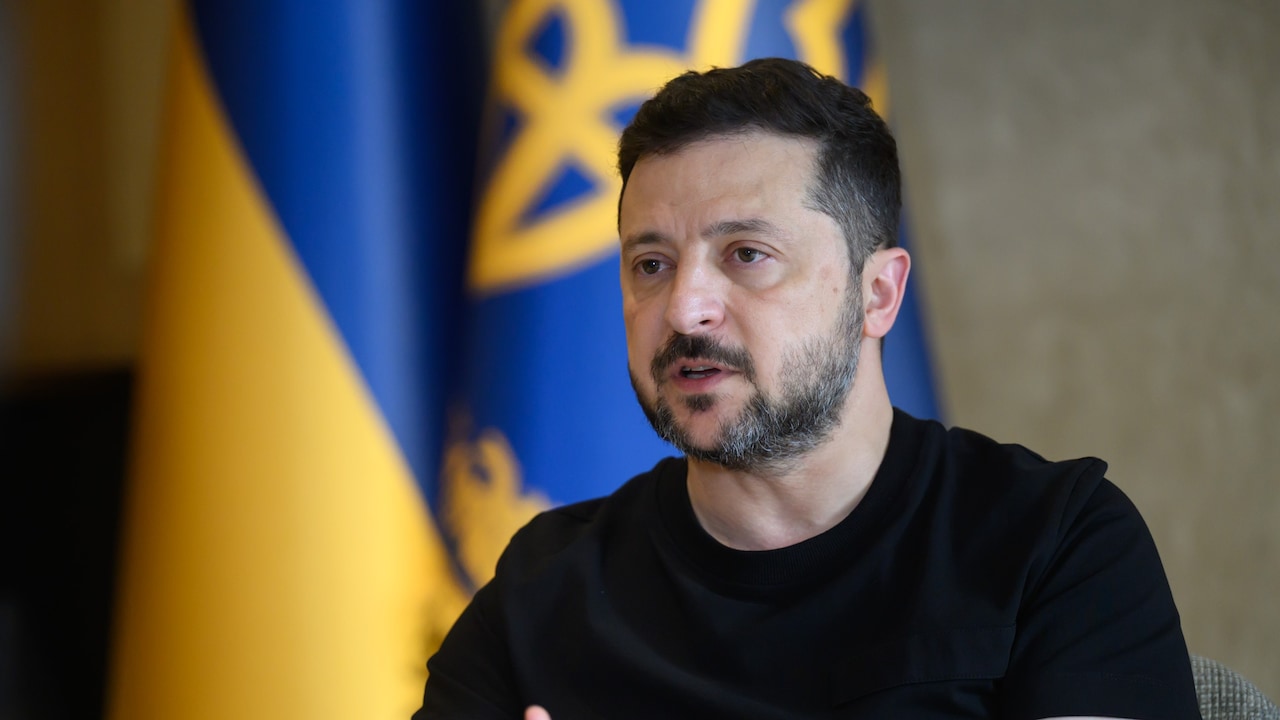
The official diplomatic communiques from European capitals painted a picture of containment. Leaders stood behind polished mahogany podiums, assuring their domestic constituencies that economic sanctions and supply chain bottlenecks had permanently clipped Moscow's offensive capabilities. Vladimir Putin's stated assurances regarding European security borders were taken at face value by political desks eager for a return to normalcy.
Beneath the diplomatic theater, military intelligence telltales pointed toward an entirely different reality. Also making news in this space: The Architecture of Imperial Intellect Deconstructing the Discovery of Aristotelian Pedagogical Sites.
Russia is quietly expanding its military industrial footprint and restructuring force generation pipelines, completely contradicting political assurances of restraint. Defense analysts tracking procurement data, satellite imagery of manufacturing hubs, and labor shift expansions across the Ural Mountains have found that force augmentation is not slowing down. It is accelerating.
Understanding how Moscow continues to scale its military apparatus requires looking past the political rhetoric and examining the cold mechanics of state-directed mobilization. More insights into this topic are explored by NBC News.
The Industrial Pivot
When sanctions struck the Russian economy, Western economists predicted an immediate collapse of high-tech defense manufacturing. That prediction ignored the sheer depth of Soviet-era stockpiles and the ruthless adaptability of a command-adjacent economy.
Factories once dedicated to civilian commercial goods or agricultural machinery were retrofitted under emergency decree. Three-shift operations became mandatory across major defense plants in Nizhny Novgorod and Omsk. Machine tool imports from alternative trade partners substituted for embargoed European electronics, bypassing traditional export controls through complex transshipment corridors in Central Asia.
The strategy relies on quantity, standardized components, and domestic self-sufficiency. Armor production lines dropped complex, failure-prone optical arrays in favor of ruggedized, easily replaceable analog systems. This trade-off lowered the unit cost of primary combat vehicles while multiplying output.
Ground forces are no longer waiting for bespoke technological marvels. They are receiving standardized, mass-produced hardware designed for high-attrition conflict environments.
Manpower Pipelines and Societal Adaptation
Procuring hardware is only half the equation. Sustaining long-term military expansion demands a steady inflow of personnel without triggering severe domestic unrest.
Rather than executing a politically perilous nationwide mass draft, the Kremlin engineered a system of aggressive financial incentives. Regional enlistment bonuses escalated to figures that transformed military service into the highest-paying occupation available in economically depressed provinces. For young men in towns where industrial employment had dried up, signing a defense contract became an irresistible upward mobility vehicle.
Simultaneously, the educational sector underwent a quiet militarization. Basic defense readiness courses returned to secondary schools. Technical vocational institutes redirected graduation quotas toward welding, diesel mechanics, and drone operation.
This creates a self-sustaining demographic pipeline. The state does not need immediate popular enthusiasm for its geopolitical aims when economic desperation and institutional conditioning secure a consistent supply of recruits.
The Strategic Miscalculation in Western Capitals
Why did European planners miss the signs of this long-term buildup? The error stems from mirror-imaging.
Western defense ministries operate on multi-year procurement cycles, transparent budget approvals, and strict fiscal accountability. Analysts expected Moscow to behave according to Western economic rationality, assuming that high inflation, labor shortages in civilian sectors, and depleted foreign currency reserves would force a scaling back of military ambitions.
That assumption misunderstood the nature of a wartime economy. In a system where state survival supersedes consumer welfare, inflation and budget deficits are secondary concerns managed through capital controls and forced savings.
While Western publics debated defense spending increases as a percentage of GDP, Moscow treated national output as an existential zero-sum game. Every ruble diverted from civilian infrastructure to artillery shell production was viewed as an investment in state longevity.
The Logistics of Endurance
Logistical depth remains the ultimate arbiter of modern protracted conflict. The Russian General Staff has spent decades studying the logistical friction points that plagued its early operations, systematically hardening supply lines against interdiction.
Rail networks have been fortified, bypassing vulnerable highway chokepoints. Ammunition depots have been decentralized, breaking massive central arsenals into smaller, dispersed caches protected by earthen berms and active air defense coverage.
Fuel distribution has similarly adapted, shifting from vulnerable commercial tanker fleets to hardened military pipeline units capable of rapid deployment. These improvements mean that even as supply lines stretch across contested territory, the system's resilience against targeted strikes has multiplied.
The Regional Implications
As Moscow solidifies its industrial and manpower base, the security architecture of Eastern Europe faces an unprecedented stress test. Frontline states are discovering that deterrence requires more than diplomatic warnings or symbolic brigade deployments.
The manufacturing output of Russian defense plants now outpaces the combined artillery shell production capabilities of several major Western European nations. Closing that gap requires a fundamental restructuring of Western industrial policy—a process that faces severe political resistance, labor shortages, and budgetary friction.
The gap between diplomatic promises made in European capitals and the concrete reality of industrial expansion in the East continues to widen. Ignoring the mechanics of this military scaling will not make it disappear. The factories along the Volga River are running around the clock, turning raw steel and imported microchips into a permanent pillar of state power, ensuring that any calculation of European security must account for a neighbor permanently armed for endurance.