The coffee maker in apartment 4B blinked its angry red digits at 3:14 AM. Then, the refrigerator stopped its low, comforting hum. Outside the window, the amber sodium glow of the streetlamp flickered once, twice, and died.
Darkness in a modern city is not the soft, velvet blackness of the countryside. It is an abrupt, sterile void. In other developments, take a look at: Why Every Breaking News Report on Papua New Guinea Earthquakes is Completely Useless.
To the woman in apartment 4B, Elena, it was just another nuisance. A blown transformer. A summer storm rolling in from the coast. She pulled her quilt tighter around her shoulders, cursed under her breath at the impending clock-reset she would have to perform in the morning, and drifted back to sleep. She did not know that three miles away, inside a chain-link enclosure choked with high-voltage humming and heavy copper coils, a timer had just clicked down to zero.
She did not know because the metal did not detonate. The operators who designed the grid built in redundancies against the erratic brutality of lightning and falling branches, but they rarely accounted for human malice wrapped in silence. BBC News has analyzed this important issue in extensive detail.
When the local police and federal investigators arrived at the substation hours later, they found no craters. They found no political manifestos taped to the gate. Instead, they found cold, surgical precision: crude, makeshift explosive devices wedged directly against the primary transformer fins—engineered not necessarily to level the block, but to cascade a failure so catastrophic that thousands of lives would freeze in mid-air.
Sabotage.
It is a word that belongs in old-world history books, tucked between grainy black-and-white photographs of railway workers dropping wrenches into gears. We like to think we have evolved past it. We believe our infrastructure is too vast, too digitized, too smart to be brought low by something as primitive as a pipe bomb. We stare at glowing dashboards and algorithmic throughput charts, convinced that security lives in code.
It does not. Security is physical. It is vulnerable. And it smells like ozone and damp earth.
Consider what happens next when an investigation of this magnitude begins. The public gets a sanitized bullet point on the evening news: Discovery of explosive devices at substation leads to sabotage probe. The words roll off the news anchor's tongue like weather reports. Fifty words. A thirty-second slot before the commercial break.
The report misses the terror of the mundane.
Because behind that single headline lies a terrifying reality: the nervous system of modern civilization is exposed. We have spent decades building an intricate web of power lines, water mains, fiber-optic cables, and gas pipelines that stretch across continents like veins. We rely on them for everything. We breathe through them. We work through them. We love through them. Yet, they sit out there in the empty lots, behind rusted chain-link fences, monitored by grainy cameras that nobody is watching until the screen goes blank.
Imagine, for a moment, the technician who walked the perimeter of that station on his routine morning check. Let's call him Marcus. Marcus has worked for the utility company for twenty-two years. He knows the hum of every transformer in the district the way a mother knows the breathing of her sleeping child. He can tell if a coil is running three degrees too hot just by placing his palm against the steel housing.
When Marcus saw the anomaly—a strange, dark cylindrical shape strapped to the cooling fins with heavy-duty zip ties—his stomach did not drop with cinematic drama. It went cold and heavy.
He didn't run. He froze. He pulled out his radio, his thumb slick with sweat against the plastic push-to-talk button, and whispered into the frequency.
"Control, this is unit four. You need to clear the sector. Now."
That is where the real story lives. Not in the press conferences held days later by men in dark suits speaking in acronyms, but in the sickening realization of how close the edge really is.
We live in a culture that worships the cloud, the invisible network, the wireless ether. We talk endlessly about data streams and cyber attacks coming from distant servers across oceans. We imagine enemies in dark rooms typing lines of malicious code that can plunge a metropolis into chaos with a keystroke. That theater is seductive. It makes us feel like we are living in a high-tech thriller.
Physical sabotage is far more unsettling because it strips away the sci-fi veneer. It requires no supervillain mastermind. It takes a pair of wire cutters, an ammonium nitrate mixture, and a bus ride to the edge of town.
The investigation into the substation devices quickly widened into a multi-agency probe involving counter-terrorism units, local detectives, and federal forensics teams. They combed through weeks of grainy CCTV footage from nearby convenience stores. They analyzed soil samples for trace chemical signatures. They cross-referenced cell tower pings to see who had drifted too close to the perimeter fence in the dead of night.
Yet, the answers remain stubbornly elusive. That is the nature of asymmetric warfare against the everyday. Anyone can walk up to a fence under the cover of a moonless Tuesday. Anyone can leave a package behind and vanish into the morning commute.
This is the vulnerability we refuse to look at. We invest billions in cybersecurity firewalls while copper substations sit in overgrown fields surrounded by chain-link fences that could be hopped by an energetic teenager. We protect the data while leaving the anchor vulnerable to a match.
When the power came back on in Elena’s apartment building twelve hours later, the digital clock on her microwave stopped flashing its angry red light and settled back into its silent, steady march. She made her coffee. She checked her phone. She complained briefly to a coworker about the fridge being warm, wondering aloud if her milk had gone sour.
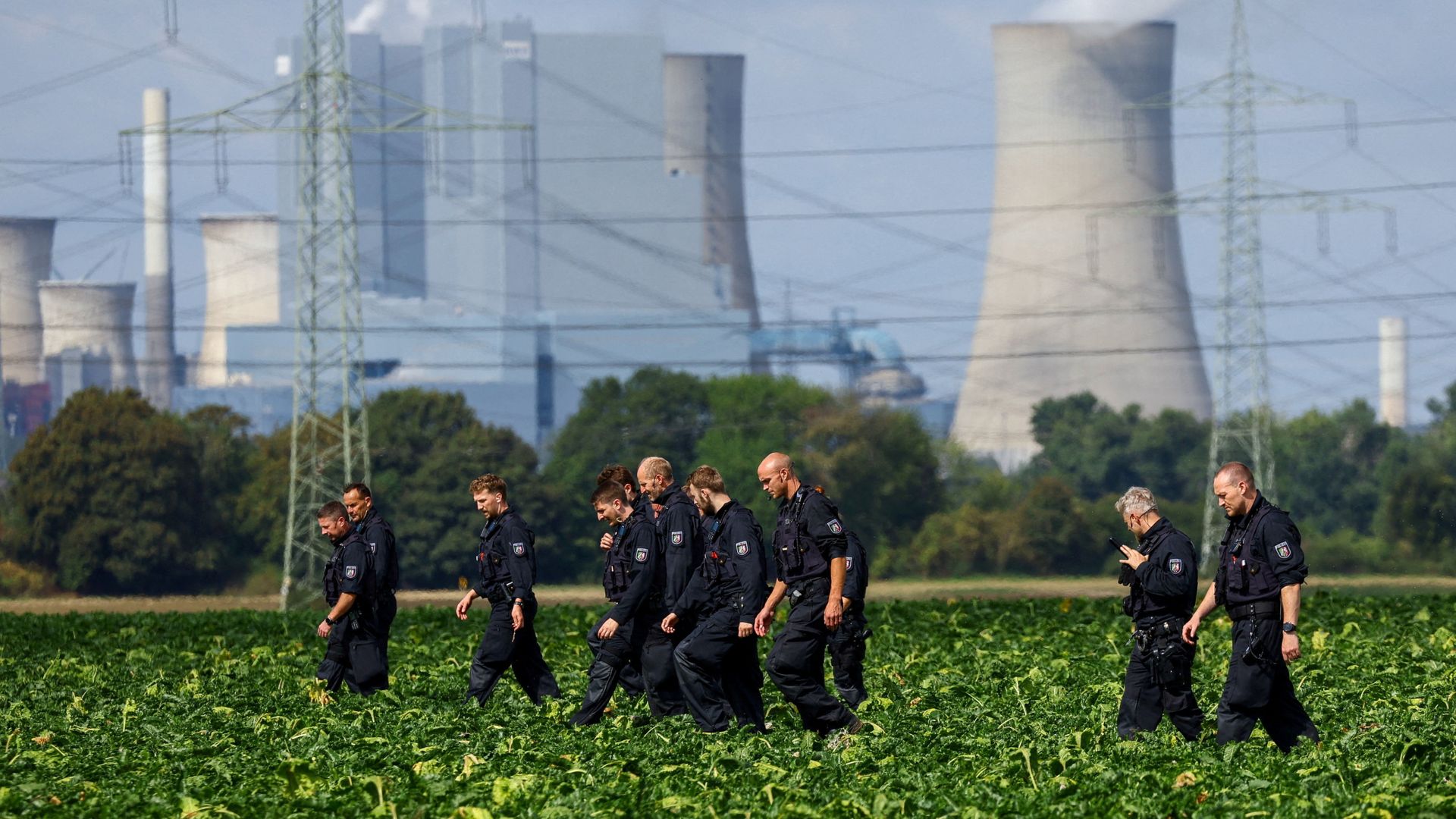
She never thought about the substation. She never thought about the makeshift pipes, the live wires, or the quiet men in jackets walking through the tall grass with metal detectors.
She didn't need to. That was someone else's job.
Until the next time the lights flicker. Until the next time the hum dies. Until the invisible infrastructure we take for granted reminds us that civilization is only ever twenty-four hours away from the dark.