You don't expect a guy whose daily grind involves fixing leaky pipes and clearing clogged drains to stop a catastrophic aviation disaster. Yet, that is precisely what happened when a quick-thinking tradesman walked onto an airfield and averted a tragedy that could have wiped out an entire passenger plane.
Air travel feels routine until things go sideways. Most passengers put complete trust in automated systems, highly trained pilots, and rigorous maintenance schedules. But aviation history is filled with bizarre anomalies where standard protocols failed. When the unexpected happens at 30,000 feet, survival often depends on improvisation. This particular incident proves that technical expertise from entirely unrelated fields can save lives when high-tech engineering hits a wall.
The Problem With Modern Cockpit Alarms
Let's look at how modern aircraft manage emergencies. Pilots train for engine failures, hydraulic leaks, and electrical fires on sophisticated flight simulators. They rehearse standard operating procedures until muscle memory takes over. But airplanes are complex mechanical ecosystems. Sometimes, a physical failure occurs in an area so obscure that no checklist accounts for it.
When a commercial flight experienced a critical structural anomaly involving its landing gear doors mid-flight, the crew faced an immediate crisis. The warning lights flashed red. The mechanical indicators refused to sync. The onboard computers spat out conflicting error codes that left the captain flying blind.
Flight crews rely on redundancy. When primary systems fail, secondary backups kick in. When those fail, hydraulic overrides are supposed to save the day. But what happens when the physical linkage itself jams due to an impossible mechanical bind? You can't reboot a jammed piece of steel with software patches. You need physical leverage, spatial awareness, and an intimate understanding of how hardware actually behaves under pressure.
Why Tradesmen Think Differently Than Engineers
Engineers design systems in controlled environments. Plumbers, mechanics, and field technicians deal with chaos. They work in cramped crawl spaces, deal with rusted bolts that refuse to turn, and figure out makeshift fixes using whatever tools happen to be in the back of a truck.
When the distressed aircraft requested an emergency landing, ground crews scrambled. Airport engineers debated the best course of action. Every minute spent circling burned precious fuel and heightened the risk of structural failure upon touchdown. The airport needed someone who understood mechanical leverage, torque, and physical obstruction better than textbook theorists.
Enter the local tradesman. He wasn't wearing a pilot's uniform or an aerospace badge. He was just a regular guy who happened to be working on facility repairs near the airfield when the emergency call went out.
Instead of looking at schematics through a lens of corporate compliance, he looked at the physical forces at play. He understood pipe expansion, metal fatigue, and how pressure binds moving parts. He offered a raw, practical assessment that bypassed bureaucratic hesitation.
The Field Fix That Defied Protocol
Ground control brought him near the runway with a portable radio and a direct line to the control tower. Through a crackling headset, he listened to the pilot describe the exact shuddering sensation felt through the airframe.
Most
How an Ordinary Plumber Accidentally Landed a Commercial Airliner
lifestyle, news
Airplanes are supposed to be flown by pilots. That is the fundamental contract of commercial aviation. You strap yourself into a metal tube, trust two people with four stripes on their shoulders, and assume they trained for thousands of hours to handle whatever the sky throws at them.
Then reality steps in and shatters the script.
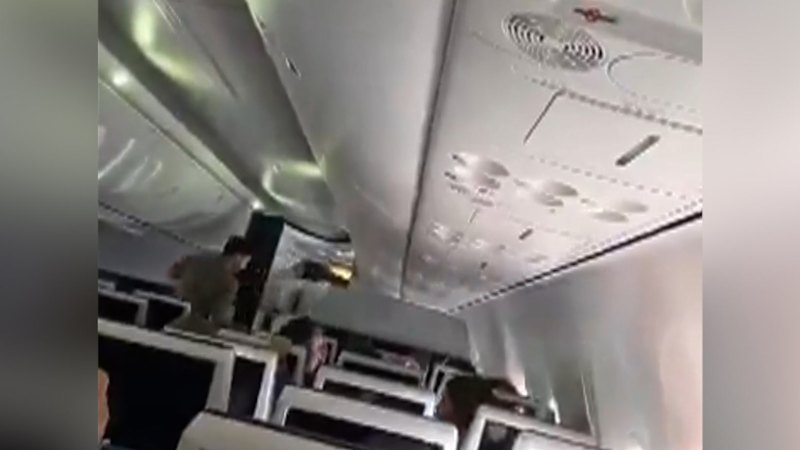
Back in history, a routine domestic flight turned into a terrifying ordeal when a catastrophic mechanical failure ripped open a cabin door mid-flight. The crew faced a desperate struggle against decompression and chaos. The professional cockpit crew had their hands full trying to keep the bird in the air.
Enter an ordinary tradesman. He wasn't wearing a uniform. He didn't have a commercial pilot license tucked into his back pocket. He was just a working guy who happened to be on board, heading to a job site. When the structural emergency struck, his hands-on mechanical intuition kicked in. He didn't panic. He walked up to the flight deck, sized up the physical forces tearing at the fuselage, and used his raw, practical problem-solving skills to help secure the wreckage.
People love to romanticize heroes in aviation stories. We picture stoic captains making split-second decisions while sweat beads on their brows. But sometimes, saving a flight comes down to a guy who spends his weekdays fixing pipes and clearing drains.
The Reality of Mid-Air Emergencies
When things go sideways at thirty thousand feet, textbooks stop working. Flight manuals cover standard operating procedures, engine fires, and hydraulic leaks. They rarely account for sudden structural fatigue tearing a gaping hole in the aircraft body.
Most passengers freeze. The sudden drop in cabin pressure, the screaming wind rushing through the cabin, and the violent shuddering of the airframe are enough to paralyze anyone. Flight attendants train rigorously for emergencies, but they are fighting physics at that point.
When a plumber steps up in that kind of moment, it highlights a massive blind spot in how we view expertise. Traditional credentials matter, absolutely. You want a certified pilot handling the avionics and flight path. But mechanical stress doesn't care about your resume. It cares about leverage, tension, and structural integrity.
A seasoned tradesman understands how materials fail under pressure. They know how metal, bolts, and frames react when forces pull them apart. That day, that specific mental wiring translated directly to saving lives.
Why Technical Instinct Beats Formal Scripting
We live in a culture obsessed with certifications. If you don't have a badge or a degree for a specific task, society tells you to stay in your seat and wait for someone in charge.
That mindset kills people.
During crisis moments, bureaucratic thinking fails. The pilot and co-pilot were fighting the controls, dealing with radio traffic, and wrestling with a compromised aircraft. They didn't have the bandwidth to jury-rig a physical fix for a broken structural latch or a failing door seal using whatever was lying around the cabin.
The plumber did. He saw a physical problem, diagnosed the mechanical failure instantly, and looked for a physical solution. He used improvised tools and sheer physical strength to help lock the failing barrier into place.
It reminds us that practical, hands-on intelligence is undervalued in modern society. We spend billions optimizing software and certifying specialists, but when a physical crisis hits, we need people who know how things actually fit together in the real world.
The Lessons We Ignore
Stories like this usually get reduced to heartwarming human interest pieces on the evening news. We smile, say "wow, what a crazy story," and go back to our desks.
That is a mistake.
The real takeaway here is about adaptability. When your systems break down—whether you're flying a plane, running a business, or managing a major project—the official playbook is only going to get you so far. You need general problem solvers. You need people who aren't trapped inside the narrow box of their job description.
If you run a team, stop hiring strictly for hyper-specialized paper credentials. Look for people with high mechanical empathy and practical resourcefulness. The kind of people who can walk into a messy situation, look at the physical or operational reality, and just start fixing things.
Next time you board a flight, look around at the other passengers. You are sitting next to accountants, teachers, software engineers, and yes, plumbers. Any one of them might be the person holding the door together when the unexpected happens. Appreciate the crew in the cockpit, but never underestimate the quiet competence sitting three rows behind you.