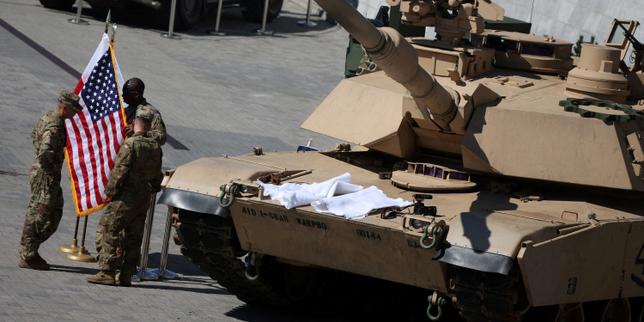
The Pentagon will not deploy a permanent brigade of 4,000 additional soldiers to Poland, reversing long-held expectations in Warsaw. A senior American military official recently confirmed the decision, grounding a wave of geopolitical speculation that had built up over months of bilateral talks. The refusal stems not from a lack of commitment to NATO’s eastern flank, but from a calculated shift toward strategic flexibility and logistical reality. Washington prefers rotational forces and rapid-reinforcement capabilities over fixed, static targets that strain resources and complicate European defense integration.
This decision exposes the friction between Eastern European political desires and American military doctrine. For years, Warsaw has lobbied for a permanent U.S. armored division on its soil, even offering billions in funding to offset the costs. To Polish planners, permanent boots on the ground represent the ultimate deterrent—an unbreakable tripwire that guarantees immediate American involvement in any conflict.
Washington sees it differently. The modern Pentagon views permanent overseas bases as expensive relics of a bygone era.
The Rotational Illusion and Logistical Friction
Maintaining a permanent military footprint requires immense infrastructure. It is not just about building barracks and tank depots. It means establishing schools, hospitals, and housing for families. It turns a combat-ready force into a small American town embedded in a foreign country.
By opting for rotational deployments instead, the U.S. Army keeps its units lean and focused entirely on readiness. Soldiers deploy for nine months at a time, leaving their dependencies at home. They train intensely with host-nation forces, pack up, and return to their home bases in the United States.
But this rotational model has its own hidden costs. The wear and tear on equipment is severe. Heavy armor, like the M1 Abrams tank and the M2 Bradley fighting vehicle, must be constantly maintained or shipped back and forth across the Atlantic. The Pentagon relies heavily on Prepositioned Stock sites—massive, climate-controlled warehouses scattered across Western Europe—to mitigate this transit strain. Yet, moving thousands of tons of steel from storage facilities in Germany or the Netherlands to the fields of Poland during a crisis remains a logistical nightmare.
European infrastructure is a major bottleneck. The rail networks, bridges, and highways of Central Europe were largely built during the Cold War or designed for civilian commerce. Many bridges cannot support the 70-ton weight of a modern American main battle tank. Rail gauges change at certain borders, requiring time-consuming transfers of cargo. The U.S. military knows that a permanent brigade stuck behind a collapsed bridge is no deterrent at all.
Sovereignty and the Host Nation Burden
Warsaw’s willingness to fund American bases has never been in question. The Polish government previously floated the concept of a dedicated base, demonstrating a deep financial commitment to securing a permanent U.S. presence.
However, financial underwriting does not solve the strategic dilemma for Washington. A permanent base binds American foreign policy to the immediate geopolitical anxieties of the host nation. It reduces the President’s operational maneuverability.
If a crisis erupts in the Indo-Pacific theater, pulling troops out of a permanent base in Poland creates a massive political crisis in Europe. It signals abandonment. Conversely, shifting rotational forces is viewed as standard operational procedure. The Pentagon demands the freedom to reallocate its assets globally without triggering a diplomatic meltdown every time a battalion moves.
Furthermore, Western European capitals have quietly resisted the permanent shifting of NATO’s center of gravity to the east. Berlin and Paris prefer a collective defense framework managed through NATO structures, rather than a web of exclusive bilateral defense pacts between Washington and frontline states. The U.S. refusal to plant 4,000 permanent troops in Poland keeps the pressure on Western Europe to fulfill its own defense spending obligations.
The Strategy of Dispersed Lethality
The rejection of a massive troop concentration also reflects a fundamental change in how modern wars are fought. The conflict in Ukraine has shown that large, concentrated military bases are easily targeted by long-range precision missiles and loitering munitions.
Putting 4,000 American soldiers, along with their vehicles and command structures, into a single permanent facility creates a high-value target on the map. Satellite reconnaissance makes it impossible to hide such a footprint.
Decentralized Command
Instead of a massive central hub, the U.S. military is embracing a doctrine of dispersal. Smaller, agile units move frequently between different training areas. They utilize temporary forward operating sites, making it difficult for an adversary to target them effectively.
- Mobility over mass: Units survive by moving, not by hiding behind thick concrete walls.
- Interoperability: Working out of existing Polish bases allows U.S. forces to integrate deeply with local commanders.
- Unpredictability: Routine changes in troop rotations keep opposing intelligence agencies guessing about exact capabilities.
This approach shifts the focus from symbolic presence to actual combat readiness. A permanent brigade can become complacent, bogged down by the administrative tasks of running a garrison town. Rotational forces arrive with a high level of training, execute their mission, and depart before readiness degrades.
Balancing the Eastern Flank
The decision leaves Poland in a complicated position. While Warsaw receives significant reassurance through the presence of V Corps Headquarters Forward in Poznan, the lack of a permanent combat brigade wounds national pride and complicates long-term defense planning.
Poland is responding by embarking on one of the most ambitious military modernization programs in Europe. If the Americans will not station a permanent division, the Polish state will build its own.
| Equipment Ordered | Country of Origin | Purpose |
|---|---|---|
| M1A2 Abrams Tanks | United States | Heavy armored breakthrough |
| K2 Black Panther Tanks | South Korea | High-mobility maneuver warfare |
| K9 Thunder Howitzers | South Korea | Long-range precision artillery |
| HIMARS Rocket Systems | United States | Deep strike capability |
This massive acquisition strategy turns Poland into a military powerhouse in its own right. It changes the dynamic of the alliance. Washington is no longer looking at Poland as a vulnerable protectorate requiring a permanent American shield, but rather as a highly capable partner that can anchor the regional defense architecture on its own.
The Threat of Strategic Overextension
The United States is currently trying to manage security commitments across three separate fronts: supporting Ukraine against Russia, securing shipping lanes in the Middle East, and deterring conflict in the Taiwan Strait. The American defense industrial base is already strained, struggling to produce enough artillery shells, air defense missiles, and spare parts to satisfy global demand.
Deploying 4,000 permanent troops to Poland requires stripping resources from other critical areas. The U.S. Army is already facing recruitment shortfalls, meaning every new overseas commitment places an extra burden on an overstretched active-duty force.
Locking down a brigade in Poland restricts the global reserve. The Pentagon must maintain a pool of uncommitted forces ready to deploy anywhere in the world within 48 hours. A permanent deployment draws down that vital reserve, trading global agility for localized reassurance.
The refusal to establish a permanent base is a clear signal that Washington expects its European allies to lead their own defense. The United States will provide the nuclear umbrella, high-end intelligence, logistics, and air power. But the heavy lifting of territorial defense must be borne by the nations closest to the threat.
Relying on American boots as a psychological safety blanket is a luxury the current international security environment no longer permits. The future of European stability depends on structural readiness, infrastructure investment, and rapid reinforcement, not on the symbolic comfort of a permanent American garrison.