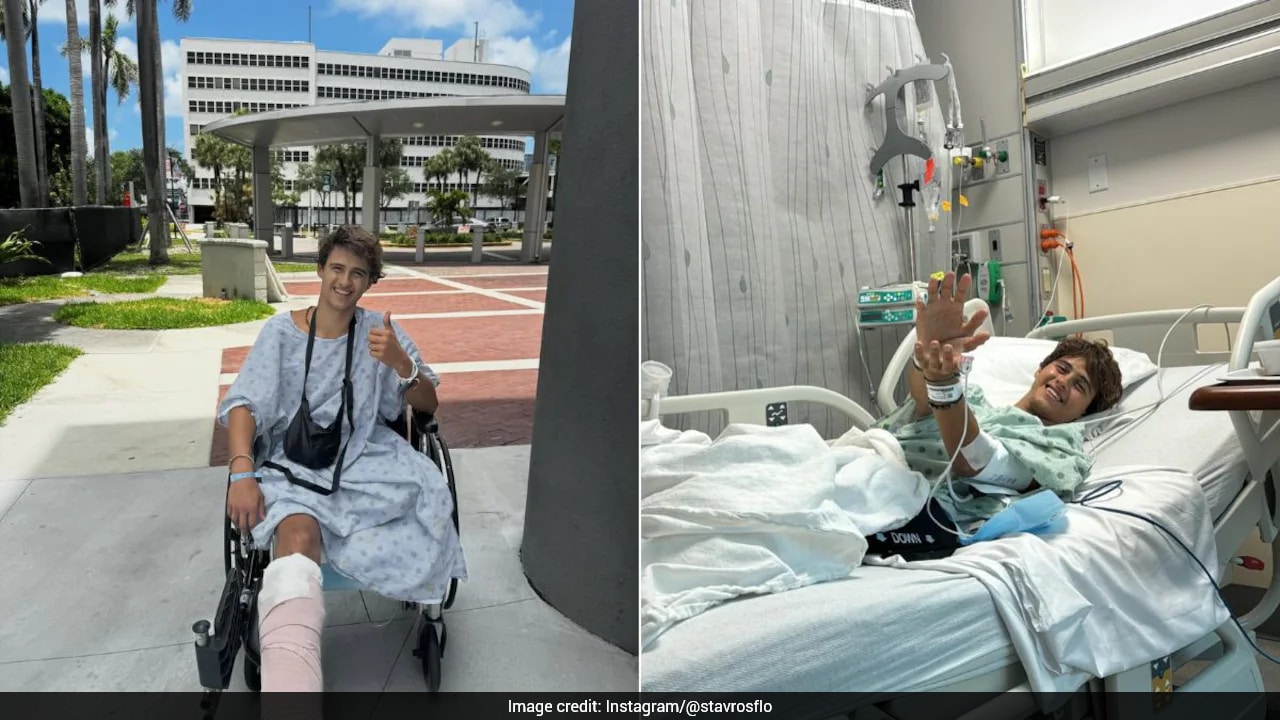
Reality television promises manufactured danger for our entertainment, but the real hazard is what happens when the cameras stop rolling and production companies cut corners. When former Survivor Greece contestant Stavros Floros filed a staggering $100 million lawsuit in Miami-Dade Circuit Court, it exposed the brutal underbelly of survival shows. At just 22 years old, Floros lost his left leg above the knee when a tourist boat propeller struck him while he was spearfishing during production in the Dominican Republic.
Most viewers assume that multi-national production houses have elite military-grade safety details stationed around every corner. They don't. The court documents filed by Floros' legal team paint a terrifying picture of negligence, highlighting an environment completely devoid of safety boats, protected swimming zones, or warning markers in open water heavily congested with commercial traffic. Meanwhile, you can explore related developments here: The Art of the Absence.
The Reality Behind the Manufactured Survival Formats
Production outfits like Acun Medya and broadcasting partners like Skai TV want maximum cinematic tension with minimum logistical overhead. On May 11, 2026, that loose approach turned catastrophic. Floros was told to spearfish for food in open waters near Bayahibe—a zone known for heavy, high-speed tourist boat traffic—without a spotter or perimeter control.
When the tragic collision happened, the consequences were immediate and irreversible. The physical impact severed his leg in the ocean, and court filings note that the missing limb was never recovered. A stranger aboard the very tourist boat that hit him had to step in and apply a makeshift tourniquet to save his life. A grueling 61-day hospitalization in Miami followed, involving multiple surgeries not just for the amputated left leg, but to reconstruct his severely battered right leg. To explore the complete picture, we recommend the recent article by Associated Press.
Production companies always have a playbook for these moments. Predictably, representatives claimed the accident occurred during a break from filming while the contestant was diving without a surface marker buoy. Yet that defense completely misses the point of the lawsuit. If a show's core premise encourages competitors to hunt for sustenance in uncontrolled public waters, the onus falls squarely on the producers to secure that environment. Shifting blame onto a young contestant looking to survive the game is corporate self-preservation at its finest.
Why a Nine-Figure Lawsuit Changes the Conversation
You don't sue for $100 million unless you want to bankrupt the complacency out of an industry. Attorney Jason Margulies, representing Floros, pointed out the obvious truth: massive production entities cut corners to pad profit margins, treating human contestants like disposable content.
This isn't an isolated incident in the wider ecosystem of physical competition formats. Corners get shaved off safety budgets because accidents are treated as calculated risks rather than human tragedies. When networks face minor fines, they write them off as the cost of doing business. A nine-figure claim demands actual accountability. It forces executives to look at the human cost of chasing high ratings in exotic locales.
What Needs to Break in Production Standards
If you ever find yourself watching these tropical survival tests, remember that the danger is entirely real, but the protective infrastructure is often an illusion. Networks need to implement mandatory non-negotiable baselines:
- Dedicated, motorized safety watercraft shadowing every single in-water activity.
- Complete spatial exclusivity and coordination with local port authorities to shut down tourist corridors during filming.
- Immediate medical evacuation protocols that do not rely on civilian intervention or improvised first aid from strangers.
Stavros Floros went onto a television set looking for an adventure and left with a permanent disability and a shattered future. Until production boardrooms realize that human lives carry infinitely more value than television ratings, these lawsuits will remain the only language they understand.