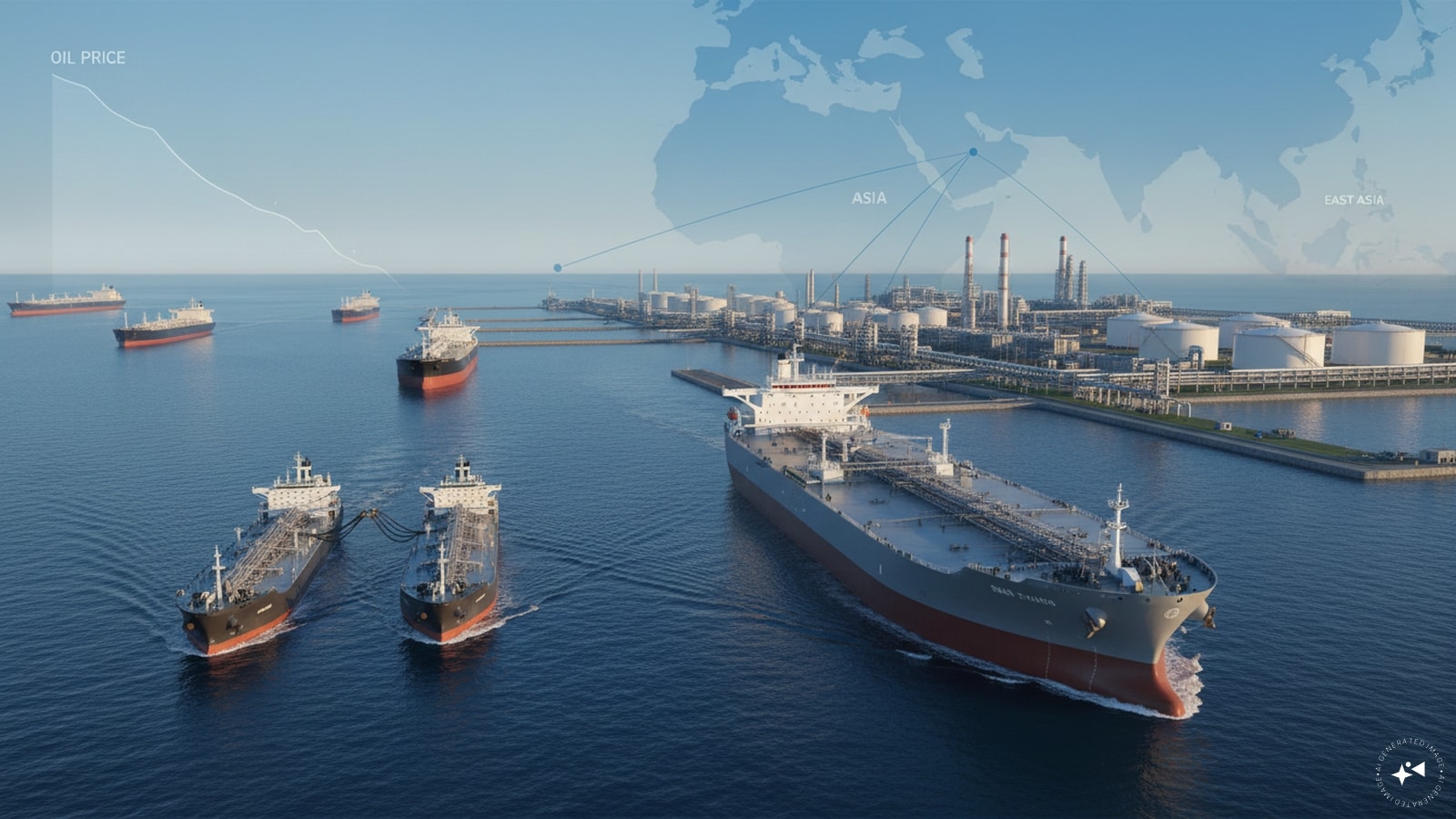
Every commodity analyst with a blog is currently hyperventilating over Riyadh slashing its official selling prices for crude heading to Asia, screaming about market share wars and desperate taps on the production valve. They look at a six-year low in pricing benchmarks and immediately reach for the tired playbook of panic.
It is lazy thinking. It ignores how state-owned energy giants actually operate.
I have spent years watching traders misread state calculus. When Saudi Aramco adjusts pricing differentials, it is rarely an emotional response to a slump. It is a calculated calibration of refinery margins across the Pacific basin, designed to starve high-cost marginal barrels while keeping the long-term cash flow hose wide open.
The Misunderstanding of Official Selling Prices
Let us clear up the basic mechanics that the financial press keeps getting wrong. An official selling price is not a spot market discount. It is a pricing formula built on top of regional benchmarks like Oman and Dubai quotes. When Riyadh drops the differential, it is adjusting the paper value of crude grades relative to physical market realities in processing hubs like China, South Korea, and Japan.
Independent refiners in Shandong do not care about geopolitical headlines. They care about crack spreads. If domestic product yields for diesel and gasoline squeeze their operating margins, they stop buying spot cargoes. Saudi Aramco understands this elasticity better than anyone. By easing the differential, they ensure their tankers keep discharging at scale while high-cost competitors in North America and the North Sea get priced out of the margin equation.
This is not a retreat. It is an offensive maneuver wrapped in defensive packaging.
The Real Target Is Not OPEC Compliance
The consensus narrative claims this move signals friction inside the broader producer coalition, hinting that member states are cheating on quotas and flooding the market by stealth. That argument falls apart under basic scrutiny.
Imagine a scenario where a dominant producer panics and drops prices to chase volume in a genuinely saturated market. Inventories in floating storage would spike instantly. Yet onshore stockpiles in key Asian transit hubs remain stubbornly balanced. Refiners are taking the cheaper barrels because demand for petrochemical feedstocks remains remarkably sticky, regardless of what macroeconomic pessimists say about global industrial output.
The strategy targets capital allocation in rival basins. Shale operators in the Permian and offshore drillers in deepwater fields require high hurdle rates to justify capital expenditure on new wells. When medium sour crudes become cheaper in Asia, the forward curve shifts. Independent producers see lower cash flows on unhedged volumes, freezing their growth budgets. Riyadh is playing a multi-year game of attrition, systematically starving rival capital projects of the cheap financing they need to expand.
The Downside Nobody Wants to Admit
Contrarian strategies carry scars, and this one is no exception. Lower differentials mean lower immediate fiscal revenues for the national budget at a time when massive domestic infrastructure projects demand continuous capital injection.
Bending the price curve puts temporary strain on domestic balance sheets. It forces financial planners to rely more heavily on sovereign debt issuance or draw down reserves. Critics are right to point out that this creates short-term pain for long-term strategic dominance. But state energy planners do not manage cash flow quarter-to-quarter like a publicly traded boutique firm. They manage decades.
If you are trading energy equities based on the headline panic of a pricing cut, you are reacting to noise while the signal passes you by. The market is not collapsing under an ocean of unwanted oil. It is being methodically restructured by the only player with the patience and the low-cost reserves to survive the shakeout.
Stop reading the panic. Watch the margins.


