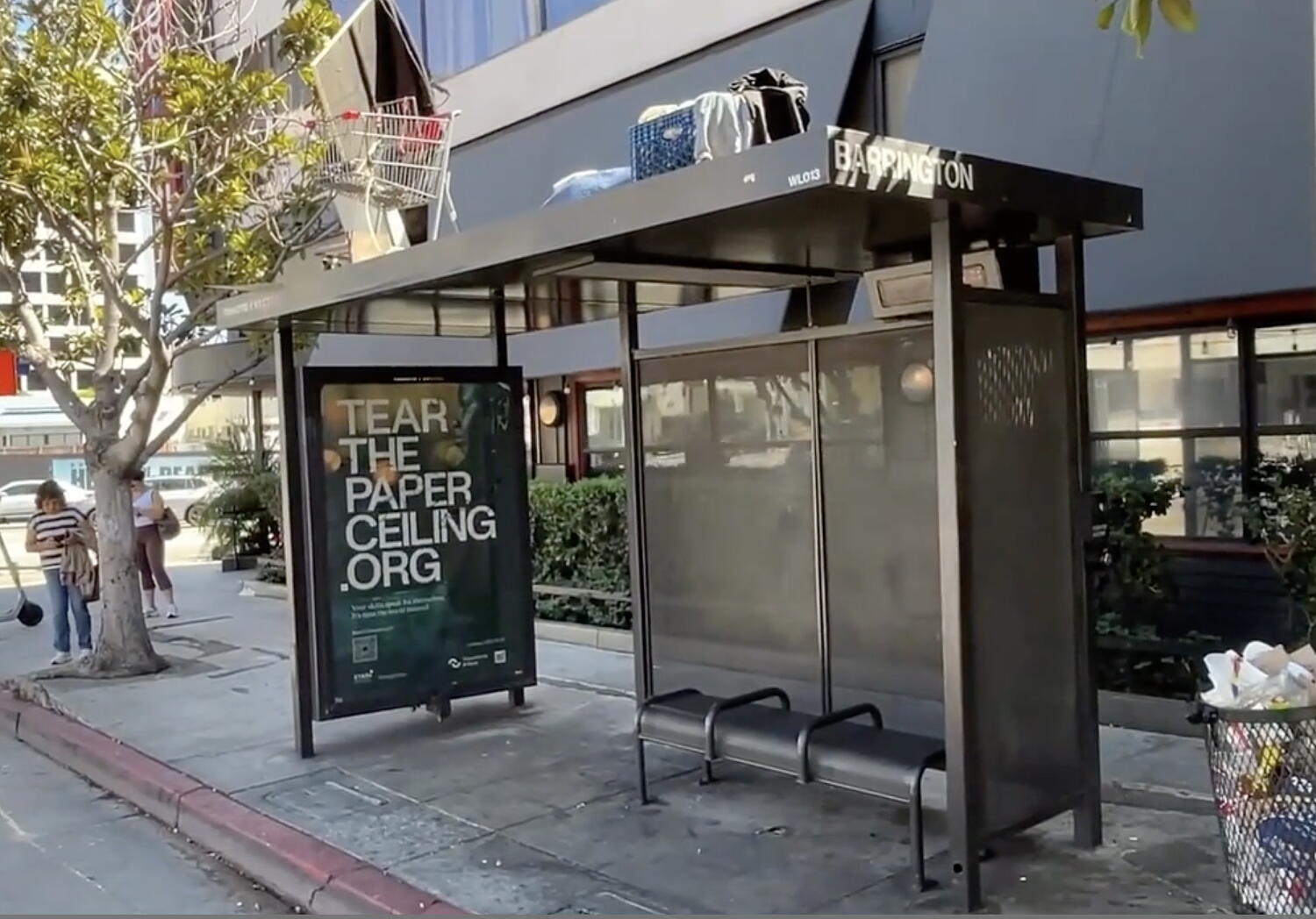
Urban spaces force people into bizarre adaptations. When someone hauls a metal grocery cart up a ladder and plants a temporary shelter atop a Brentwood bus stop, it isn't just a quirky local headline. It's a loud alarm about housing pressure, municipal neglect, and the sheer grit of survival on modern city streets.
Most transit riders look down at their phones while waiting for a bus. Few look up. But commuters in Brentwood caught sight of an unusual skyline modification recently. A makeshift camp, complete with a stranded shopping cart, materialized on the roof of a local transit shelter.
How Urban Infrastructure Becomes Shelter
City planners design bus stops for a single purpose: standing out of the rain for ten minutes while waiting for public transit. They aren't engineered for habitation. Yet, when housing options evaporate, public architecture gets re-engineered by necessity.
People sleeping rough often scout elevated positions for safety, visibility, and distance from street-level harassment. A bus stop roof offers all three, albeit with zero insulation, massive exposure to the elements, and extreme danger. Hauling heavy gear like a shopping cart up onto a narrow structure requires physical desperation.
When emergency shelter systems run at full capacity, individuals improvise. Municipalities frequently respond by installing hostile architecture—metal spikes, divided benches, sloping ledges—meant to deter human bodies. Ironically, those exact structures sometimes become stepping stones or windblocks for people who refuse to give up entirely.
The Reality of Street-Level Adaptation
Living out of a shopping cart means carrying your entire worldly existence in a wire basket. Clothes, blankets, half-empty water bottles, and scavenged tools form a mobile household. Taking that mobile household vertically onto a concrete or metal canopy represents a logistical nightmare.
Why do it? Because sleeping on the pavement exposes you to theft, violence, and constant sweeps by local authorities. Elevating your sleeping quarters creates a psychological barrier. It offers a detached perimeter.
Local transit authorities usually respond to these incidents with immediate removal. Maintenance crews arrive with cherry pickers, police officers stand guard below, and the improvised camp gets dismantled in minutes. The belongings go into a trash compactor. The person gets displaced back to the sidewalk, restarting a brutal cycle.
What Cities Miss About Root Causes
Removing a camp from a bus stop roof solves nothing. It merely shoves the problem around the corner, out of sight for morning commuters who prefer not to think about poverty on their way to work.
Real solutions require permanent supportive housing, accessible mental health care, and low-barrier shelter beds that allow people to keep their belongings and pets. Until cities treat housing as a fundamental utility rather than a luxury commodity, carts will end up in strange places.
Next time you wait for your ride, look around your transit stop. Notice the design choices meant to keep people away. Then ask yourself what happens when the people those designs target have nowhere else left to go.