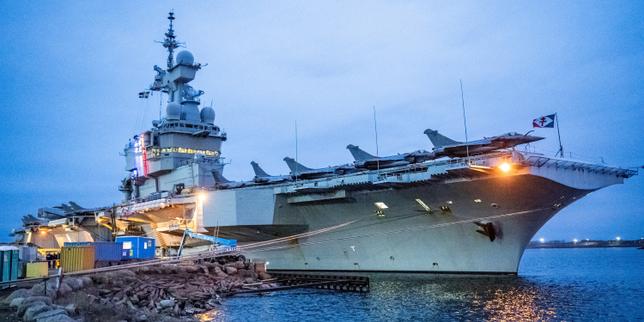
The coffee in the plastic cup has gone cold, but the man staring at the flickering monitors in the bunker beneath the Massif Central doesn’t notice. He is part of a lineage that began with Charles de Gaulle—a priesthood of the atom. His job is to wait for a phone call that would signal the end of the world. For decades, that phone call was a strictly French affair. If Paris burned, the world would follow. But if Berlin or Warsaw burned? That was a question for the Americans.
That certainty is rotting.
Across the continent, the "nuclear umbrella"—the invisible shield of MAD (Mutually Assured Destruction) that has kept the peace since 1945—is undergoing a violent structural shift. For seventy years, Europe slept soundly under a canopy woven in Washington. Today, the stitching is coming apart. The conversation has moved from the hushed hallways of the Quai d’Orsay to the front pages of German tabloids. They are talking about the Force de Frappe. They are talking about a French umbrella for a European storm.
The Ghost of 1966
To understand why a German politician is suddenly interested in French warheads, you have to understand the trauma of 1966. That was the year De Gaulle pulled France out of NATO’s integrated military structure. He didn't trust that an American president would sacrifice New York to save Lyon. He wanted a "sanctuary." He built a sovereign deterrent, a "stubborn" arsenal that answered to no one but the Elysée.
For fifty years, this was the great French taboo. The missiles were for France, and France alone. When French officials suggested "Europeanizing" the deterrent in the 1990s and mid-2000s, the Germans reacted as if they’d been offered a poisoned chalice. To the German mind, hardened by decades of pacifism and reliance on the US, the idea of a French nuclear guarantee was both provocative to Moscow and insulting to Washington.
Then came the silence from across the Atlantic.
It started as a murmur during the Obama years—the "pivot to Asia." It became a shout during the Trump administration. Suddenly, the guarantor of European security was questioning the invoice. When Russia moved on Ukraine, the murmur became a roar. The realization hit the continent like a physical blow: What if the umbrella stays in the shed next time it rains?
The Hypothetical Case of Janusz and Karin
Consider two people who have never met. Janusz is a tank commander in eastern Poland. Karin is a schoolteacher in Hamburg.
For Janusz, the threat isn't a geopolitical theory; it’s a vibration in the ground. He looks east and sees a neighbor that has spent the last decade modernizing tactical nuclear weapons designed for "limited" use on a European battlefield. He needs to know that if a Russian Iskander missile levels a Polish supply depot, the response will be swift and devastating.
Karin, meanwhile, grew up in the shadow of the Pershing II and SS-20 debates of the 1980s. She hates the idea of nuclear weapons. But she watches the news. She sees the American political system fracturing. She hears the candidates talking about "America First." She begins to wonder if a French Rafale jet carrying an ASMPA supersonic missile is a better insurance policy than a US promise that might expire every four years.
This is where the "taboo" breaks. The Europeanization of the French deterrent isn't about France handing over the keys to the nukes. Emmanuel Macron isn't going to give a German Chancellor a finger on the button. That will never happen. Instead, it’s about "strategic dialogue." It’s about France saying to its neighbors: "Our vital interests have a European dimension."
It is a subtle, linguistic shift that carries the weight of millions of lives.
The Math of Armageddon
The numbers are cold. The United States possesses roughly 5,000 nuclear warheads. Russia has a similar number. France has about 290.
To the critics, 290 warheads look like a firecracker compared to a volcano. They argue that France cannot replace the US. They are technically correct, but strategically wrong. Nuclear deterrence isn't about winning a war; it’s about making the cost of starting one unthinkable.
You don't need 5,000 warheads to ruin a superpower's Tuesday. You only need to be able to reach their centers of power. The French M51.3 missile, launched from a submarine hidden in the depths of the Atlantic, can do exactly that. The "equalizing power of the atom" means that a medium-sized power can hold a giant at bay.
The shift we are seeing now is the realization that 290 "European" warheads are more credible than 5,000 "American" ones if the American ones are locked behind a door of isolationism.
The Price of Admission
If France expands its umbrella to cover Berlin, Warsaw, or Tallinn, what does it want in return? This is the part of the story that makes diplomats sweat.
Sovereignty is a jealous mistress. For France to extend its guarantee, it would likely demand a massive shift in how Europe buys weapons and organizes its armies. It would mean "Buy European" instead of "Buy American." It would mean a shift in the very soul of the EU, from a trade bloc to a power bloc.
The Germans are terrified of this. They fear that leaning into the French embrace will finally drive the Americans away for good. They are caught in a strategic love triangle, staring at a fading American sunset while a French suitor stands at the door with a very expensive, very dangerous gift.
But the clock is ticking.
Every time a Russian official mentions "Sarmat" or "Poseidon," the French offer looks less like a threat to NATO and more like a life raft. We are moving toward a world of "multipolar deterrence." It’s messy. It’s expensive. It’s terrifyingly complex.
The Invisible Stakes
Back in the bunker, the man with the cold coffee checks his watch. He isn't thinking about "strategic autonomy" or "transatlantic decoupling." He is thinking about the checklist. He is thinking about the fact that for the first time in his career, the "vital interests" he is sworn to protect might include a city whose name he can barely pronounce in Estonian.
The taboo didn't die because of a grand vision. It died because of a cold, hard look at the map.
The "Europeanization" of the French nuclear force is the sound of a continent growing up and realizing that the parents aren't coming home to tuck them in. It is the sound of Europe deciding whether it wants to be a player on the stage or merely the scenery.
We are watching the birth of a Nuclear Europe, not out of ambition, but out of a desperate, quiet necessity. The umbrella is opening. We just don't know yet if it’s big enough to cover us all.
In the end, deterrence is a mind game. It only works if the enemy believes you are crazy enough to use it, and your friends believe you are brave enough to use it for them. France is asking Europe to believe. And for the first time, Europe is starting to listen, because the alternative is standing alone in the rain.
The silence of the Atlantic is getting louder every day.
Would you like me to research the specific budget increases European nations have proposed for integrated defense systems following these recent strategic shifts?