:max_bytes(150000):strip_icc()/GettyImages-700832601-5bb602c0c9e77c002609fe08.jpg)
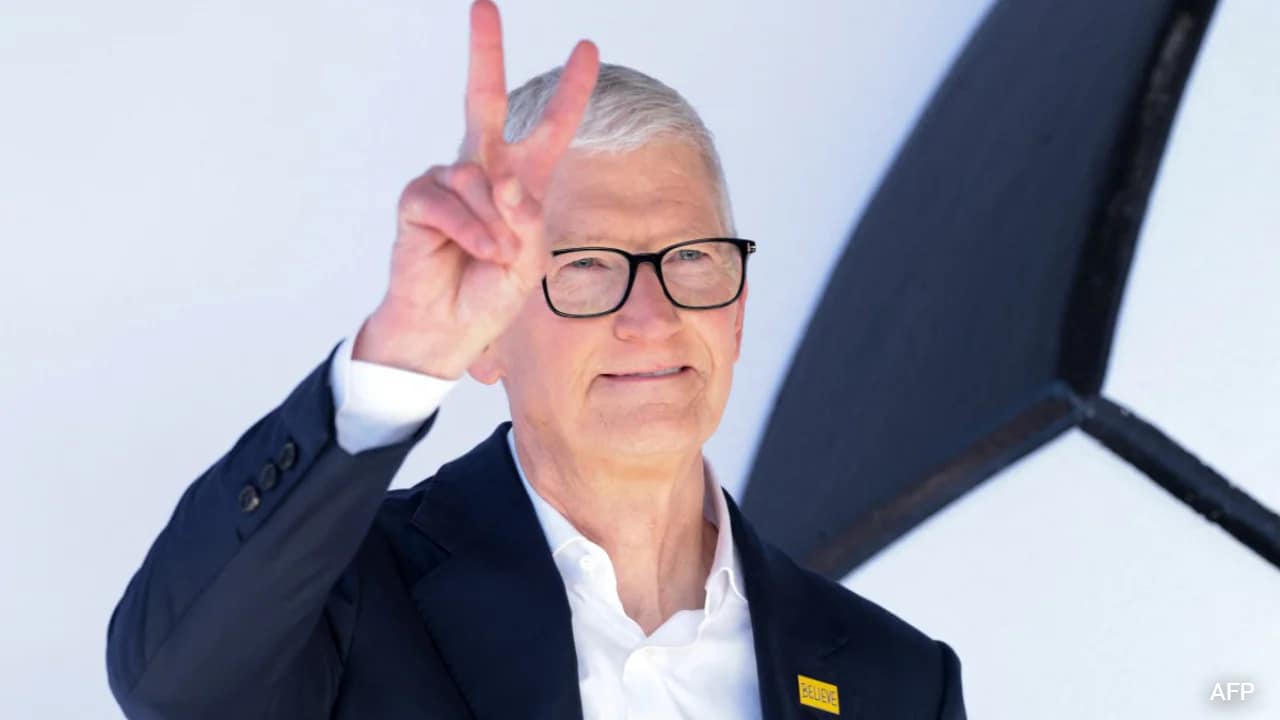
John Ternus takes the helm at Apple as chief executive, inheriting a four-trillion-dollar machine that can machine-mill titanium with micron precision yet struggles to answer basic user queries via Siri. Tim Cook built the greatest operational logistics engine in human history, turning supply chains into a competitive weapon. But as Ternus steps into the corner office, the currency of consumer tech has shifted away from inventory turns and toward neural weights. Wall Street wants an artificial intelligence titan. Apple has delivered an accomplished mechanical engineer who spent twenty-five years inside the product design labs.
The narrative propagated across the tech press suggests that Ternus is simply swapping places with Cook to oversee the software revolution. This interpretation misunderstands both the man and the structural crisis facing Cupertino. Apple is not suffering from a shortage of executive vision. It is wrestling with a fundamental architectural mismatch between its vertically integrated hardware philosophy and the messy, server-heavy reality of modern machine learning.
The Hardware Paradox
Look closely at how Apple approaches computation. For the past decade, the company's greatest triumphs relied on bringing silicon design in-house. The transition away from Intel processors to custom Apple silicon stands as Ternus's crowning operational achievement as head of hardware engineering. By tightly coupling custom processors with bespoke metal chassis, thermal designs, and display controllers, his teams wrung astonishing energy efficiency out of every watt.
Artificial intelligence operates under a completely different law of physics. Large language models and predictive generative models do not care much about the thermal dissipation of a fanless MacBook chassis when they require thousands of clustered data-center GPUs running continuously to train and infer. Apple's traditional approach relies on local, on-device processing to preserve privacy. That privacy stance is noble, but it creates a brutal computational bottleneck.
When a user asks an intelligent assistant a complex generative question, processing locally on a smartphone neural engine limits the parameters of the model. Competitors routing queries through massive cloud clusters face fewer constraints. Apple recognized this friction point when it partnered with Google to integrate Gemini technology, an admission that on-device silicon alone cannot bridge the intelligence gap. Ternus now sits at the center of this compromise. His entire career taught him to keep everything inside the box. The artificial intelligence era demands that the box learn how to talk to a giant, distributed cloud.
Inside the Engineering Transition
The timing of this succession leaves zero room for an introductory honeymoon. Just eight days after taking over the CEO chair, Ternus must face the public on September 9 to introduce the next hardware lineup, widely rumored to include a foldable handset. A foldable device represents a massive physical departure for a company that typically waits for a category to mature before perfecting it.
Ternus understands hinges, stress tests, and material fatigue. From an engineering perspective, building a durable folding screen that does not degrade after fifty thousand cycles fits his exact skill set. Yet, the pressure surrounding this launch has little to do with the physical durability of the hinge. The hardware must serve as the physical vessel for software features that consumers are still struggling to find vital.
Consider the broader market response to generative features on mobile devices. Consumers are not upgrading their handsets solely to summarize email threads or generate cartoon versions of their family members. They want an assistant that acts as a genuine agent, executing multi-step tasks across disparate applications without handholding. Apple's software architecture, historically siloed and ruthlessly sandboxed for security, resists this type of fluid agentic behavior. Ternus must pry open those software silos without compromising the security blanket that keeps users loyal.
The Geopolitical Tightrope
Tim Cook did not just manage supply chains and balance sheets. He acted as chief diplomat, navigating the treacherous corridor between Washington and Beijing with rare dexterity. Cook absorbed the shocks of successive trade wars, kept manufacturing lines humming across mainland China, and maintained an audience with foreign heads of state while simultaneously expanding production footprints into India and Vietnam.
Ternus inherits this geopolitical minefield with virtually no public track record in statecraft. While Apple has methodically diversified its assembly hubs, the Chinese market remains deeply intertwined with both its revenue streams and its component sourcing. If trade restrictions tighten or retaliatory measures target US technology platforms, the new chief executive will have to manage high-stakes negotiations himself.
To mitigate this vulnerability, Apple engineered a clever governance structure. Cook remains on campus as executive chairman, specifically retaining a mandate to manage external government relations and high-level policy. This arrangement buys Ternus time. It shields him from the immediate necessity of becoming a corporate statesman on day one. Even so, relying on a predecessor to manage foreign governments while trying to steer a massive corporate pivot creates an awkward dual-power dynamic.
Redefining the Next Decade
The assumption that Ternus will merely maintain Cook's operational rhythm underestimates the disruptive nature of the current shift. Apple is transitioning from a device-selling enterprise into an intelligence service provider, whether it wants to or not. Hardware sales follow replacement cycles, and those cycles are lengthening as phones become durable enough to last half a decade.
If growth is going to accelerate, it must come from recurring services and software capabilities that make older hardware feel obsolete. That requires a cultural shift within a company that has always treated software as a way to sell more aluminum and glass. Ternus spent twenty-five years perfecting the vessel. Now he must figure out how to invent the wine.
The market will judge his tenure not by how thin he can make a phone or how efficiently his supply chain can weather a tariff, but by whether Siri evolves from a punchline into an indispensable layer of digital existence. He has the tools, the engineering pedigree, and the balance sheet. What remains unproven is whether a master builder of physical machinery can successfully re-engineer the soul of the world's most valuable technology enterprise.