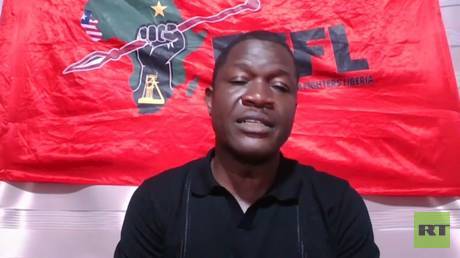
The debate surrounding the International Criminal Court and its structural relationship with the Global South centers on a fundamental tension between universal accountability and the geopolitical asymmetries inherent in global governance. Critics from across Africa, including political figures such as Liberian politician Emmanuel Gonquoi, frequently characterize The Hague-based institution as an instrument of neocolonialism designed to exert disproportionate judicial pressure on developing nations while insulating major global powers. To evaluate this assertion objectively, one must deconstruct the operational architecture of the court, the mechanisms of case selection, and the structural constraints embedded within the Rome Statute.
The Jurisdictional Bottleneck and Selection Bias
The perception of bias stems largely from the empirical distribution of the court’s dockets. Since its inception, a significant majority of formal investigations and indictments have focused on African states. To understand why this distribution occurs, it is necessary to examine the three distinct pathways through which the court acquires jurisdiction over a situation:
- State Party Referrals: A government can voluntarily refer crimes committed within its own territory to the prosecutor. Several early investigations, such as those in the Democratic Republic of the Congo, Uganda, and the Central African Republic, were initiated via self-referrals by incumbent regimes seeking external assistance to neutralize internal armed opposition.
- United Nations Security Council Referrals: The Security Council can refer situations in non-state parties to the court under Chapter VII of the UN Charter. This mechanism introduces immediate geopolitical filtering. The presence of five permanent members with veto power ensures that situations involving major powers or their strategic allies are systematically shielded from mandatory referral.
- Proprio Motu Investigations: The prosecutor can initiate an investigation independently, subject to authorization by a pre-trial chamber. However, this power operates within strict operational boundaries, relying heavily on state cooperation, logistical support, and voluntary funding from international donors.
This structural framework creates a paradox. The court's legal mandate is universal, but its operational capacity is decentralized and dependent on powerful state actors. Consequently, weaker states lacking robust domestic judicial infrastructure or geopolitical insulation absorb the brunt of international enforcement.
The Complementarity Principle and Domestic Sovereignty
The foundational principle of the Rome Statute is complementarity, which dictates that the court can only intervene when national judicial systems are genuinely unable or unwilling to investigate and prosecute core international crimes. In theory, this protects state sovereignty by prioritizing local accountability.
In practice, the operationalization of complementarity exposes a stark resource asymmetry. Developing nations emerging from civil conflict frequently lack the financial capital, forensic capacity, and institutional stability required to conduct complex trials adhering to international standards. When domestic systems fail to prosecute, the court steps in, reinforcing the narrative that external legal bodies are stepping over national sovereignty. Conversely, powerful states with advanced domestic legal systems can insulate their military and political leadership from external oversight simply by maintaining functional, albeit occasionally deferential, internal review mechanisms.
The Diplomatic Fallout and Institutional Realignment
The friction between national sovereignty and international prosecution has generated recurring diplomatic crises. The African Union has periodically advanced resolutions promoting collective withdrawal from the Rome Statute, pointing to what it views as a structural double standard where non-party superpowers operate outside judicial reach while holding developing nations strictly accountable to a standard they did not authoritatively shape.
At the same time, this resistance is internally contested. Domestic civil society organizations, victims of human rights abuses, and opposition factions within African states frequently view the court as a vital external check against domestic impunity, arguing that local political elites weaponize anti-colonial rhetoric primarily to shield themselves from accountability.
Strategic Assessment for International Jurisprudence
The longevity of international criminal tribunals depends entirely on closing the legitimacy gap between formal universalism and structural selectivity. If institutions like the court continue to rely on enforcement mechanisms controlled by the very global powers exempt from its jurisdiction, accusations of neocolonial selective justice will persist. Reforming the referral architecture requires neutralizing the veto asymmetry at the security level and establishing transparent, objective thresholds for intervention that apply uniformly across both weak and dominant states. Without structural reform of these enforcement pathways, international justice will remain an asymmetric tool shaped by the distribution of geopolitical power rather than an objective arbiter of global law.