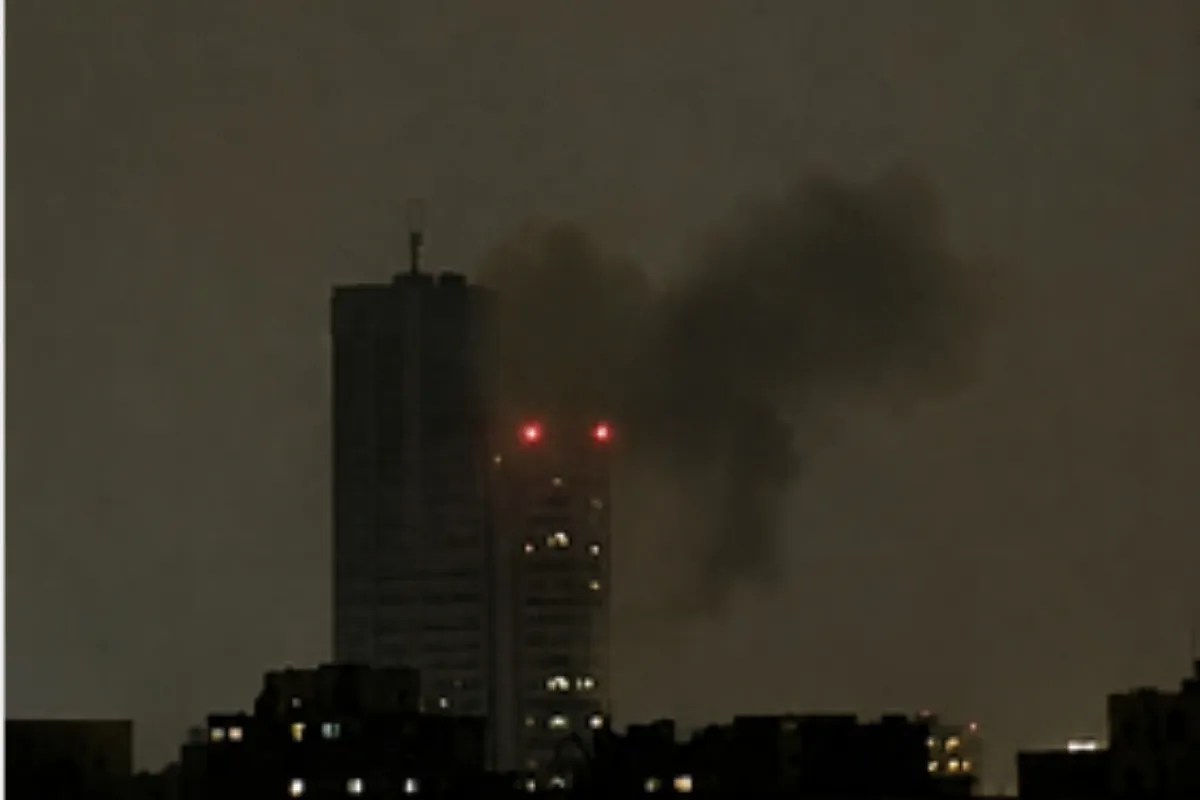
An unexpected evacuation of diplomatic infrastructure reveals a structural vulnerability in sovereign risk planning: the dependency on local municipal clearance during urban construction emergencies. When an adjacent 37-story high-rise under reconstruction at 42nd Street in Midtown Manhattan exhibited structural instability on July 7, 2026, the forced displacement of the Permanent Mission of India to the United Nations highlighted how third-party construction failures can disrupt high-level diplomatic operations.
The incident demonstrates the intersection of municipal zoning, urban real estate safety, and sovereign operational resiliency. Understanding the mechanics of prolonged institutional displacement requires breaking down the core vulnerabilities into three distinct operational layers.
The Tripartite Risk Profile of Combined Diplomatic Assets
The Permanent Mission of India operates out of a 27-story red granite structure completed in 1993 and designed by architect Charles Correa. Unlike standard corporate leases or isolated embassy properties, the asset integrates high-security administrative facilities with residential quarters for diplomats and their families under a single roof.
This dual-use architecture creates three operational dependencies:
- Residential Exposure: Sudden physical displacement forces immediate migration to commercial hospitality infrastructure, introducing uncontrolled security environments and compounding daily operating costs.
- Secure Communications Continuity: Administrative dislocation threatens restricted communications networks, requiring temporary cryptographic and secure data routing protocols outside primary facilities.
- Geopolitical Execution Risk: High-stakes multilateral schedules do not pause for local infrastructure disruptions. The displacement coincided directly with the July 13 arrival of External Affairs Minister S. Jaishankar to launch India’s campaign for the 2028–2029 UN Security Council seat.
When municipal authorities issue a red-tag evacuation order due to neighboring structural integrity threats—such as the compromised Pfizer headquarters site—the affected sovereign mission lacks legal mechanisms to override local Department of Buildings (DOB) jurisdiction. Sovereign immunity applies within diplomatic boundaries, but municipal civil protection laws dictate access to surrounding public rights-of-way and safety perimeters.
The Logistics of Prolonged Municipal Dislocation
Municipal safety protocols operate on risk-averse verification timelines. While primary cordon lines around the compromised site were lifted within 24 hours for most commercial properties, specific high-density zones remained restricted under NYC DOB directives following zero-movement monitoring protocols.
The friction between municipal regulatory compliance and state mission operations stems from two structural mechanics:
- Vibration and Settlement Monitoring: Engineering teams require extended periods of zero-displacement data from tiltmeters and automated total stations before certifying adjacent foundations as secure.
- Liability Allocation: Municipal departments face severe legal exposure if an evacuation order is lifted prematurely near an unstable high-rise. Consequently, clearance timelines favor extended observation windows over rapid administrative resolution.
The operational impact on diplomatic missions manifests as an unbudgeted cash outflow. Commercial hotel accommodations across Manhattan, combined with temporary administrative workspace leases, create a compounding cost function ($C_{t}$) relative to time ($t$):
$$C_{t} = \sum_{i=1}^{n} (H_{i} + M_{i}) \cdot t + S_{t}$$
Where $H$ represents per-diem lodging rates per diplomatic officer family, $M$ represents supplemental transit and security expenditures, and $S_{t}$ represents the sunk cost of compromised operational efficiency.
Strategic Real Estate Frameworks for Sovereign Missions
To prevent municipal infrastructure failures from impairing diplomatic readiness, foreign ministry real estate management must adapt sovereign risk frameworks.
Separation of Residential and Administrative Footprints
Combining diplomatic quarters with diplomatic offices increases operational efficiency during normal conditions but introduces single-point-of-failure vulnerabilities during physical site compromises. Distributing residential housing across independent municipal blocks isolates housing security from administrative access points.
Redundant Communications Protocols
Missions must establish off-site, hardened backup nodes outside immediate urban high-density corridors. Operational readiness depends on maintaining encrypted voice and data lines independently of the primary mission footprint.
Municipal Liaison Integration
Diplomatic delegations should establish formal bilateral protocols with municipal emergency management agencies prior to crises. Pre-arranged access clearings for essential diplomatic personnel during general public lockouts prevent total operational freezes during regional disruptions.
Sovereign real estate management requires moving away from single-facility consolidation in high-density urban corridors toward geographically distributed asset models. Deploying decentralized operational clusters ensures that third-party engineering failures do not compromise national diplomatic initiatives.