The peace talks in Islamabad didn't just fail. They went up in smoke. Now, we're staring at the most aggressive maritime maneuver in modern history. President Trump officially pulled the trigger on a U.S. Navy blockade in the Strait of Hormuz this morning. It's a massive bet. If you thought the "maximum pressure" of years past was intense, you haven't seen anything yet. This isn't just about patrolling international waters anymore. It's a direct strangulation of Iran's remaining economic lifelines.
CENTCOM started the operation at 10 a.m. ET today. The orders are blunt: intercept any vessel entering or leaving Iranian ports. Trump’s message on Truth Social wasn’t exactly subtle either. He warned that any Iranian "attack ships" that get too close or fire on peaceful vessels will be "blown to hell."
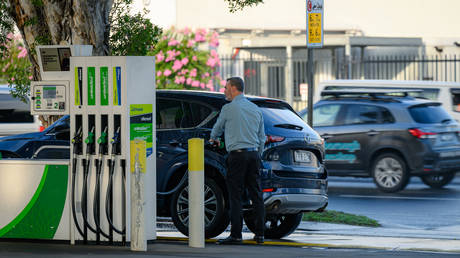
Honestly, the world hasn't seen a move this risky since the Cuban Missile Crisis. We're talking about a chokepoint that handles 20% of the world's oil and LNG. You can already see the results at the pump. Oil prices just cleared $100 a barrel again, and they aren't looking back.
The Islamabad collapse and the nuclear red line
Why now? Why go for a full blockade when a ceasefire was supposedly "holding"?
It comes down to what happened—or didn't happen—behind closed doors in Pakistan. Vice President JD Vance led the U.S. delegation with a stack of "red lines" that Tehran simply wouldn't touch. The biggest one? Total surrender of Iran's highly enriched uranium (HEU) stockpile. The U.S. wants it all gone—either handed over or sold off. Iran counter-offered, but the White House saw it as a stall tactic.
Trump is convinced he can squeeze a deal out of them if he cuts off their ability to sell even a single barrel of oil. During the talks, it became clear that the Iranian delegation was a mess of competing factions. You had IRGC hardliners fighting with diplomats. That kind of internal chaos makes a deal almost impossible. So, Trump decided to stop talking and start blocking.
How the blockade actually works on the water
Don't mistake this for a total shutdown of the Strait. That would be an act of war against the entire world. The U.S. is being very specific about who gets stopped.
- Iranian Destinations: If a ship is headed to or coming from an Iranian port like Bandar Abbas, it's getting intercepted. Period.
- The "Toll" Interdiction: Iran has been trying to run a protection racket, forcing ships to pay tolls in crypto to use their territorial waters. Trump made it clear: if you pay Iran, the U.S. Navy will stop you in international waters.
- Freedom of Navigation: Ships going to the UAE, Kuwait, or Saudi Arabia are technically "safe," but let's be real. Nobody wants to sail a billion-dollar tanker through a zone where destroyers are clearing mines and drones are buzzing overhead.
The U.S. already has the USS Abraham Lincoln and a massive carrier strike group in the Arabian Sea. They’ve got the hardware to do this. But Iran isn't just sitting there. The IRGC Navy claims they have "full control" and that any military vessel approaching the Strait will face a "forceful response." They've already threatened to hit regional power plants if the blockade continues.
The economic fallout nobody is ready for
This isn't just a military story. It's a grocery store story.
The Gulf countries (the GCC) get about 80% of their calories through this Strait. In places like Qatar and Bahrain, food prices have already jumped 40% to 120% since the wider conflict began in March. We're looking at a "grocery supply emergency." If you live in Dubai or Doha, your drinking water comes from desalination plants that are now prime targets for Iranian retaliation.
It's a mess. China, India, and Japan get 75% of their oil from this region. They are watching their energy security vanish in real-time. Trump says other countries will join the blockade, but so far, the UK and Spain have explicitly said they're staying out. Even the Pope is weighing in, calling for restraint, which naturally led to Trump calling him "weak" on social media.
What happens when the ceasefire expires
There’s a two-week ceasefire currently in place, but it's set to expire on April 22. The blockade might just be the thing that breaks it early.
The U.S. isn't just looking to stop ships. They're already doing "mine clearance" operations. That’s military-speak for "we’re taking the Strait back." If Iran decides to push back with those "attack ships" Trump mentioned, the situation turns from a blockade into a hot war in seconds.
If you're tracking this for your portfolio or just trying to understand the global stakes, watch the "shadow" shipping lanes. Some vessels are already hugging the Iranian coast to stay in their territorial waters, hoping the U.S. won't follow them in. It's a dangerous game of chicken with $100+ oil as the prize.
Keep a close eye on the insurance markets. Most commercial shippers won't even touch the Strait right now because insurance premiums have gone through the roof. Even if the U.S. "opens" the Strait, it doesn't mean it's safe for business.
The next 48 hours are critical. Watch for any movement of Iranian drone swarms or fast-attack craft near the blockade line. If a shot is fired, the Islamabad talks will look like a distant, peaceful memory.