The shadow war in the Middle East just entered a much harsher economic phase. United States forces struck three Iranian oil tankers after American warships successfully evaded multiple missile attacks in the region.
If you've been following the ongoing conflict that flared up on February 28, you know both sides have cycled through months of fragile lulls and sudden spikes in violence. This latest escalation marks a definitive shift. Central Command didn't just retaliate for a missed missile strike. They went straight for Tehran's financial jugular.
What Actually Happened on the Water
Let's look at the operational details. An American aircraft carrier and a destroyer were on routine patrol when they faced unprovoked Iranian attacks. No U.S. personnel were injured, and the warships evaded incoming fire.
The response was immediate and destructive.
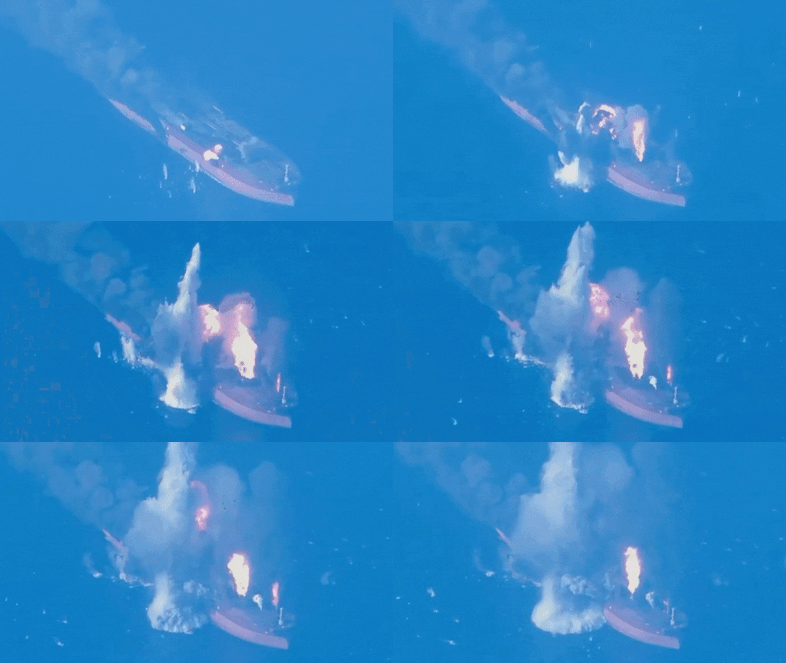
- Two Iranian oil carriers were permanently disabled.
- A third, unladen tanker was completely destroyed.
- Strikes hit near Kharg Island, close to Iran's primary oil export terminal, and near Jask, east of the Strait of Hormuz.
The Pentagon's rationale is straightforward. These vessels weren't just moving commercial crude. They belonged to a covert shadow network funneling cash directly to the Islamic Revolutionary Guard Corps (IRGC) and its regional proxy groups. By taking out these tankers, Washington is trying to dry up the funding source keeping those proxies operational.
The Broader Economic Stranglehold
Negotiations have completely broken down. What started over nuclear compliance has mutated into a brutal contest over maritime choke points. Tehran wants to assert control over the Strait of Hormuz, turning a historically international trade route into a contested zone.
In response, the U.S. military has escorted select commercial traffic, but overall shipping volume through the strait remains depressed. Tehran relies heavily on this shadow fleet to bypass international blockades and sanctions, selling oil abroad to keep its domestic economy afloat.
When Admiral Brad Cooper, head of U.S. Central Command, stated that the military would "if necessary, destroy Iran's limited and exposed oil fleet," it wasn't empty rhetoric. It's an active campaign strategy. Iran's infrastructure is fragile, and taking out these tankers punches holes in a regime already strained by decades of economic isolation.
The Human Cost on the Ground
We can't talk about military strategy without looking at the civilian toll. Strategic strikes on paper translate to devastation on the ground. Earlier in the week, a U.S. bombardment in southern Iran killed at least five people, including a direct hit on a wedding celebration.
Teenagers like 13-year-old Masoumeh Zarei and her friend Kiana Karimi ended up in intensive care units after communication towers and civilian areas were caught in the crossfire. These stories rarely make it into high-level defense briefings, but they drive the cycle of retaliation. Hard-line leaders in Tehran use these tragedies to harden domestic resolve, ensuring that every military escalation feeds the next round of violence.
Where This Leaves Global Markets
President Donald Trump recently brushed off the conflict as "small potatoes," yet the reality on the ground tells a much more volatile story. When naval carriers are dodging missiles and the U.S. military is actively sinking export tankers, energy markets feel the shockwaves.
Iran's leadership has signaled they're willing to absorb the pain and dig in, regardless of economic pressure. As long as the Strait of Hormuz remains a high-risk zone and shadow tankers are treated as legitimate military targets, shipping insurance rates, fuel costs, and geopolitical tensions will stay dangerously elevated. Expect more kinetic flashpoints around the Persian Gulf until a diplomatic off-ramp actually materializes—something neither side is currently willing to build.