The ice at the 2026 Milan Cortina Winter Games is harder, faster, and more expensive than it has ever been. For USA Hockey, the pressure of a best-on-best Olympic tournament—the first featuring NHL stars in a decade—has transformed the organization’s financial and operational identity. At the center of this shift is Donna Guariglia, the Treasurer who has spent her tenure quietly moving the federation away from reactive accounting and toward a predictive, data-heavy model.
While fans are focused on the Tkachuk brothers’ chemistry or Auston Matthews’ wrist shot, the real movement is happening in the back office. The organization is no longer just a governing body for youth leagues and national teams. It has become a sophisticated data entity. Under Guariglia’s watch, USA Hockey is utilizing artificial intelligence to solve a riddle that has plagued amateur sports for decades: how to fund an elite, gold-medal-caliber Olympic program while simultaneously subsidizing the skyrocketing costs of grassroots hockey for families across the country.
The Financial Mechanics of a Digital Powerhouse
Guariglia has been clear about the stakes since she stepped into the role. USA Hockey operates on a multi-million-dollar budget that is largely dependent on membership fees and corporate sponsorships. In a high-inflation environment, those traditional revenue streams are under siege. To maintain the National Team Development Program (NTDP) and the sprawling infrastructure of the Milan Cortina mission, the CFO’s office had to find efficiencies that manual spreadsheets simply couldn't catch.
The integration of AI into the treasury isn't about replacing accountants; it’s about algorithmic auditing. USA Hockey has deployed predictive models to analyze membership churn and fee structures. By processing historical registration data alongside local economic indicators, the system can predict which regions are at risk of losing players due to cost. This allows the federation to proactively allocate grants and subsidies before a local program collapses.
This is the "long game" that often goes unnoticed. Most sports federations wait for the year-end audit to see where they lost money. Guariglia is using AI to run "what-if" scenarios for the 2026 cycle. If the cost of travel to northern Italy spikes by 15%, how does that impact the training camps in Plymouth, Michigan? The AI provides those answers in seconds, allowing the board to adjust the budget in real-time.
Scouting the Invisible Player
The most aggressive application of this technology, however, is on the ice itself. In previous Olympic cycles, scouting was a matter of intuition, air miles, and handwritten notes. That world is dead. For the 2026 Games, USA Hockey has leaned into computational scouting.
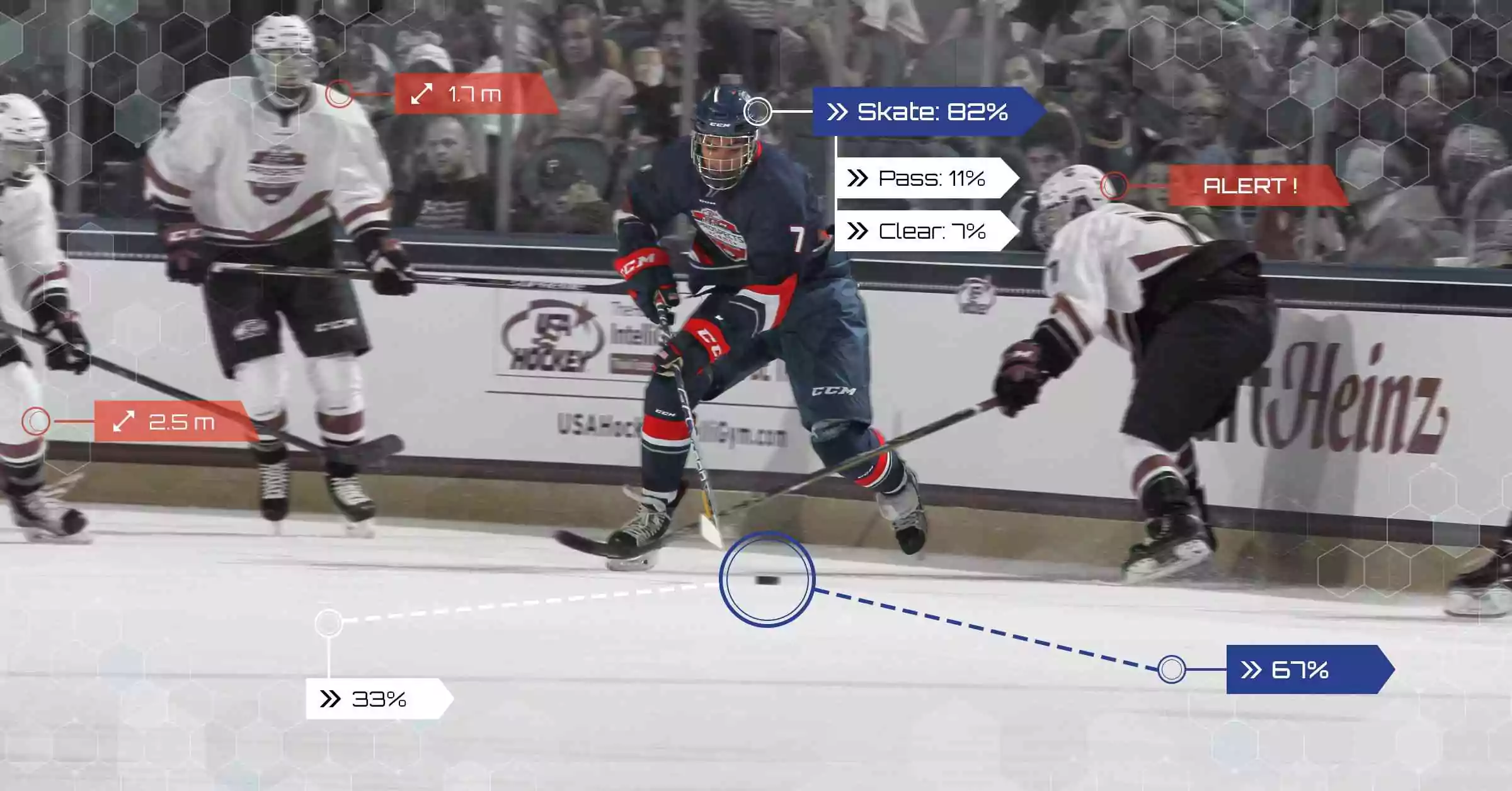
The federation utilizes AI-powered motion tracking to evaluate thousands of players across the NHL, AHL, and collegiate ranks. These systems don't just track goals and assists. They measure "invisible" metrics like:
- Gap Control Efficiency: The precise distance a defenseman maintains from an attacker, measured in centimeters across every shift.
- Puck Recovery Probability: The likelihood of a player winning a contested puck based on their entry angle and speed.
- Fatigue-Adjusted Decision Making: How a player’s passing accuracy degrades between the first and third periods.
By feeding this data into a centralized model, the Olympic management team can build "synergy profiles." This is how they determined that certain role players, who might have been overlooked by traditional scouts, were the perfect statistical match for superstars like Jack Eichel. It isn't just about the best players; it's about the best-fit algorithms.
The Ethical Cold War on Ice
The shift hasn't been without its detractors. There is a growing tension between the old-school scouts, who believe in the "eye test," and the new guard of data scientists. A veteran scout will tell you that you can't measure heart or the way a player reacts in a locker room after a blowout loss. The algorithms, they argue, are making the game clinical.
Furthermore, the issue of data sovereignty has become a looming crisis. As USA Hockey collects more biometric and performance data on its athletes, the question of who owns that data remains unanswered. Does a 17-year-old in the NTDP own their "injury risk profile," or does the federation? If an AI predicts a player has a 70% chance of a knee injury, could that affect their future NHL draft stock?
Guariglia and the leadership team are walking a tightrope. They must use these tools to stay competitive with nations like Sweden and Finland, who are also pouring resources into sports tech, but they must do so without alienating the human element of the sport. The 2026 Olympics are essentially a massive laboratory for this experiment.
Infrastructure and the Global Reach
The Milan Cortina Games are unique because of their "diffuse model," with venues spread across Milan and the Dolomites. This creates a logistical nightmare for a CFO. Moving equipment, staff, and athletes across multiple Italian regions requires a level of coordination that would break a traditional logistics team.
USA Hockey is using AI to optimize these logistics, from flight paths to hotel blocks. But the real goal is legacy. The data gathered during this Olympic run will be fed back into the domestic programs. The hope is that the same AI that helped pick the 2026 roster can eventually be used to help a coach in a small town in Minnesota identify which of their 10-year-olds has the skating mechanics to reach the next level.
The financial reality is that hockey is an expensive, exclusive sport. The ice time alone is a barrier to entry for millions of American families. If the AI can find ways to lower operational costs or identify talent in underserved communities where scouts never travel, then the technology becomes more than just a competitive edge—it becomes a tool for survival.
The Long Game Beyond the Podium
Success in Milan will be measured in gold. But for the treasurer’s office, success is measured in the sustainability of the model. The "long game" isn't just about winning in 2026; it's about ensuring that USA Hockey has the digital infrastructure to compete in 2030 and beyond.
The federation is betting that by embracing AI now, they are securing their place at the top of the international hierarchy. They are betting that data-driven financial management will insulate them from the volatility of the global economy. And they are betting that the machines can find the next great American hockey hero before anyone else even knows their name.
As the puck drops in Milan, the numbers will already be crunched. The projections will be set. All that remains is for the humans to play the game that the algorithms have already simulated a thousand times.
Ask yourself if your own organization is auditing the past or predicting the future.