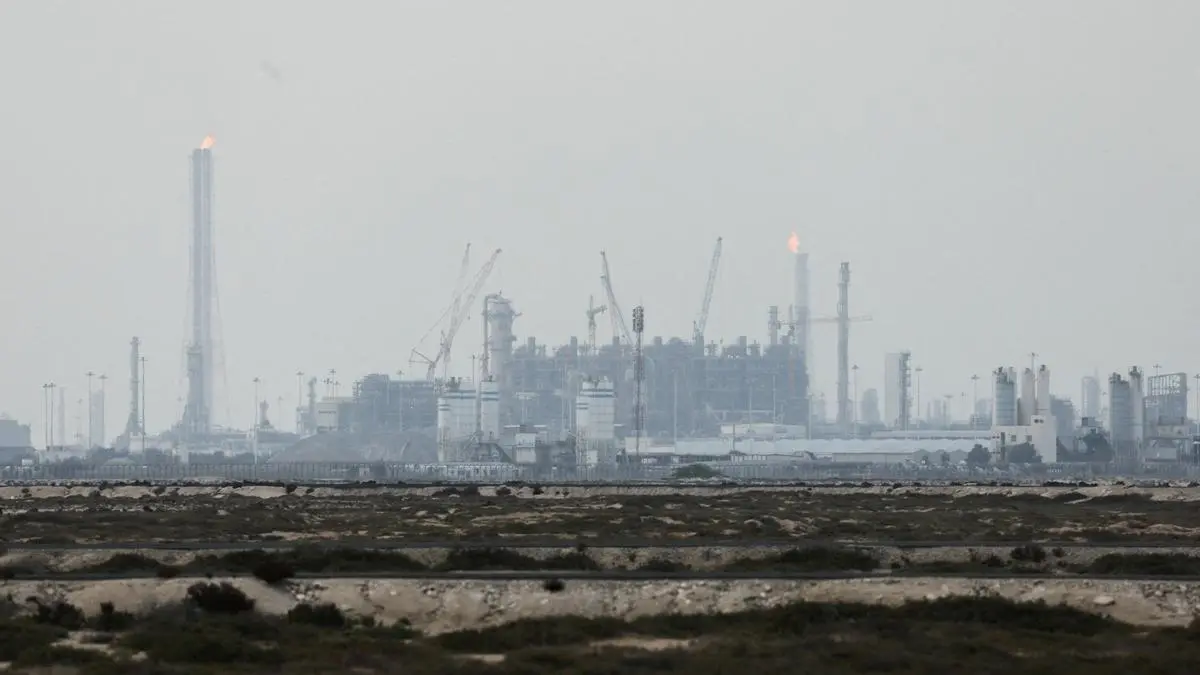
The sudden extraction of 17% of Qatari Liquefied Natural Gas (LNG) production from the global ledger following kinetic interference in the Persian Gulf exposes a systemic fragility in the "just-in-time" energy transition. While the immediate catalyst is a physical attack on infrastructure, the real crisis is the inelasticity of the global supply chain. Unlike oil, which benefits from significant strategic reserves and a flexible global tanker fleet, LNG is tethered to specific liquefaction trains and regasification terminals. When Qatari output drops by nearly a fifth, the impact is not a linear reduction in volume; it is a logarithmic increase in price volatility and a catastrophic breakdown in energy equity between Europe and Asia.
The Qatar Disruption Matrix
To understand why a 17% loss creates a disproportionate shock, we must examine the Triad of LNG Dependency. Qatar operates as the global "baseload" provider. Its production is characterized by high-volume, long-term contracts that provide the price floor for the entire industry. Don't miss our earlier article on this related article.
- Contractual Rigidity: Roughly 70% to 80% of Qatari LNG is locked into long-term Sales and Purchase Agreements (SPAs). A 17% drop effectively wipes out the "spot market" availability—the liquid portion of the market that countries use to manage seasonal spikes.
- The Geographic Chokepoint: Qatar’s reliance on the Strait of Hormuz creates a single point of failure. Kinetic attacks in this corridor do not just stop the gas; they reprice the insurance premiums (War Risk Surcharge) for every cubic meter of methane currently on the water.
- Liquefaction Train Interdependency: Qatari production is centralized in Ras Laffan. The loss of output suggests damage to the mega-trains—massive, integrated cooling units that cannot be simply "restarted" like a power switch. Repairing a damaged cryogenic heat exchanger in a high-threat environment involves a lead time of months, not days.
The Displacement Effect: Europe vs. Asia
The disruption triggers an immediate zero-sum competition between the Atlantic and Pacific basins. This is governed by the Netback Price Differential. Because LNG tankers are essentially floating pipelines, they will always sail toward the highest margin.
Asian buyers, particularly Japan, South Korea, and China, rely on Qatari gas for power grid stability and industrial heating. European buyers use it to replace the structural loss of Russian pipeline gas. When 17% of the supply vanishes, the market enters a bidding war of desperation. Europe has more financial capital to bid up spot prices, but Asia has more "in-place" infrastructure and long-term legal claims to the cargo. This creates a "Price Floor Escalation" where the new global minimum price for LNG is set by the most desperate importer's ability to pay, rather than the cost of production. If you want more about the history of this, Business Insider offers an excellent breakdown.
Operational Physics of the Supply Gap
The 17% deficit translates to approximately 13 to 15 million tonnes per annum (mtpa) of missing supply. To fill this gap, the market looks to the United States and Australia. However, the physics of global shipping and liquefaction capacity create a hard ceiling on recovery.
- Utilization Rates: Most US LNG terminals (e.g., Sabine Pass, Corpus Christi) are already operating at 95% to 105% of their nameplate capacity. There is no "spare" liquefaction capacity in the West to compensate for a Qatari shortfall.
- The Suez/Panama Bottleneck: If Atlantic-based gas must move to Asia to cover Qatari defaults, it must transit either the Suez Canal (prone to regional instability) or the Panama Canal (prone to drought-related draft restrictions). This adds 15 to 22 days to the "molecule-to-market" cycle, effectively reducing the global fleet's efficiency.
- Storage Depletion Rates: In Europe, gas storage is a buffer, not a source. A 17% supply cut accelerates the withdrawal rate from underground storage (UGS). If the Qatari trains remain offline through a peak heating season, the "Storage Inflection Point"—where demand exceeds the maximum daily withdrawal rate—will be reached weeks earlier than modeled.
The Cost Function of Kinetic Risk
The market is currently mispricing the "Security Premium." Traditional energy modeling treats infrastructure as a constant. The Iranian attacks have converted Qatari infrastructure into a variable.
The economic fallout is calculated through the Systemic Risk Multiplier:
$Total Impact = (Lost Volume \times Spot Price) + (Systemic Risk Premium \times Total Global Volume)$.
Even if you are a buyer of US gas, you are now paying the "Qatari Risk Premium." This is because the global market is integrated; a price spike in the Persian Gulf ripples through the Henry Hub and the Title Transfer Facility (TTF) within minutes. The kinetic threat to Ras Laffan introduces a permanent "Volatility Floor" that will persist until a credible maritime security corridor is established.
Technical Limitations of Alternative Energy Vectors
A common fallacy suggests that renewables or coal can mitigate an LNG shortfall. This ignores the Ramp-Rate Reality. Industrial processes (glass, steel, chemicals) and peak-load power generation require the specific energy density and throttle-ability of natural gas.
- Thermal Inertia: You cannot "spin up" a coal plant to match the intraday volatility of a gas-deprived grid without significant mechanical stress and carbon penalties.
- Intermittency Gaps: If the Qatari disruption coincides with a "Dunkelflaute" (a period of low wind and sun in Europe), the grid loses its primary balancing mechanism.
- Molecular Substitution: For the petrochemical industry, gas is a feedstock (methane/ethane), not just fuel. There is no renewable substitute for the hydrogen-rich molecules required for fertilizer production. A 17% drop in LNG is, by extension, a threat to global food security through the nitrogen fertilizer supply chain.
Strategic Re-Engineering of the LNG Value Chain
The current crisis dictates a shift from "Efficiency-First" to "Resiliency-First" energy procurement. The 17% loss is a warning shot for a global economy that has underinvested in redundant infrastructure.
To navigate this, energy majors and sovereign states must pivot toward Distributed Liquefaction and Regasification. The reliance on massive, centralized hubs like Ras Laffan is an invitation to asymmetric warfare. Moving forward, the strategic play involves:
- Floating LNG (FLNG): Deploying smaller, mobile liquefaction units that can be moved out of high-threat zones.
- Contractual Optionality: Moving away from "Destination Restricted" clauses to allow for more fluid cargo diversion during crises.
- Strategic LNG Reserves (SLR): Implementing government-mandated physical storage of liquefied gas, similar to the Strategic Petroleum Reserve (SPR), to dampen the price shocks of 15% to 20% supply disruptions.
The immediate move for large-scale energy consumers is to hedge against a protracted outage by securing "Stripped" call options on the TTF and JKM (Japan Korea Marker) indices. The probability of a rapid return to 100% Qatari output is low, given the technical complexity of repairing cryogenic infrastructure under the threat of further drone or missile interference. Expect a structural shift where the "Hormuz Risk" is no longer a theoretical footnote but a primary driver of the global energy discount rate.
Analyze the operational status of the North Field expansion projects immediately; any delay in these new trains, coupled with the 17% loss in existing capacity, will lock the global market into a deficit through 2028. Secure long-term volumes from non-proximate suppliers—specifically US Gulf Coast and West African offshore projects—to decouple your supply chain from the Persian Gulf's deteriorating security architecture.