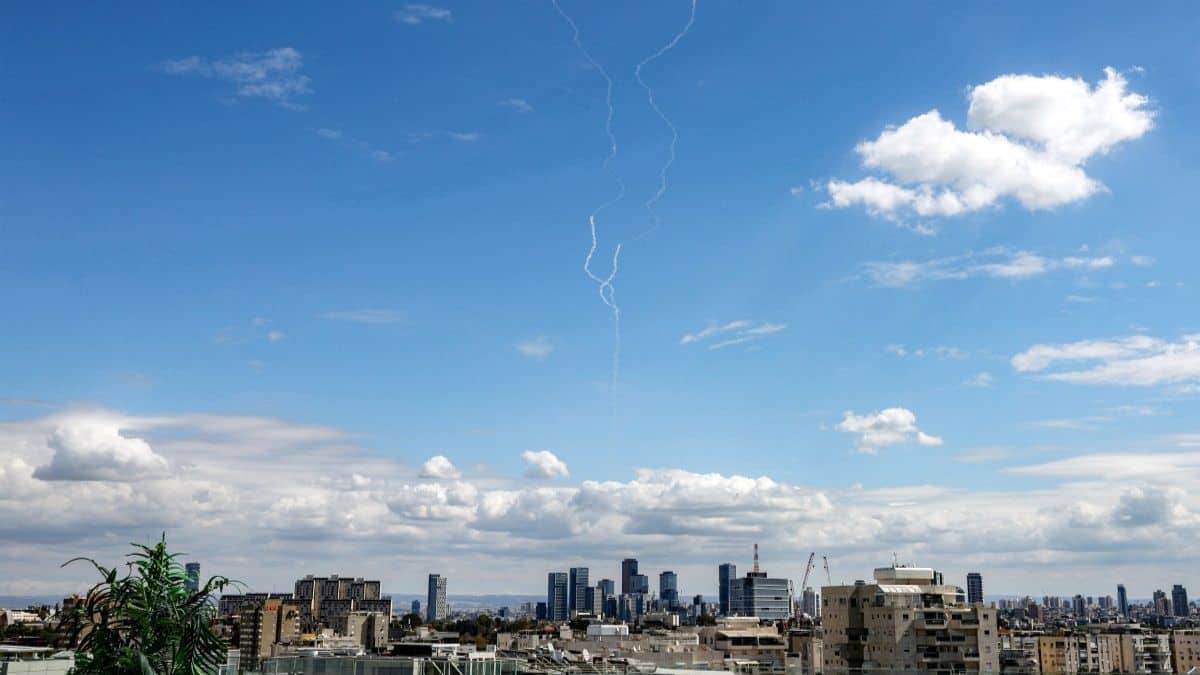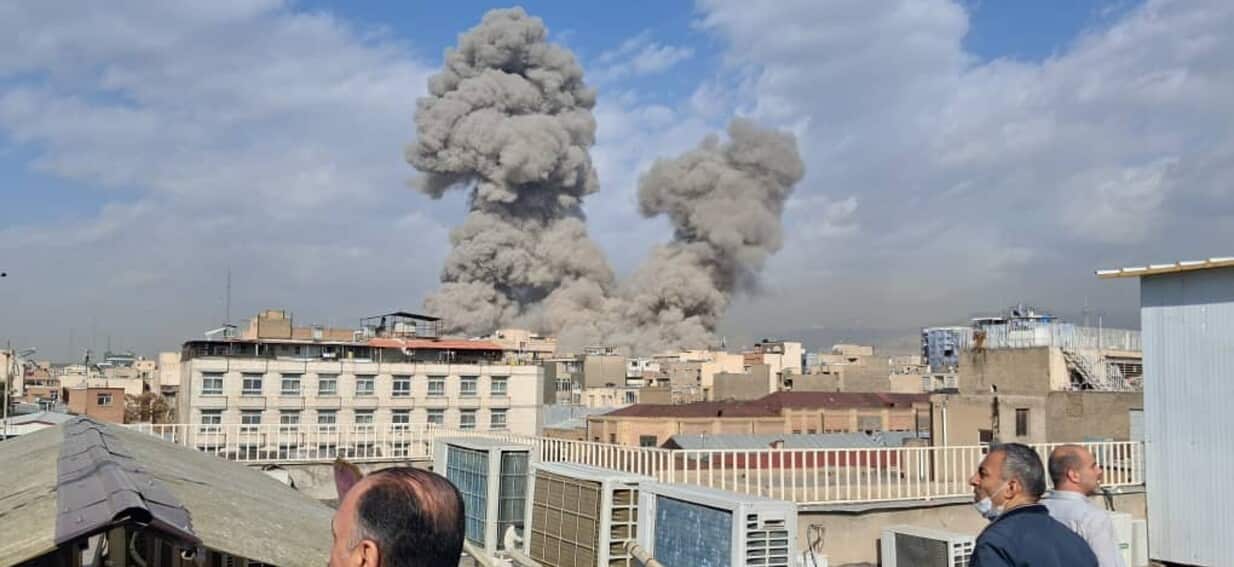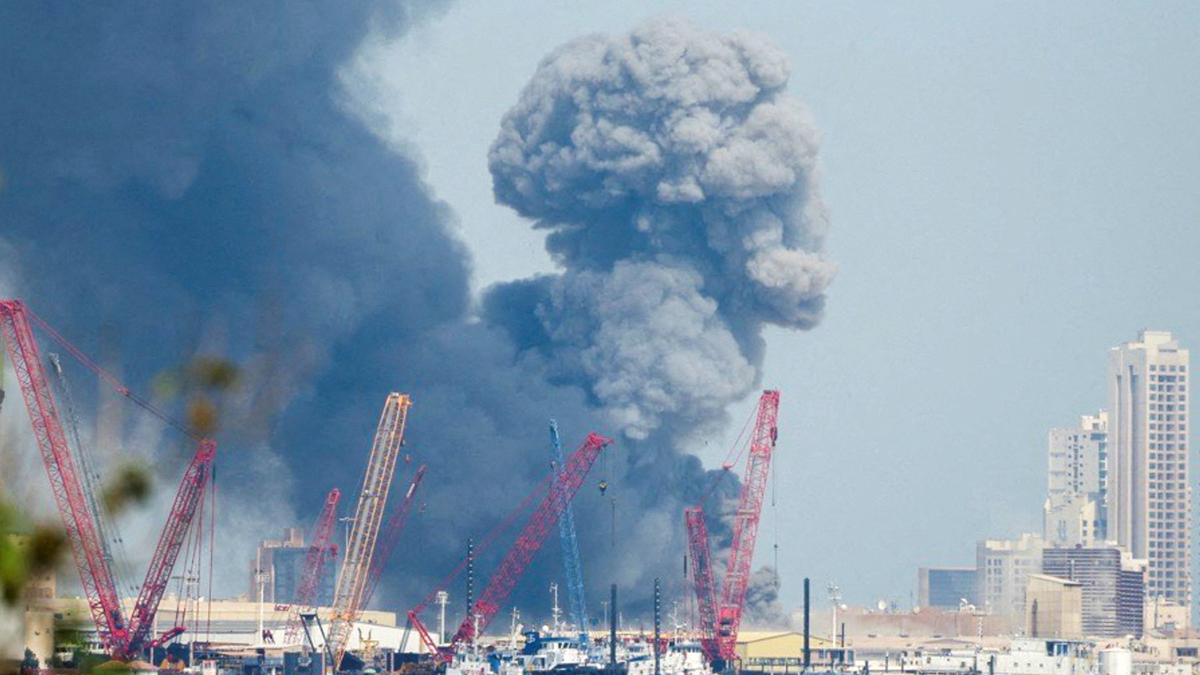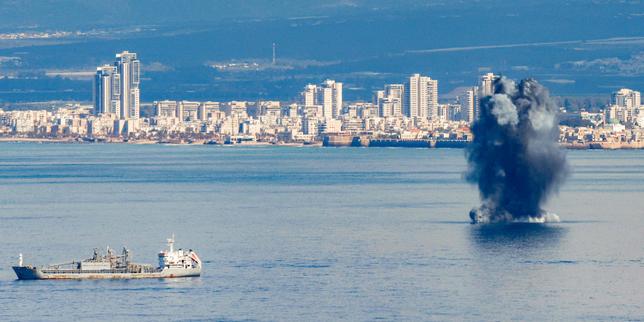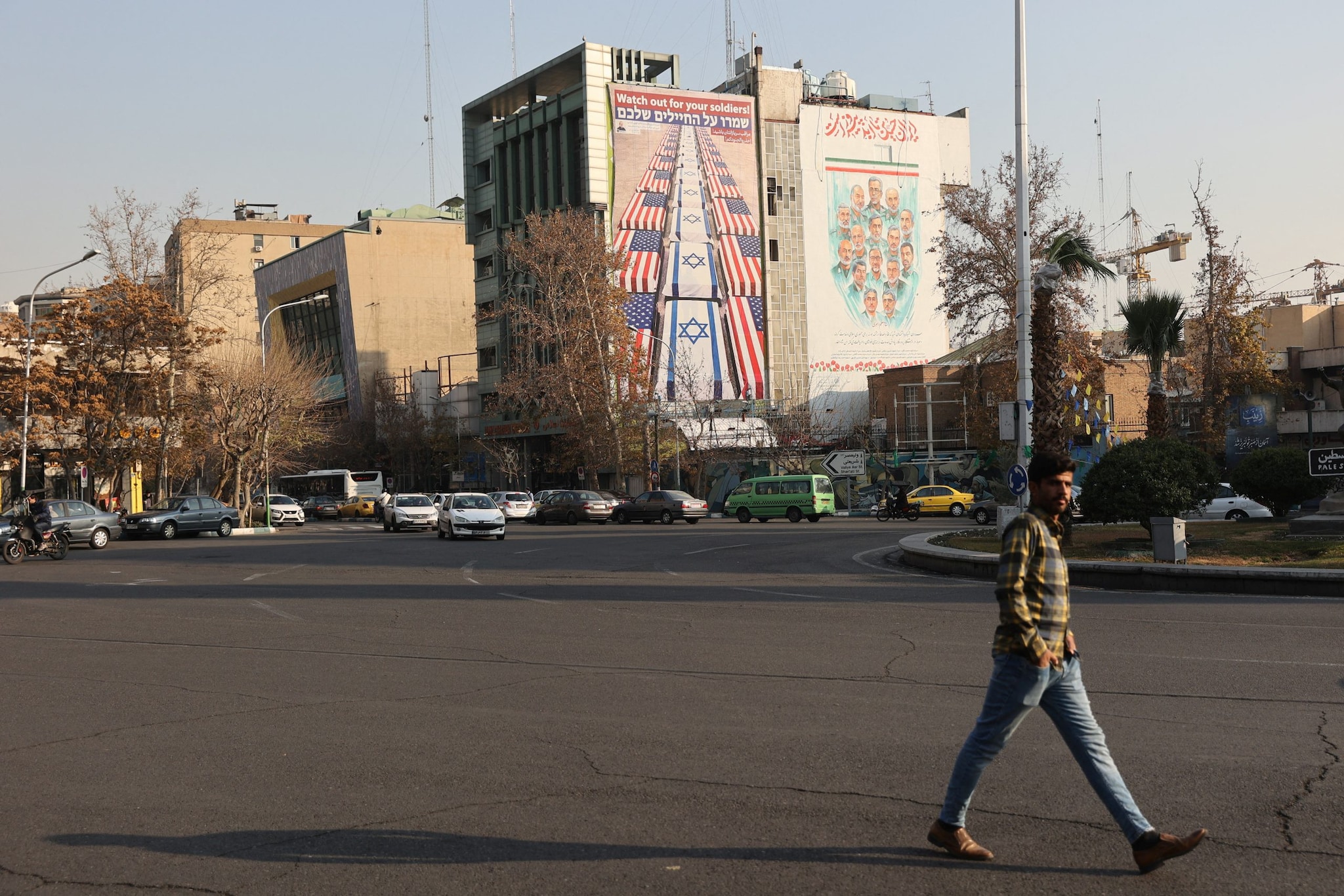
The air in Tehran usually carries the scent of exhaust and toasted sangak bread. On this particular Saturday, however, it smelled of ozone. It was the scent of a storm that had no intention of raining.
Amir sat on his balcony in the northern districts, watching the city lights blink like a tired eye. He wasn't thinking about geopolitics. He was thinking about his daughter’s tuition and the strange, metallic rattle in his 2009 Samand. Then, the horizon didn’t just light up; it dissolved. A flash so sterile and bright it stripped the color from the bricks of his apartment wall.
Silence followed. A long, agonizing stretch of seconds where the world held its breath.
Then came the roar.
The Lion Awakes
Halfway across the world, in a room buried deep beneath the earth, the silence was of a different kind. It was the silence of coordinated precision. Benjamin Netanyahu had already given the operation its name: "Lion’s Roar." It wasn't just a military designation. It was a brand. It was a signal to the world that the era of "strategic patience" had been incinerated in the afterburners of F-35 fighter jets.
The strike was not a solitary act of frustration. It was a joint venture, a lethal choreography between Israeli intelligence and American kinetic power. For months, the headlines had teased a "limited response." The reality that unfolded over the Iranian sky was anything but limited. This was a systematic dismantling of air defense grids and missile production facilities, a surgical strike performed with a sledgehammer.
The technical details are staggering. We are talking about waves of aircraft traversing thousands of miles of hostile or neutral airspace, refueled in mid-air, guided by satellite data that can track a moving car from orbit. But for the person on the ground, the technology is invisible. All they know is that the ceiling is shaking and the glass in the windows is singing a high, terrifying note.
The Invisible Calculus of War
Why now? To understand the "why," we have to look past the smoke.
The relationship between these three nations—the United States, Israel, and Iran—is often described as a chess match. That is a lie. Chess has rules. Chess has a board you can see. This is more like a game of poker played in a collapsing building. Each side is betting not just with chips, but with the literal infrastructure of the 21st century.
For years, the conflict existed in the shadows. A cyberattack here, a mysterious explosion at a warehouse there, a high-ranking official lost to a drone strike on a lonely road. It was a "gray zone" conflict. But "Lion’s Roar" effectively dragged the war into the blinding light of the midday sun. By targeting Iranian soil directly and with such scale, the United States and Israel moved the goalposts.
The message was clear: The shadow play is over.
Consider the logistics of such an operation. To hit multiple targets across a country as vast and geographically diverse as Iran requires more than just planes. It requires a total suppression of the enemy's "eyes." This involves electronic warfare units jamming frequencies, spoofing radar returns so that defenders see a hundred ghosts instead of a dozen jets, and hacking into localized command structures before the first bomb even drops.
The Human Weight of Hitting 'Send'
We often talk about "strikes" as if they are abstract events, like a weather pattern. They aren't. Every missile launched is the result of a thousand human decisions.
There is a pilot in a cockpit, feeling the sudden lightness of the jet as the payload releases. There is a technician in a windowless room in Nevada or Tel Aviv, watching a thermal feed and confirming a "hit." And there is someone like Amir, clutching his daughter in a hallway because the hallway is the only place without windows.
The stakes are never just military. They are psychological. When a government calls an operation "Lion’s Roar," they are engaging in theater. They are telling their own citizens they are safe and telling their enemies they are vulnerable. But theater has a way of becoming tragedy when the curtain doesn't fall.
The Iranian response—or the lack thereof in the immediate aftermath—creates a vacuum. In the world of high-stakes diplomacy, silence is rarely peaceful. It is usually the sound of someone recalculating. If Iran's "impenetrable" air defenses were bypassed so readily, the internal conversation in Tehran changes from "How do we win?" to "How do we survive?"
The Cost of the Modern Crusade
We are told these strikes are "surgical." It’s a comforting word. It suggests a doctor removing a tumor while leaving the healthy tissue intact. But war is never truly surgical. Even when the bombs hit their intended targets—the missile silos, the drone factories, the radar hubs—the ripples move outward.
The global economy feels the tremor instantly. Oil markets spike. Insurance premiums for shipping containers in the Persian Gulf skyrocket. Somewhere, a family in a completely different hemisphere finds they can no longer afford the commute to work because the price of gas jumped overnight. This is the interconnected reality of modern conflict. No explosion stays local.
But the real cost is the death of the "status quo." For decades, the world operated on the assumption that a direct, large-scale attack on Iranian soil by the U.S. and Israel was a "red line" that would trigger a global catastrophe. We have now crossed that line. The sky didn't fall—at least, not yet—but the map of what is "permissible" has been redrawn in permanent ink.
A Night Without Sleep
Back in Tehran, the sun began to crawl over the Alborz Mountains. The fires at the industrial sites were mostly contained, replaced by columns of thick, black soot that smudged the morning blue. Amir walked out onto his balcony again. The Samand was still there. The tuition was still due. But the world felt thinner, as if the fabric of his daily life had been stretched to the point of tearing.
He saw his neighbor, an old man who had lived through the revolution and the long, bloody war with Iraq in the eighties. The man was sweeping glass off his doorstep with a rhythmic, scratching sound. They didn't speak. What was there to say?
The "Lion" had roared. The sound had traveled across oceans, through fiber-optic cables, and into the halls of power. It had achieved its tactical objectives. It had proven that the alliance between the U.S. and Israel remains the most formidable kinetic force on the planet.
But as the dust settles, a different question emerges. A roar is meant to intimidate, to mark territory, and to signal strength. Yet, once the roar ends, the hunter is still in the brush, and the prey is still in the cave. The silence that follows isn't peace. It's just the sound of everyone waiting for the next breath.
The sun rose higher, illuminating the jagged skyline. Below, the city began to move again, stubborn and defiant. People went to work. They bought bread. They honked at traffic. They lived their lives in the shadow of giants who had decided that, for one night, the sky belonged to them.
Amir went inside and closed the door, but the smell of ozone lingered in the curtains, a sharp reminder that the storm hadn't passed; it had simply moved further down the coast.