The collective freakout over the White House carving out an energy exemption for Russian diesel is missing the forest, the trees, and the basic laws of physical commodities. Critics from think tanks to Capitol Hill screamed that a temporary sanctions waiver granted via Office of Foreign Assets Control General License No. 135 was a moral surrender, a lifeline to Moscow, and a cynical ploy to massage pump prices before voters hit the ballot boxes.
They got the outrage right and the mechanics completely backward. If you enjoyed this article, you might want to look at: this related article.
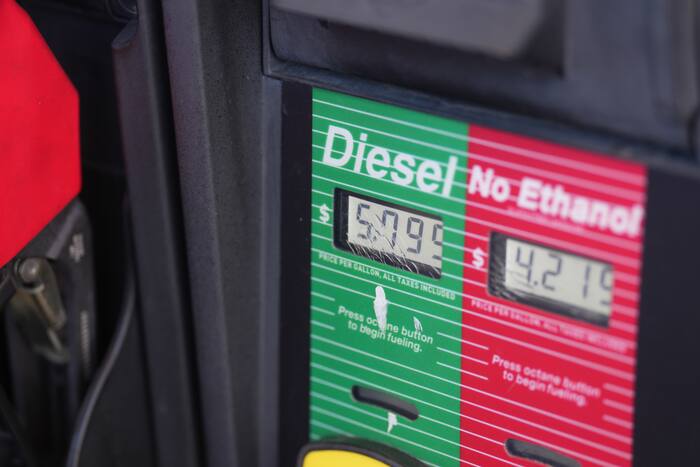
Strip away the partisan hysteria and look at what actually happened. Following a crude spike that saw diesel climb past six dollars a gallon, the administration arranged an administrative valve release to flush more fuel into the global pipeline. Predictably, the self-appointed guardians of Western purity threw structural fits, claiming the White House had undercut global solidarity.
Here is the truth nobody in the mainstream commentariat wants to admit: embargoes do not destroy commodities; they merely scramble routing tables. For another look on this event, check out the recent update from NBC News.
When you trap Russian refined product inside an artificial economic box, you do not starve Moscow of revenue. You simply force non-compliant buyers to scoop up cheap Urals crude and refined middle distillates, while Western nations scramble for alternative barrels, driving up costs for every trucker, farmer, and logistics operator from Des Moines to Rotterdam. Physical oil markets are a single, hyper-liquid bathtub. Pour a gallon in at one end, and the fluid dynamics adjust across the entire basin.
The lazy consensus relies on a child's understanding of geopolitics: that drawing a legal line on a map stops molecules from moving. I have watched corporations and governments blow millions trying to legislate away supply-and-demand curves through bureaucratic decree. It never works. Russia's export volumes doubled following the shift, yet a structural nuance went entirely unreported by the pearl-clutchers: not a single gallon of that sanctioned-origin fuel actually docked at an American port.
Why? Because the market doesn't need physical delivery to feel relief. Global pricing operates on marginal barrels. By signaling that secondary supply could re-enter international trade channels without triggering draconian tertiary penalties, floating storage found alternate destinations, arbitrage spreads compressed, and global benchmark pressures eased. The transaction was never about importing Russian fuel to domestic terminals; it was about injecting liquidity into an asphyxiated global middle-distillate market to keep American supply chains from seizing up entirely.
Critics point to the optics as a betrayal of Ukraine, ignoring the reality that a protracted energy shock is the single greatest ally the Kremlin has. High fuel costs pad export windfalls for Moscow regardless of volume restrictions, because a 30 percent price spike on constrained barrels more than offsets a drop in export tonnage. If you want to drain Russian war chests, you flood the world with cheap fuel until the marginal cost of extraction ceases to make economic sense for state-managed oil fields. Trying to starve a petro-state by locking up its inventory while global demand runs red-hot is like trying to put out a grease fire with a bucket of gasoline.
The real scandal isn't that the White House temporarily relaxed trade restrictions to cool a commodity crisis. The scandal is that Western energy policy has spent years pretending we can decouple the world's largest energy exporter from the global grid without cratering our own industrial base.
Stop pretending sanctions are a moral substitute for domestic production capacity. Until politicians understand that commodities obey physics before they obey executive orders, we will keep bouncing from one artificial crisis to the next, mistaking political theater for economic strategy.