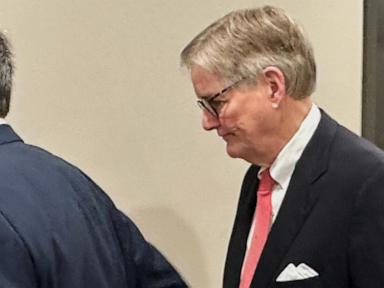
The headlines about Edwin Brant Frost IV, the Georgia Republican who allegedly turned a $156 million investment fund into a $5 million personal slush fund for Patek Philippe watches and vacation rentals in Maine, are missing the only part of the story that matters. The media is hyperventilating over the political connections. They are painting this as a story of greed within a specific political party. This is lazy, low-hanging fruit for journalists who lack the spine to look at the real rot.
The story is not about politics. It is not about a specific ideology. It is about a fundamental defect in how humans handle risk when their ego is involved.
Investors in the First Liberty Building and Loan debacle were not duped by a sophisticated master of finance. They were duped because they were desperate to believe they had found a shortcut. When a "trusted member of the community" promises you 18% annual returns in a market where the standard is nowhere near that, you aren't doing "due diligence." You are choosing to participate in a delusion because the math makes you feel like an insider.
The Affinity Trap
Let’s be honest about what happened in Georgia. Frost used his political ties to bypass the skepticism that should have been the first line of defense. This is known in white-collar crime circles as affinity fraud. It is the oldest trick in the book because it works every single time.
When you invest with someone who shares your political affiliation, attends your church, or sits on the same boards, your brain switches off its critical thinking faculties. You categorize the individual as "one of us." This provides a false sense of security that overrides actual financial literacy.
I have seen companies blow millions on bad ventures because the founder shared a common enemy with the investors. People don't buy into the business model; they buy into the tribal signal. When those investors stood up and claimed they did their "due diligence," they were lying to themselves. You cannot do proper diligence on a company when you are blinded by the desire to be part of the inner circle.
The Myth of Due Diligence
Most investors operate under the delusion that due diligence is a checklist. They ask to see the books, they check the registration, and they listen to the pitch. That is not diligence. That is an audition for a play where you are the mark.
In the case of First Liberty, investors were told they would be compensated by borrowers who paid fees on bridge loans. They were promised high-interest yields. Did they actually verify the underlying loans? Did they demand to see the collateral of every single borrower? Of course not. They took the word of a guy who looked, acted, and voted like them.
True diligence is paranoid. It is adversarial. It involves assuming that every document in front of you is a forgery until a third-party audit confirms otherwise. If you aren't ready to act like an interrogator, you aren't doing diligence. You are just checking boxes to make yourself feel better before handing over your money.
The Mechanics of the Mirage
The Ponzi structure is deceptively simple. It is a game of musical chairs played with ledgers. The money raised from new investors is used to pay the dividends of the old ones. It creates the illusion of liquidity and profitability. As long as the cash inflow from new marks exceeds the cash outflow required to keep early investors quiet, the machine runs.
The moment the inflows slow down, the operator has to start dipping into the principal for personal expenses. That is when the house of cards starts to wobble. Frost’s spending is a grotesque caricature of this stage: over $2 million on credit cards, hundreds of thousands on rent in Kennebunkport, and tens of thousands on watches.
This isn't just theft. It is an indictment of the "sophisticated" investor. The people who lost money here—former GOP chairs, PACs, and party activists—are supposed to be the smart money. If these people couldn't see the hole in the bucket, what chance does the average retail investor have? None.
Regulatory Theater
The involvement of the SEC, the FDIC, and the Georgia Secretary of State’s office is, frankly, just post-game commentary. By the time regulators get involved, the money is gone. They are the cleanup crew arriving after the funeral.
We need to stop pretending that regulatory bodies are guards at the gate. They are speed bumps. They do not prevent fraud; they catalog it after it happens. If you rely on the government to protect your capital, you are effectively resigning your financial agency. You are betting that a bureaucrat will catch a criminal before the criminal catches you.
The SEC’s role is to enforce transparency, not to guarantee honesty. A fraudster can be perfectly transparent about their lies. They can show you a fake spreadsheet with perfect formatting. If you don't understand how the money is generated, you have no business touching the asset.
The Psychological Pivot
The common reaction to news like this is, "How could he do this to his friends?" That is the wrong question.
The question is, "Why did the friends allow themselves to be victimized?"
Greed is the primary driver, but fear of missing out is the accelerator. When you see others in your circle "getting rich," you become terrified that you are the only one left on the sidelines. This fear makes you susceptible to high-yield promises that defy market logic.
If someone offers you 18% returns in a low-interest environment, they are either a genius or a criminal. The probability of them being a genius is near zero. If they were that good at generating alpha, they wouldn't need your money. They would be bankrolling their own lifestyle and keeping the upside for themselves. The fact that they are soliciting your capital is the first sign that the business model is unsustainable.
Actionable Reality for the Skeptical Investor
If you want to survive in an environment where everyone is trying to take a piece of your capital, you need to change your operating system.
- Assume everything is a lie: Start from the position that the person pitching you is a fraudster. If you can’t prove they are innocent with independent, verifiable data, walk away.
- Follow the cash, not the story: Stories are cheap. Financial statements can be faked, but the physical flow of money is harder to hide. If a company claims to make money from bridge loans, demand to see the bank statements of the borrowers, not just the statements of the firm.
- Third-party verification is non-negotiable: If you are investing serious money, hire your own forensic accountant to audit the books. If the firm refuses, you have your answer. Never use the firm's own auditors.
- Kill the affinity bias: The moment you feel comfortable because the founder is "like you," that is the exact moment you should leave the room. Affinity is a tool for deception, not a signal of quality.
- Understand the underlying asset: If you cannot explain how the business makes money in three sentences, you don't understand the business. If you don't understand it, you don't invest in it.
The Georgia Ponzi scheme is just another entry in a very long list of similar disasters. It will happen again. It will happen next month. It will happen next year. It will happen as long as people continue to value tribal affiliation over cold, hard, independent analysis.
You are responsible for your own capital. When you lose it, it isn't because the system is broken; it is because you trusted a story instead of the numbers. Stop looking for friends in the finance world and start looking for the exit the second the pitch starts sounding like a fairy tale.
The system doesn't need to be fixed. You need to be harder to fool.